
Bitcoin faced a sharp sell-off, plunging below the critical $93,000 level as escalating global trade war fears rattled financial markets. The sudden downturn wiped out approximately $357 million in leveraged positions, highlighting how fragile investor sentiment has become amid rising geopolitical and economic uncertainty.
What Triggered the Bitcoin Crash?
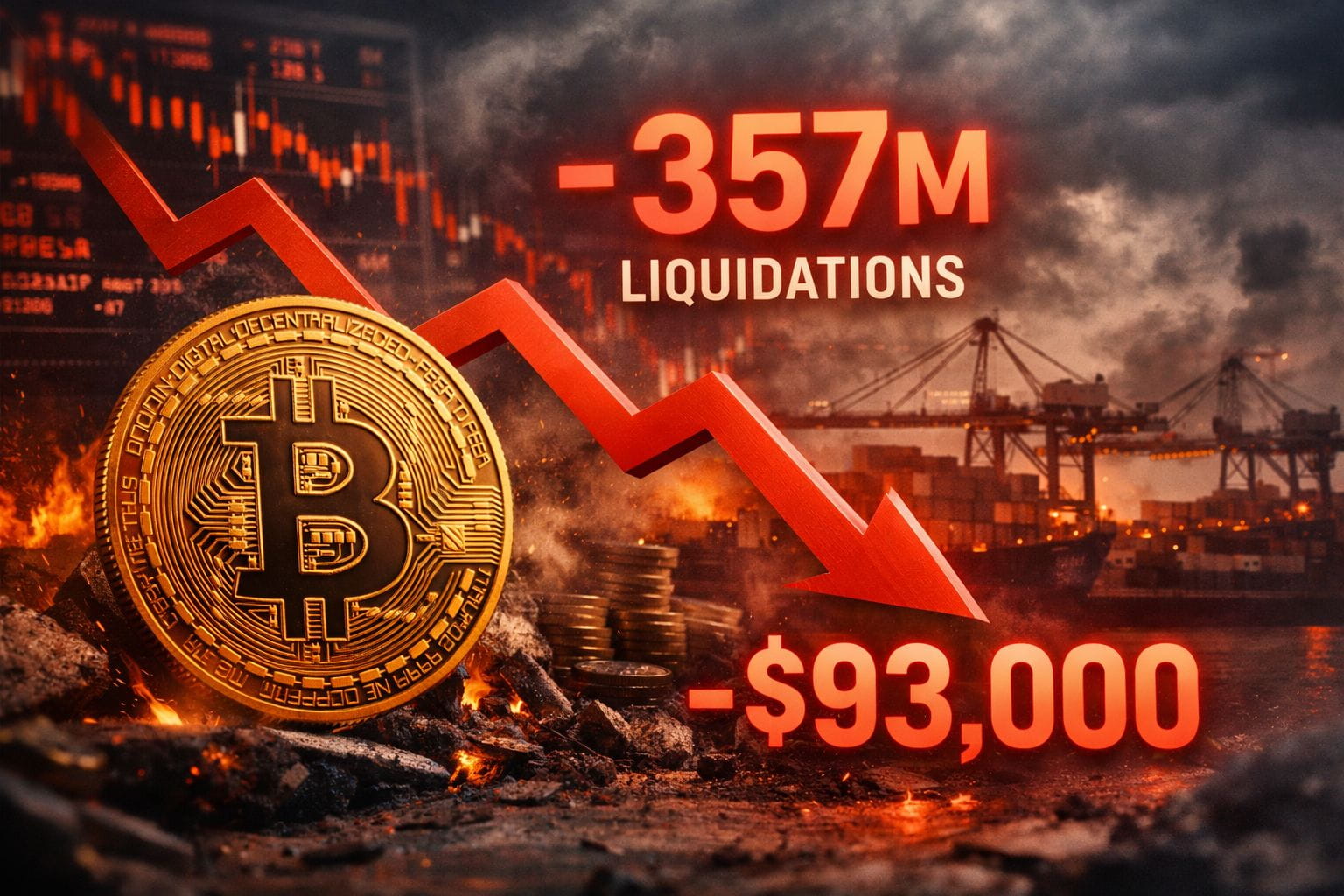
The primary catalyst behind the sell-off was renewed concern over trade tensions between major economies, particularly following aggressive tariff threats and policy signals from the United States. As traditional markets reacted negatively, crypto — often treated as a high-risk asset — was not spared.
When macro uncertainty rises, traders tend to reduce exposure to volatile assets, triggering a risk-off move. Bitcoin, despite its long-term “digital gold” narrative, continues to behave like a risk asset during periods of global stress.
Leverage Wipeout Accelerates the Decline
A major factor behind the speed of the crash was excessive leverage in the futures market. As Bitcoin dipped below key support zones, a cascade of forced liquidations followed:
$357 million in leveraged positions liquidated
Majority of liquidations were long positions
High leverage amplified downside volatility
Once liquidation levels were hit, automatic sell orders flooded the market, pushing prices even lower in a short period of time.
Key Technical Levels Broken
Bitcoin’s fall below $93,000 is significant from a technical perspective. This level had acted as a strong support zone, and its breakdown triggered further selling pressure.
Market analysts are now closely watching:
$90,000 as the next psychological support
Short-term momentum indicators turning bearish
Decreasing open interest suggesting traders are stepping back
A failure to reclaim $93K quickly could open the door to deeper consolidation or further downside.
Broader Market Impact
The crash wasn’t limited to Bitcoin. The wider crypto market also saw red:
Major altcoins followed Bitcoin’s decline
Market sentiment shifted sharply bearish
Fear & Greed indicators moved toward “fear”
This reinforces Bitcoin’s role as the market leader — when BTC falls sharply, the rest of the market usually follows.
What Happens Next?
Despite the short-term weakness, many long-term investors view such corrections as healthy market resets, especially after extended rallies fueled by leverage. However, volatility is likely to remain elevated as long as trade war headlines and macro uncertainty dominate the narrative.
Traders are advised to:
Reduce excessive leverage
Watch macroeconomic developments closely
Focus on key support and resistance zones
Final Thoughts
Bitcoin’s drop below $93,000 is a reminder that macro events still heavily influence crypto markets. While long-term fundamentals may remain intact, short-term price action is increasingly driven by global politics, interest rates, and investor risk appetite.
As trade war fears continue to loom, the crypto market may experience further turbulence — making risk management more important than ever.

