Scammers airdrop lookalike tokens that copy a trending memecoin’s name, symbol, and icon to bait users into swapping the wrong asset.
Token names are easy to copy. The most reliable check before you swap is the token contract address, verified on a block explorer for the correct chain.
On-chain transactions are generally irreversible. If you swap into an impersonation token contract, recovery can be difficult.
When a memecoin starts trending, scammers often deploy multiple fake tokens that look almost identical to the real one. Because on-chain data is public, scammers can airdrop these fake tokens to many wallets, hoping users will interact with them later.
This typically shows up as an unfamiliar token appearing in your wallet, or as multiple search results with similar names when you try to swap on a DEX. If you select the wrong token, you can end up swapping USDT or other assets into a token that has little to no value.
A token’s name, ticker, and icon can be copied in minutes. That means “it looks right” is not a security check.
A token contract address (or token address on chains like Solana) is a stronger identifier – its on-chain reference is what distinguishes the real asset from clones. The safest routine is to verify the address before every swap, especially when a token is trending and search results show many similar entries.
A token contract address is the on-chain identifier for a token. Think of it as the token’s “ID” on a specific network.
On EVM chains (Ethereum, BNB Chain, Polygon, etc.), it is a contract address.
On Solana, you will typically verify the token address shown in explorers such as Solscan.
Use a block explorer that matches the chain you are trading on:
Etherscan (Ethereum, and supported networks)
BscScan (BNB Chain)
Solscan (Solana)
DexScreener (multi-chain market views)
Token Sniffer (risk signals for some EVM tokens)
Best practice is to cross-check the token address using two sources, such as an official project channel plus a block explorer.
Please note: Images and information in this section are presented as examples only.
Confirm the chain first. Make sure you know which network the token is on (for example, Ethereum, BNB Chain, or Solana).
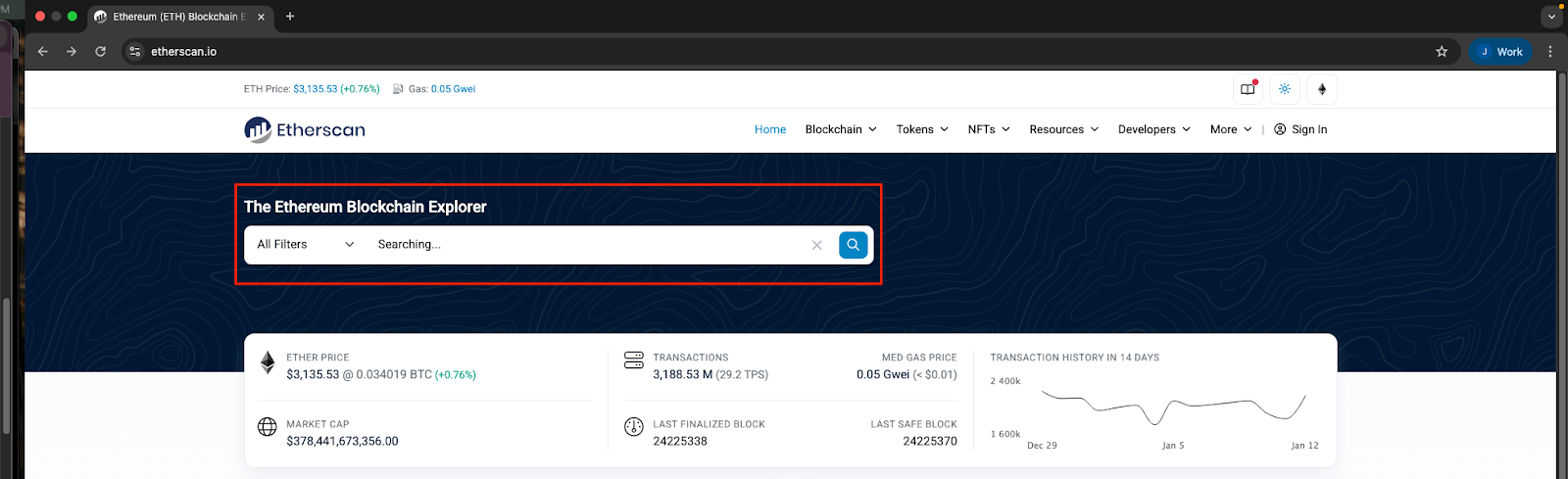
Use the correct block explorer.
Ethereum (EVM): Etherscan (etherscan.io)
BNB Chain: BscScan (bscscan.com)
Solana: Solscan (solscan.io)
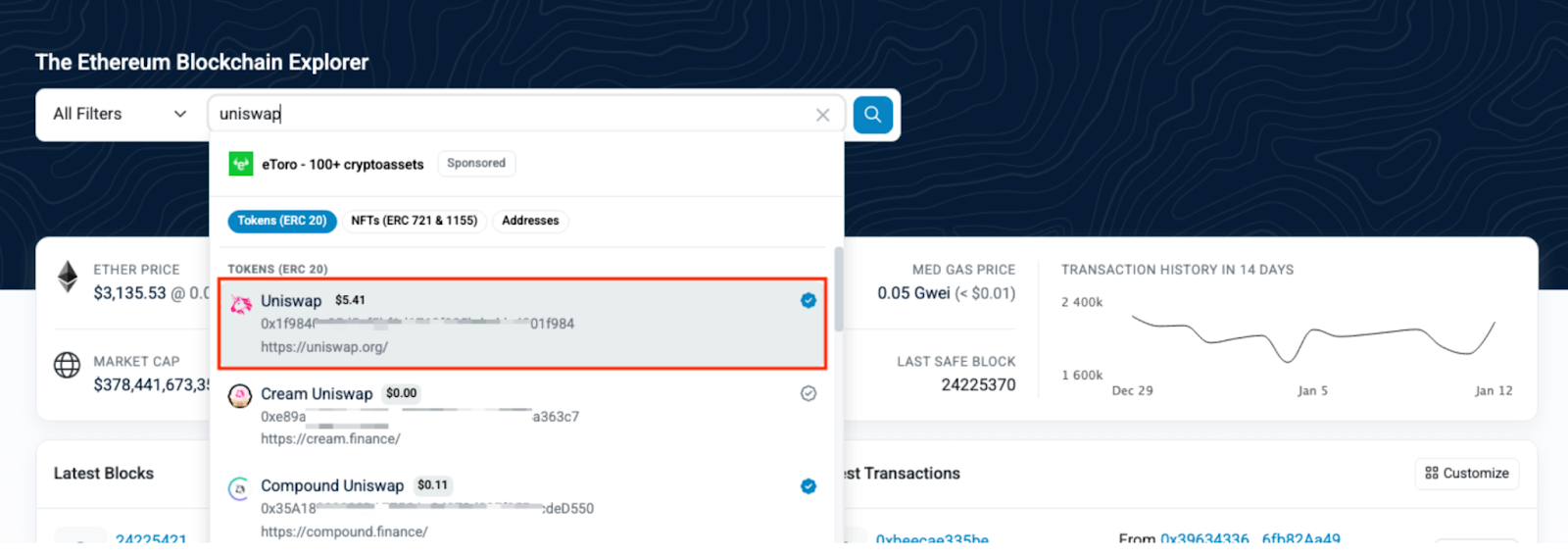
Search the token, then slow down. Enter the token name or symbol (for example, “Uniswap” or “UNI”). Trending tokens often have many lookalikes that appear in search results.
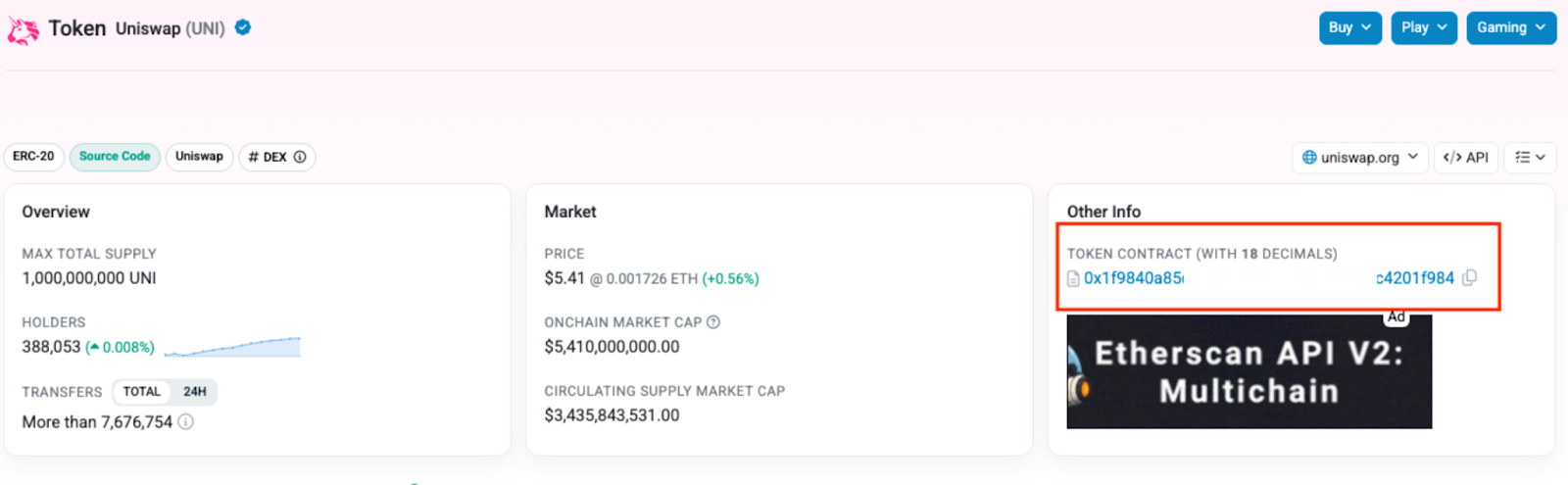
Open the token page and find the address.
On EVM networks, check the token contract address.
On Solana, check the token address (mint address).
Verify the address before you swap. Copy the address and cross-check it against the project’s official channels or your own transaction history. A checkmark can be a helpful signal, but not a substitute to verifying the address.
If the address does not match, do not swap. On-chain transactions are typically irreversible.
Please note: Images and information in this section are presented as examples only.
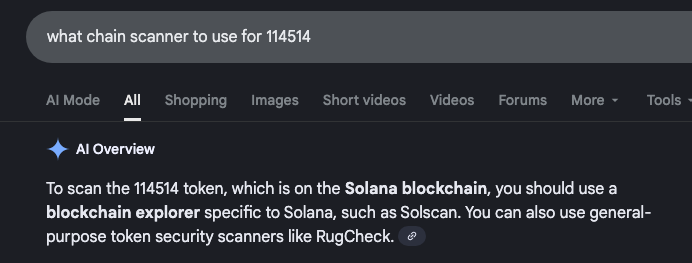
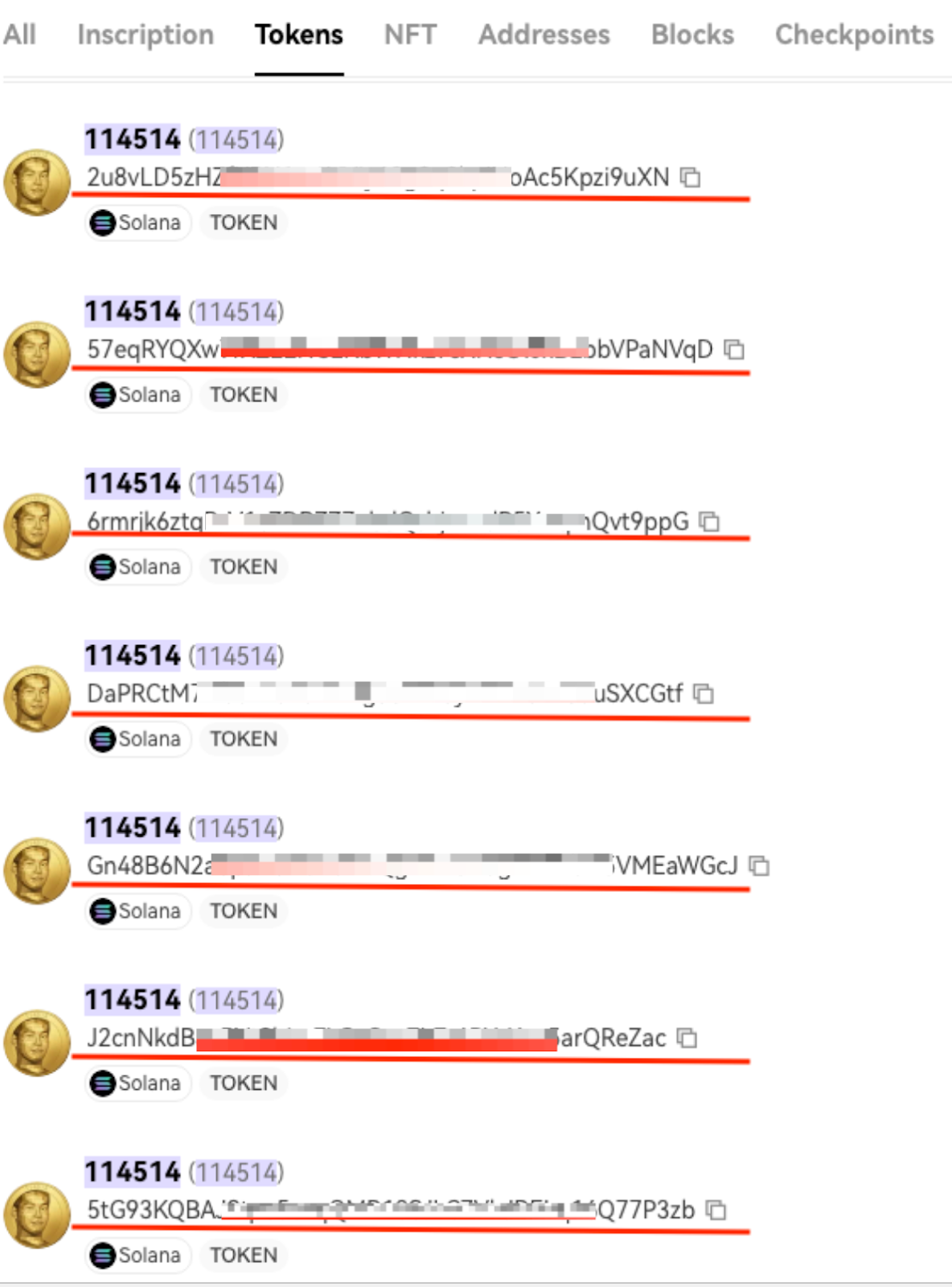
In a recent example involving a trending memecoin, multiple tokens appeared under the same name in search results on Solana, with each token under a different token (mint) address. Swapping USDT into one of the impersonation tokens instead of the authentic token address resulted in a loss for users.
When a token is trending, it is common for explorers and DEX search to surface many lookalikes. Selecting the token by name alone is risky; selecting by a verified address is the safer path.
Here is how you can verify the intended token before swapping:
Confirm the token’s network. Check the project’s official channels or a trusted explorer/market tracker to confirm the token is on Solana.
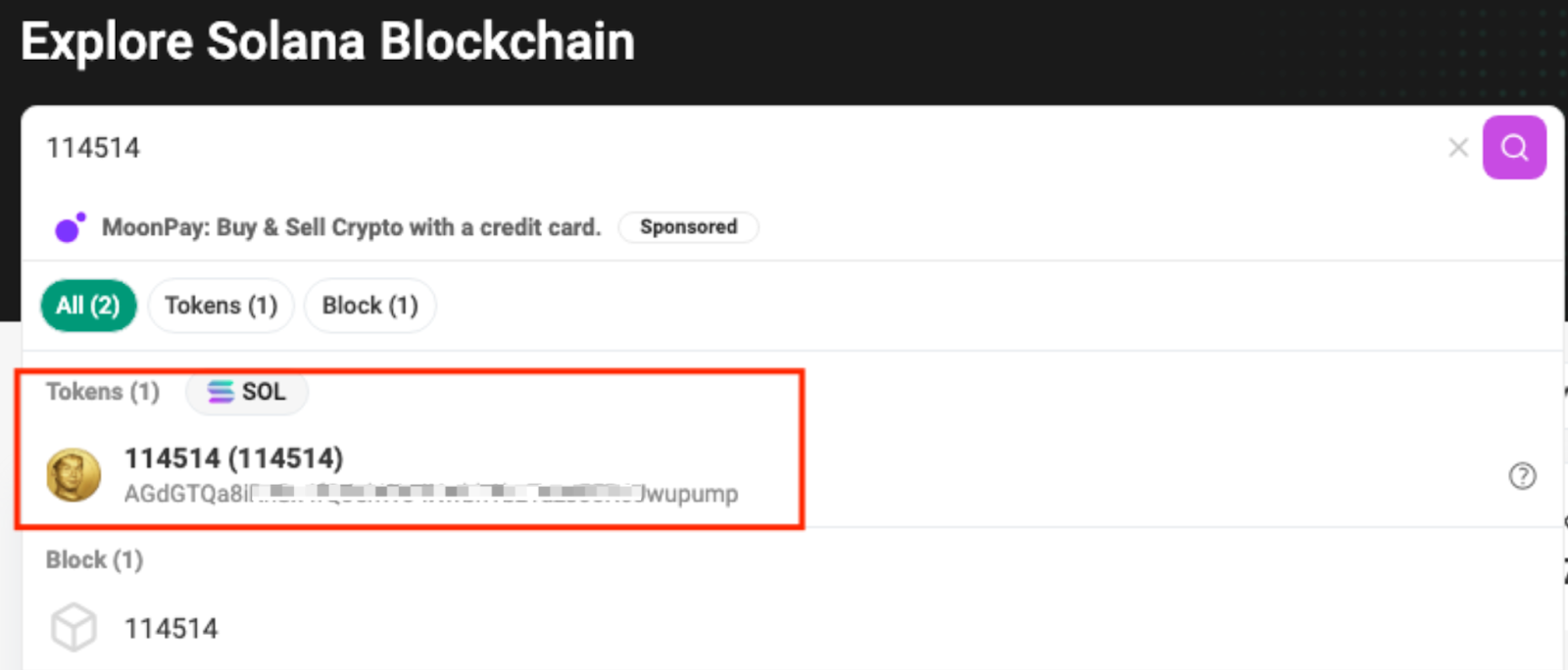
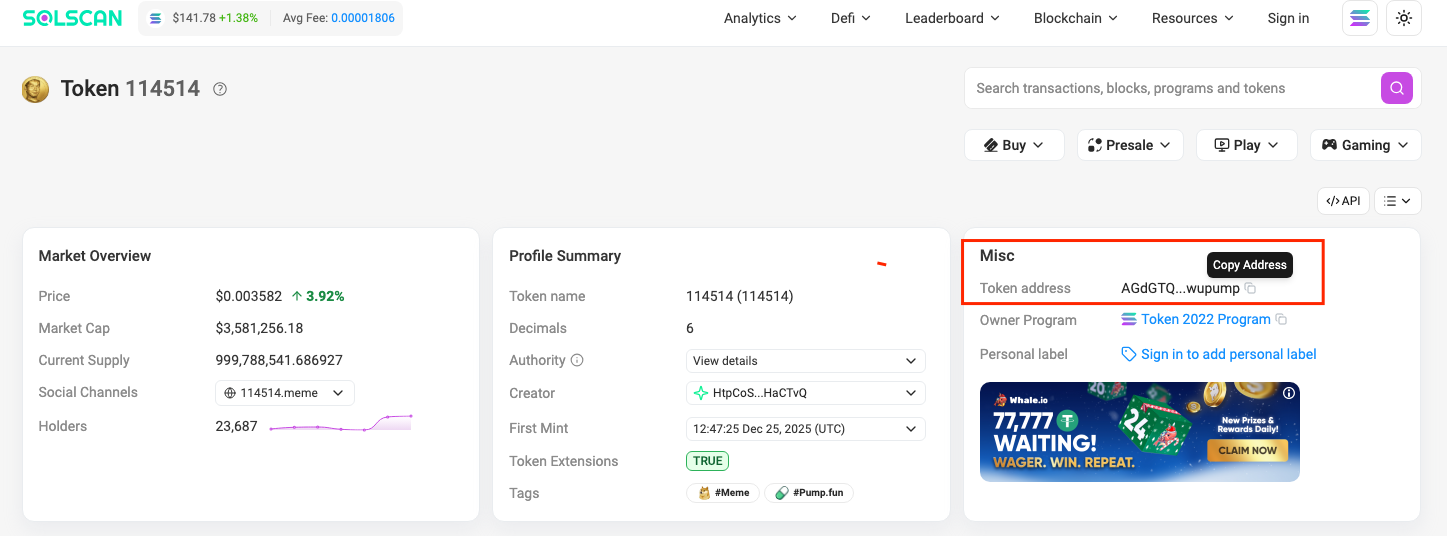
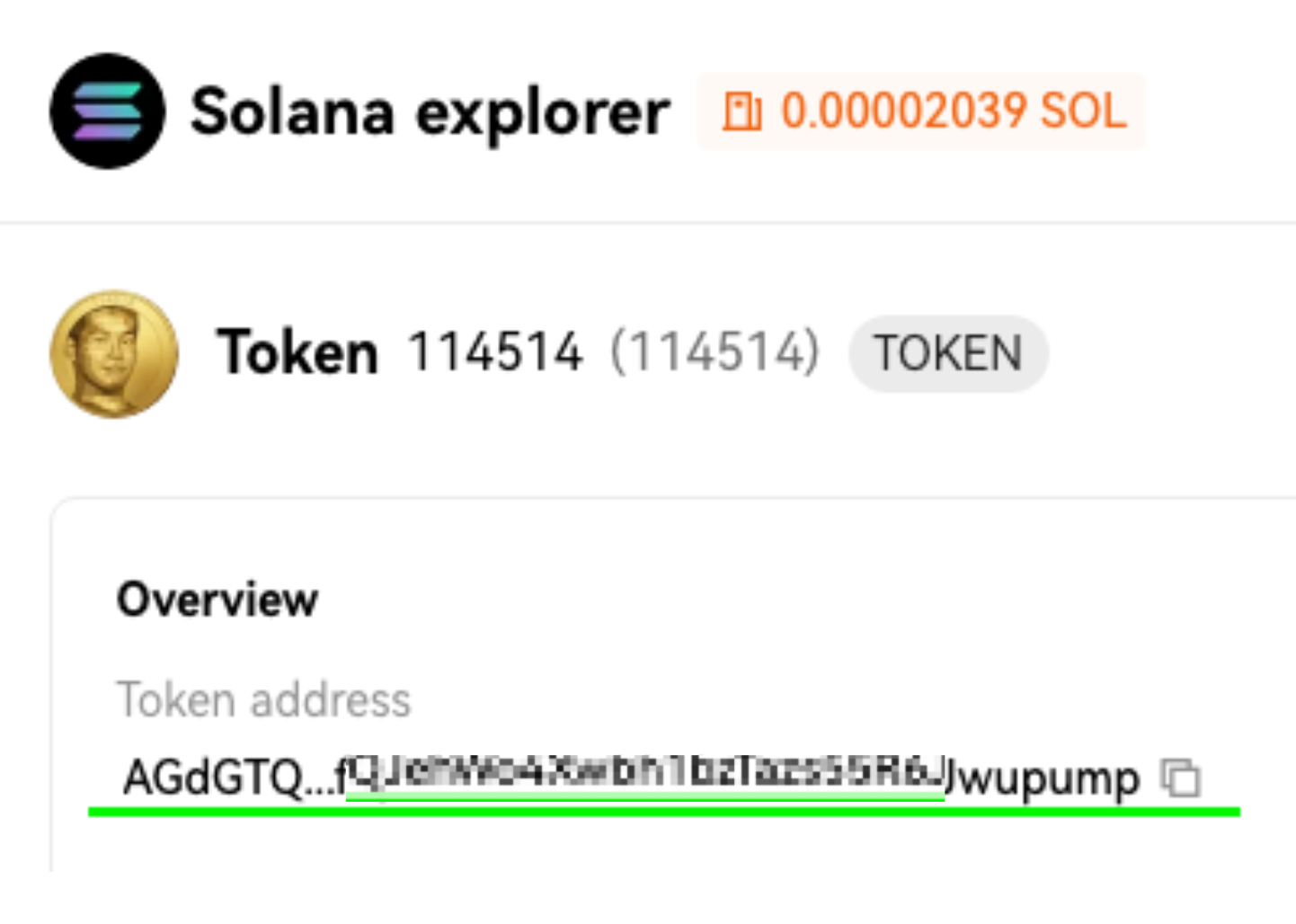
Verify the token address on a Solana block explorer. Open Solscan and search for the token. On Solana, focus on the token address (mint address) as the primary identifier.
Save the verified address for future reference. For example, the token address you intend to swap, shown on Solscan, is: AGdGTQ…wupump
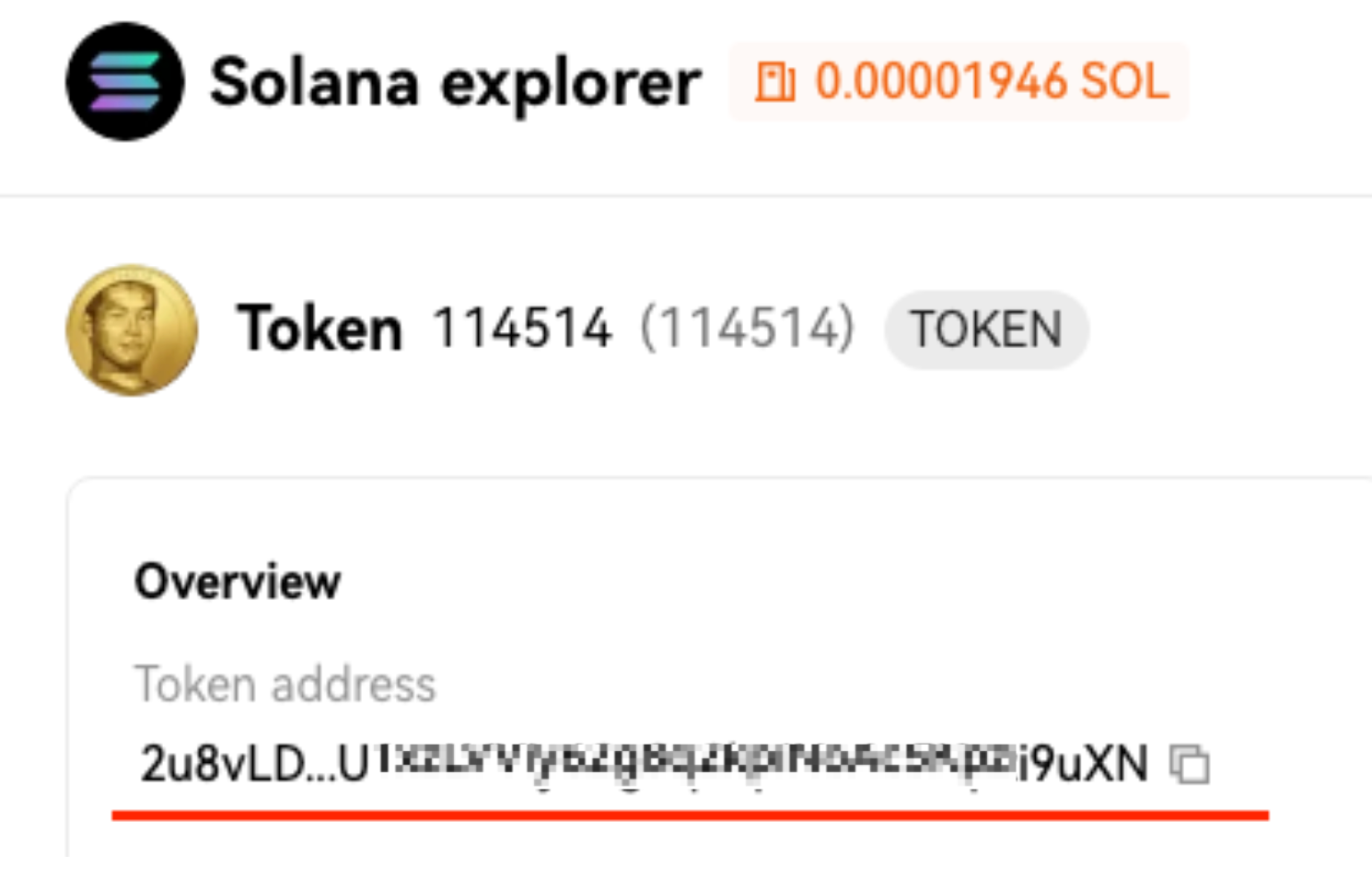
Watch for lookalikes with the same token name, but different addresses. During interest spikes, multiple tokens can impersonate the same name while using completely different token addresses. For example, an impersonation token address could look like: 2u8vLD…zi9uXN
This does not match the verified token address of the real token you intend to swap.
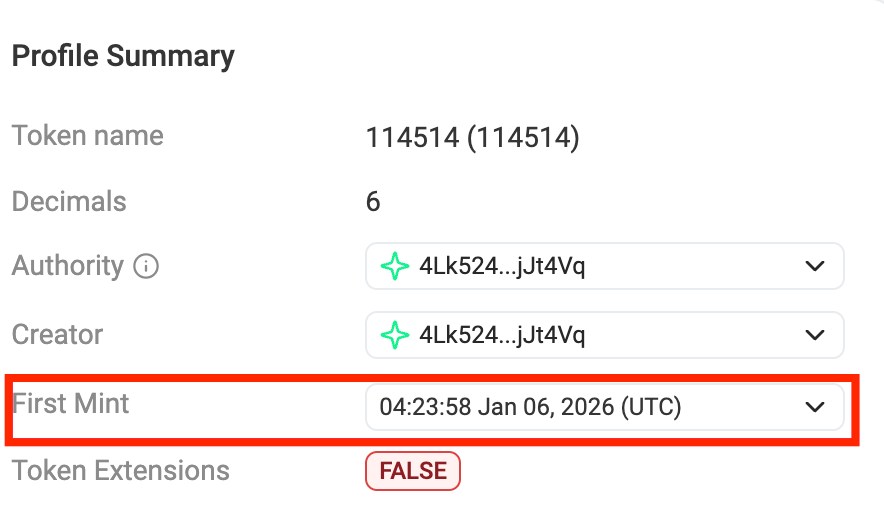
Cross-check using a second tool if needed. You can use OKLink Solana to compare token profiles and confirm the token address matches the verified one.
If the address does not match, do not swap.
If you are unsure, these signals can help you avoid obvious impersonators:
Check the token creation time (first mint): A brand new token created minutes ago during a trend spike can be an impersonator.
Review holder distribution and liquidity signals on the explorer or market trackers: Extremely thin liquidity often means you cannot exit safely.
Treat unexpected airdrops as suspicious: Do not swap, “claim,” or interact with tokens you did not sign up to receive.
Meme token impersonation succeeds because it exploits familiarity. Remember that in an on-chain environment, token names and icons alone are not reliable identifiers. Before every swap, verify the token contract address on the relevant chain explorer and confirm it matches a trusted source or your own transaction history. This 30-second habit can help prevent irreversible lossess.
Disclaimer: Digital asset prices can be volatile. The value of your investment may go down or up, and you may not get back the amount invested. This content is for general information only and should not be construed as financial or investment advice. For more information, see our Terms of Use and Risk Warning.
On-chain transactions are generally irreversible. Always verify token contract addresses, approvals, and transaction details before swapping or interacting with unfamiliar tokens. This content is for anti-scam and security education only and does not constitute financial or investment advice.