
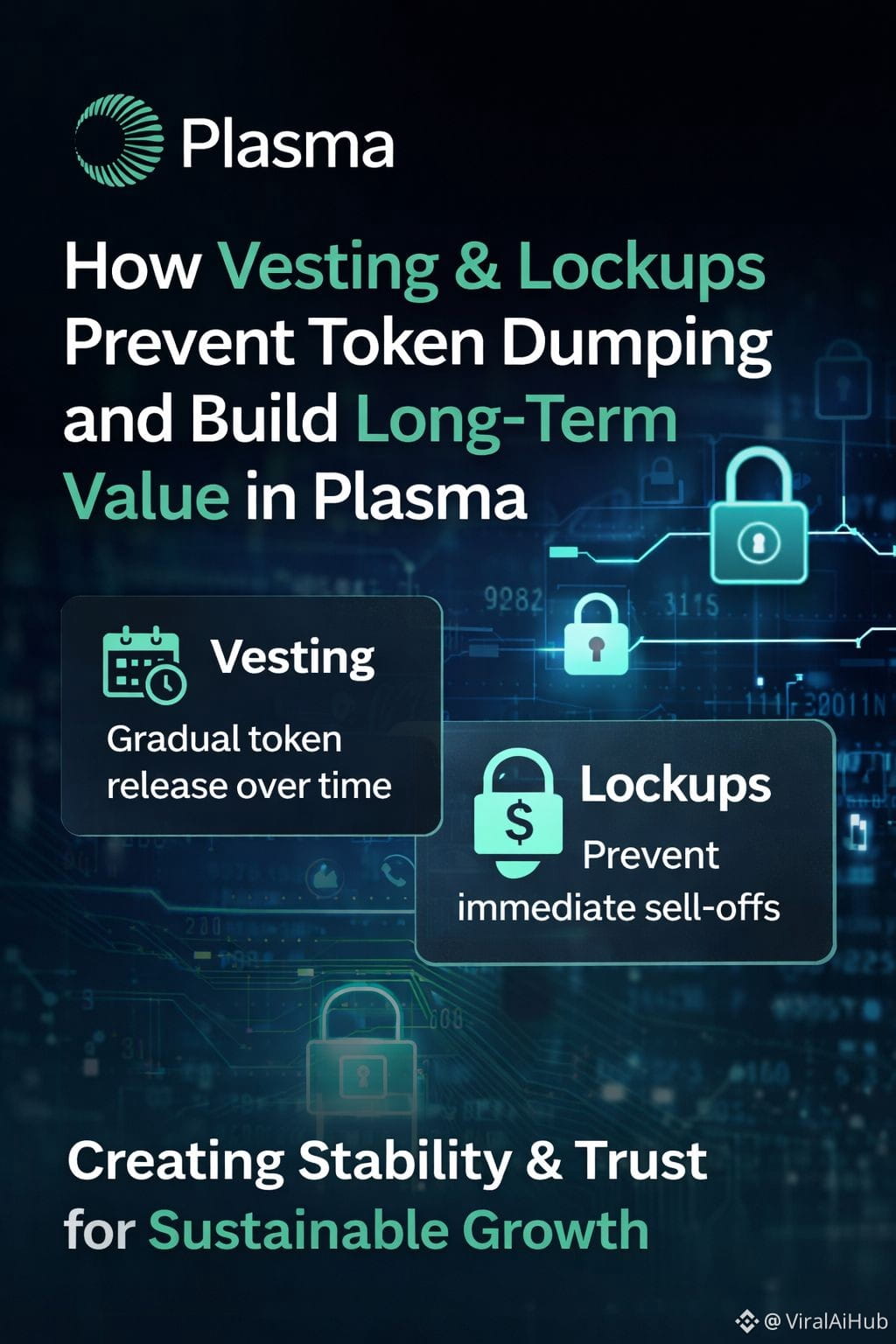
In the crypto ecosystem, vestings and lockups are foundational tokenomic mechanisms designed to prevent large, early-stage sell-offs (dumping) and align stakeholders with a project’s long-term success. Vesting refers to scheduled, progressive release of tokens over time, ensuring that team members, investors, and contributors can only access their tokens gradually according to a predetermined plan. Lockups, on the other hand, impose periods during which token holders are prohibited from selling or transferring tokens outright, regardless of whether they are vested or not. Both aim to reduce sell pressure, stabilize token value, and foster confidence in the project’s durability — core principles necessary for projects like #Plasma aiming for global scale.
1. Vesting: Gradual Alignment with Long-Term Goals
Vesting schedules are structured frameworks that release tokens in stages rather than offering full access at once. Typically implemented via smart contracts, these schedules can include a cliff period (where no tokens are released initially) followed by linear or milestone-based release increments. The purpose is to ensure key stakeholders — founders, team members, and early contributors — remain financially and strategically invested in the project’s evolution over months or years. Gradual vesting discourages short-term speculation and helps maintain a healthier market dynamic by limiting the amount of tokens entering circulation at any one time.
2. Lockups: Preventing Immediate Sell-Offs
While vesting governs how tokens become available, lockups determine when holders can trade them. Lockup periods are contractual or code-enforced restrictions that block token transfers until a specific date or condition is met. For early investors or team allocations, lockups act as anti-dump provisions — preventing large holders from immediately selling their tokens after a public launch or listing, which could otherwise put sharp downward pressure on price and erode market confidence. These mechanisms are especially important in the weeks and months following a token generation event (TGE), when token liquidity normally expands rapidly.
3. Combined Effect on Price Stability and Market Depth
Together, vesting and lockups create a controlled, phased release schedule. This reduces the risk of mass sell-offs (“dumping”) that historically can lead to steep price drops and investor losses — dynamics seen in numerous crypto markets lacking such safeguards. By smoothing token release events, the project can support a more predictable supply trajectory that enhances depth, reduces extreme volatility, and aligns market behavior with growth milestones rather than speculative timing.
4. Trust and Commitment Signaling to the Community
Beyond technical economics, these mechanisms signal long-term commitment from founders, developers, and strategic partners. Investors and the broader community are more likely to trust a project with well-defined vesting and lockup terms because they demonstrate discipline and a focus on sustainable value creation rather than short-term gains. For @Plasma — a Layer-1 chain purpose-built for global stablecoin infrastructure with deep ambitions in payments and financial interoperability — such tokenomic discipline is crucial for building institutional confidence and widespread adoption.
5. Implementation Through Smart Contracts
Modern vesting and lockup systems are usually implemented via smart contracts, enabling transparent, on-chain enforcement without manual intervention. This not only automates compliance with the token release schedule but also increases transparency — a key factor in decentralized ecosystems. Smart contracts can be configured to enforce time-based restrictions, milestone-based releases, or even performance-linked vesting, enhancing flexibility while preserving market safeguards.
Conclusion:
For ambitious blockchain projects like Plasma that aspire to power trillion-dollar stablecoin flows and global money movement, vesting and lockups are essential tokenomic tools. They mitigate early sell-pressure risks, enhance token price stability, and align all stakeholders behind the network’s long-term success. By employing phased token distribution with transparent, automated enforcement, Plasma can create a healthier market environment, attract serious long-term participants, and strengthen confidence in its mission to redefine how money moves on-chain.
#Plasma @Plasma $XPL

