

Let’s talk about what keeps a network like Dusk running securely and sustainably – its native token, $DUSK. Token design matters a lot because it directly influences security, participation, and long-term viability. Dusk’s model emphasizes utility and gradual emission to reward contributors without aggressive inflation.
Starting with the basics: DUSK serves as the gas token for fees, paid in tiny units called LUX (1 LUX = 10^-9 DUSK). Fees scale with demand but stay low during quiet periods. It’s also required for deploying and interacting with dApps, paying for network services, and participating in consensus.
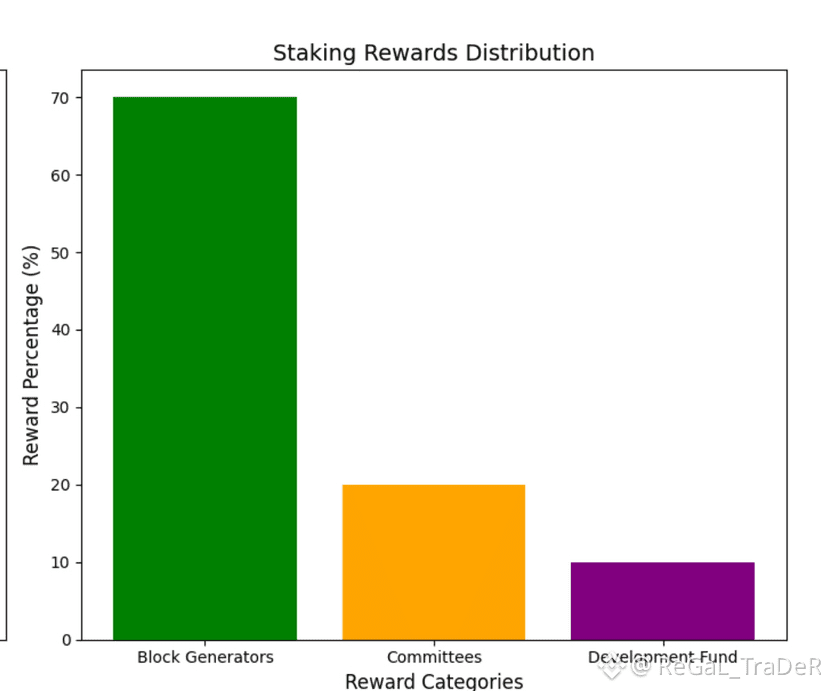
 Staking is central. You need a minimum of 1,000 DUSK to stake, with no maximum. There’s a short maturity period (two epochs), and unstaking has no lockup penalties – flexible for users. Stakers help generate and validate blocks via the network’s consensus (involving generators, validation, and ratification committees). Rewards come from newly emitted tokens plus collected fees, distributed roughly as 70% to block generators (with credits), portions to committees, and some to a development fund. Slashing is “soft” – suspensions or stake penalties for repeated faults, but no outright burns – encouraging honest behavior without overly punishing honest mistakes.
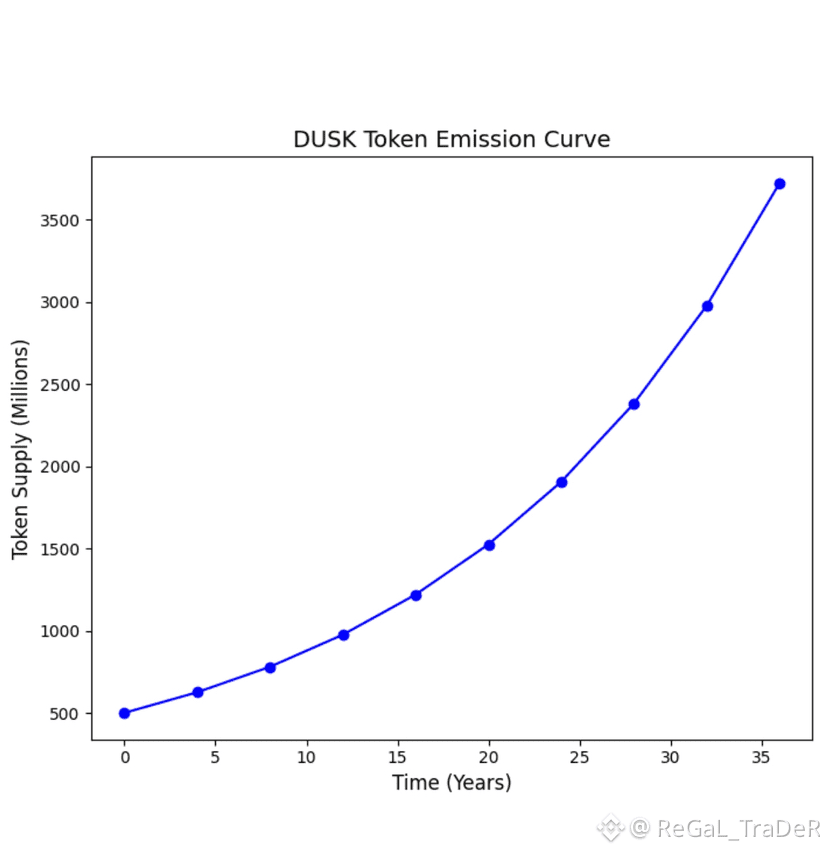
Tokenomics details: Initial supply was 500 million DUSK (from ICO and allocations), with another 500 million emitted over 36 years in a geometric decay schedule – halving roughly every four years. This creates predictable, declining inflation, reaching near-max supply of 1 billion. Allocations included sales (50%), team/advisors (~12.8%), development (18%), etc., with vesting completed years ago. Emissions incentivize long-term staking to secure the privacy features and compliance tools.
Beyond security, $DUSK enables governance participation indirectly through staking influence on consensus. Developers pay fees in DUSK for contract deployment, tying economic activity back to the token.
In conclusion, this design aligns incentives for security, development, and usage in a privacy-first environment. Personally, I appreciate how Dusk avoids hyper-inflationary models common elsewhere, opting instead for a decades-long emission curve that supports steady growth. It reflects careful planning for a network aimed at institutional-grade applications, where reliability and economic sustainability outweigh short-term speculation. In a maturing crypto space, such thoughtful tokenomics could help Dusk attract serious builders and participants focused on regulated use cases.
