
Financial systems shape behavior. They quietly encourage certain actions and discourage others through the rules they enforce. When systems are loose, responsibility is pushed onto people. Teams are forced to double check, intervene, and compensate for uncertainty. When systems are disciplined, responsibility becomes embedded. Good outcomes happen by default rather than by effort.
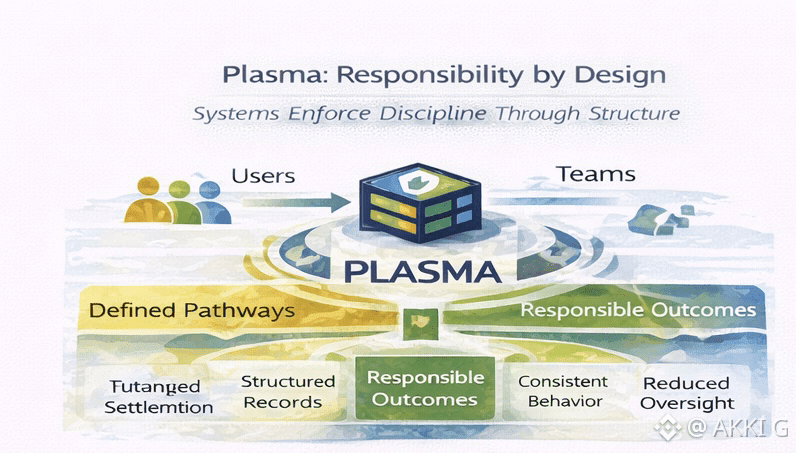
In Web3, responsibility has often been treated as a social expectation instead of an infrastructure property. Users are expected to act carefully. Teams are expected to monitor constantly. Mistakes are framed as edge cases rather than signals of weak design. Over time, this creates fatigue and erodes trust, especially for businesses that operate at scale.
Plasma is built around the idea that financial responsibility should be enforced by structure, not vigilance. Plasma encodes clear execution paths so payments behave predictably regardless of conditions. Settlement windows are defined. Refunds follow disciplined logic. Records remain consistent across the full lifecycle. Responsibility is not optional. It is automatic.
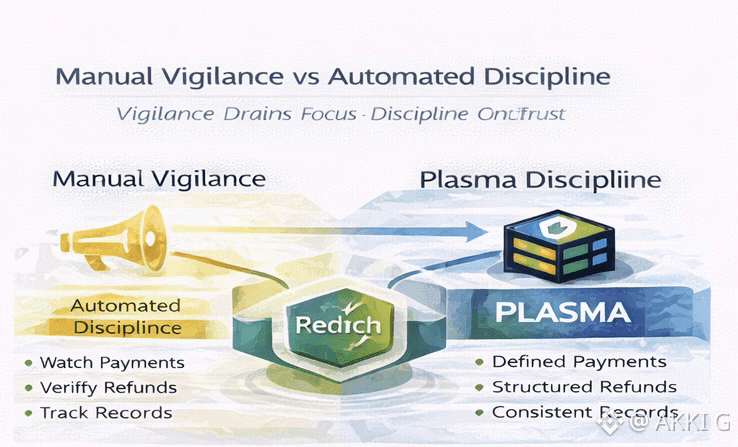
This approach changes how organizations operate. Finance teams stop acting as gatekeepers and start acting as planners. Operations teams focus on delivery instead of verification. Compliance becomes alignment rather than investigation. Plasma reduces the cognitive and operational burden by ensuring that the system itself encourages responsible behavior.
Moreover, responsibility scales differently than innovation. Innovation can tolerate experimentation. Responsibility cannot. As volume grows, small inconsistencies become systemic risks. Plasma addresses this by designing for repeatability first. Every payment follows the same disciplined structure, which keeps behavior stable even as complexity increases.
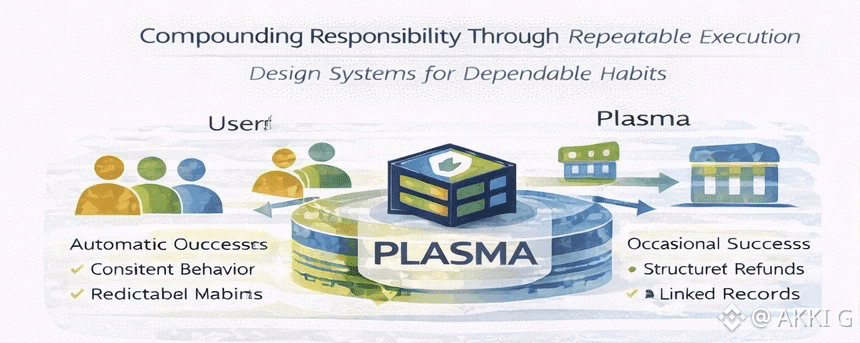
My take is that long lasting financial infrastructure is defined by the habits it creates. Systems that reward responsibility quietly outperform those that rely on constant oversight. Plasma’s philosophy reflects a mature understanding of this truth. It builds not just for transactions, but for the people and organizations that depend on them every day.

