

You know, in today’s data-driven world, it’s fascinating to explore how storage solutions can move beyond simple file holding to actually empowering new kinds of applications and ownership models. Walrus, the decentralized blob storage protocol on Sui, opens up possibilities by making large unstructured data not just persistent, but programmable, verifiable, and integrable into broader ecosystems. Rather than focusing solely on the underlying mechanics, let’s talk about how this translates into practical scenarios for developers, creators, and organizations.
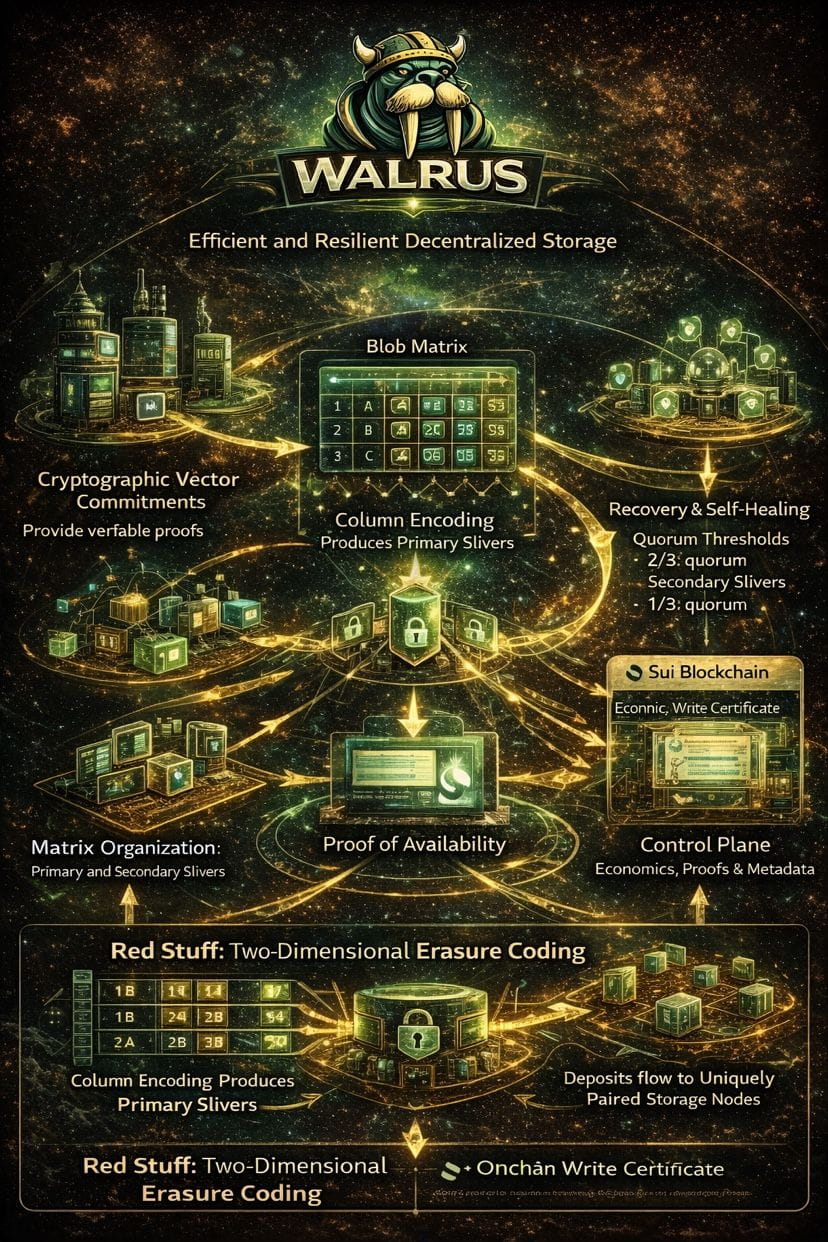
One area where Walrus shows clear potential is in supporting AI workflows and data markets. Datasets for training or inference can be stored as blobs, with their availability certified onchain. This allows parties to prove possession and integrity without transferring the full data, which is useful for collaborative AI development or marketplaces where data becomes a tradable asset. For instance, an AI agent builder might store versioned training corpora that smart contracts can reference for verification purposes. Partners like Talus are exploring integrations where agents store, retrieve, and process such data directly, streamlining onchain AI operations. Similarly, Itheum works on data tokenization, leveraging Walrus as a management layer to give users control over their information assets.
For content and media, the protocol enables reliable hosting of videos, images, music, podcasts, and documents. A notable application is Walrus Sites, which lets developers deploy static websites—HTML, CSS, assets—directly from stored blobs. These sites benefit from provable availability certificates, reducing dependence on traditional hosting providers. Media companies like Decrypt have considered uploading content here, potentially unlocking decentralized distribution with built-in verification. In DeFi contexts, blobs can hold ledger archives or verification data, allowing real-time checks against onchain records to flag issues or confirm transactions.
Programmability adds depth to these uses. Blobs appear as Sui objects, so smart contracts can interact with them—checking availability, extending lifetimes, transferring ownership, or even deleting after expiration. This turns raw storage into composable resources. Developers gain tools like SDKs and CLIs for straightforward integration, while optional Web2-compatible interfaces (caches, HTTP endpoints) improve accessibility without compromising decentralization. Projects such as Baselight aim to build permissionless data economies on top, using Walrus for secure, decentralized management. Linera’s collaboration highlights efficient handling of large datasets alongside instant transactions.
What stands out in conversations around these applications is the emphasis on data sovereignty and monetization. By certifying availability and enabling proofs, Walrus helps data move from passive storage to active, governable assets. For example, in content platforms, creators could tie media files to onchain rights or usage terms. In AI, verifiable datasets reduce risks around tampering or unavailability during critical model updates. The protocol supports various data types exceeding 100KB, including blockchain archives, making it versatile for archival needs across ecosystems.
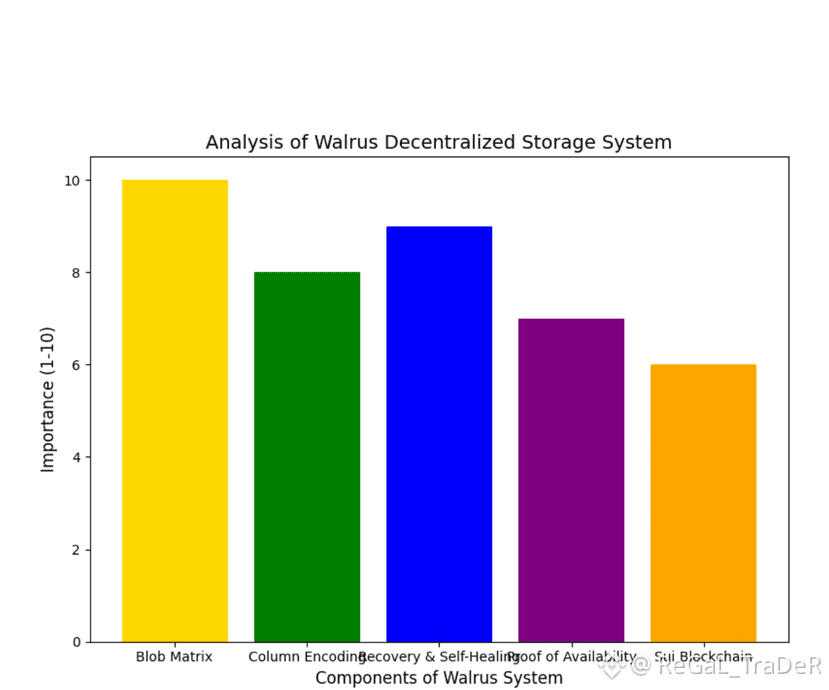
Of course, real-world adoption will hinge on factors like consistent retrieval speeds, developer experience with the tools, and seamless cross-chain access via SDKs for non-Sui applications. The focus on high-performance reads and writes aims to make it competitive for everyday use, though network growth and node diversity will influence long-term reliability.
In conclusion, Walrus distinguishes itself by bridging reliable storage with programmability and verifiability, creating pathways for data markets, decentralized web experiences, and AI tooling that feel actionable rather than theoretical. Its integrations with projects focused on tokenization and agentic systems suggest thoughtful ecosystem building. From my viewpoint, analyzing various storage protocols, this targeted approach—prioritizing blobs that can be owned, extended, and proven—addresses genuine pain points around data control in decentralized settings. It avoids broad overreach, instead carving out strengths in verifiability and efficiency that could prove valuable as AI and media demands evolve. Watching how these use cases mature, particularly around data marketplaces and site hosting, will reveal its lasting impact. What specific application area intrigues you most when thinking about decentralized storage?


