

Most blockchain conversations start with numbers. Faster blocks. Lower fees. Higher throughput.That stuff matters but mostly on Twitter.
In real financial environments speed rarely decides whether a system gets adopted. What actually matters is whether the system can be reviewed. Can it be explained in an audit? Can it survive a regulatory question? Can someone outside the engineering team understand what’s happening?
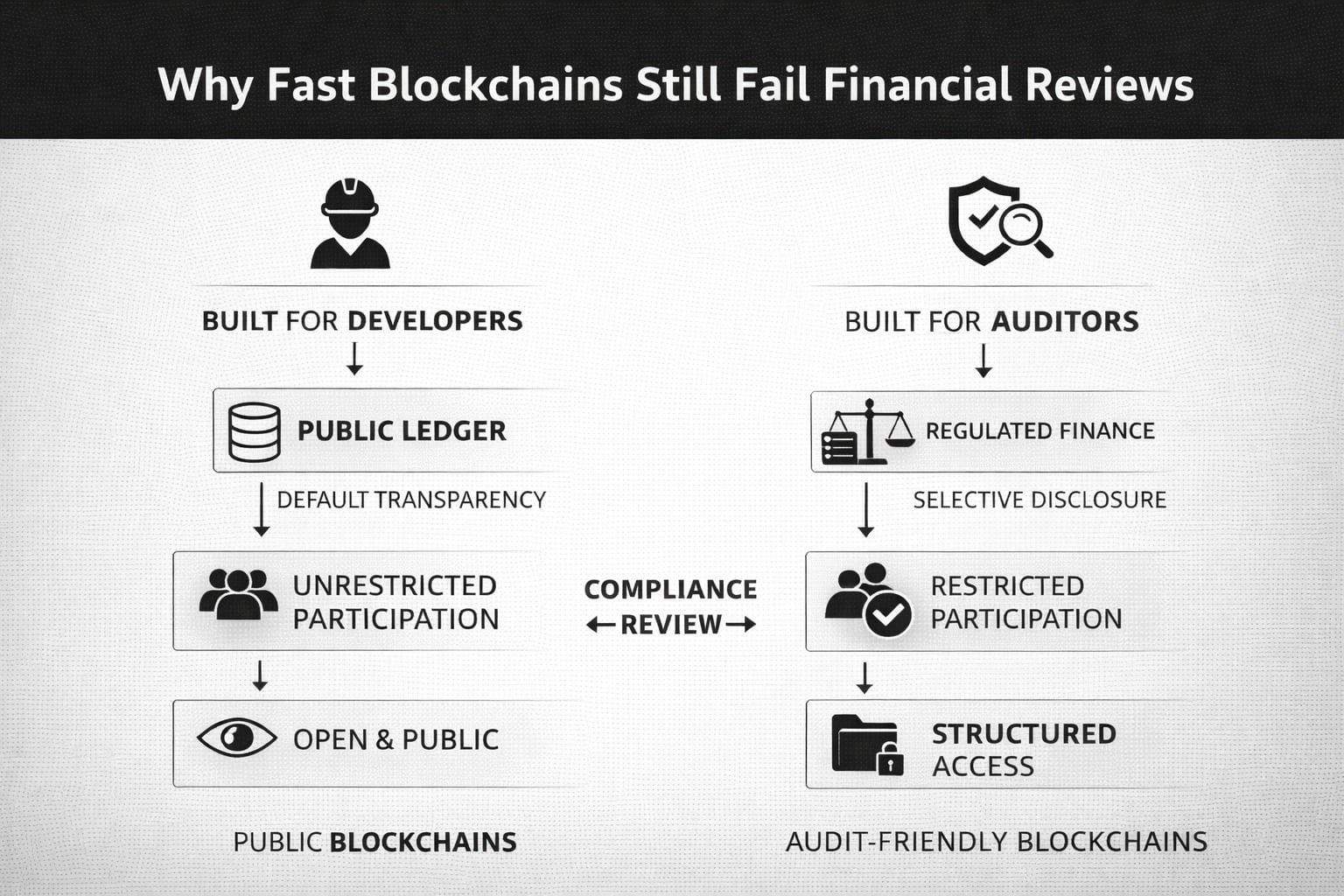
For banks and financial institutions every system lives under constant review. Transactions need context. Controls need proof. And processes need to make sense to people whose job is to find problems. Many public blockchains weren’t built for that. Full transparency sounds good in theory but in practice it often creates confusion and unnecessary risk.
Auditors don’t want access to everything. They want access to what’s relevant when it’s relevant. Dumping all data onto a public ledger doesn’t make compliance easier it makes it harder.
This is where Dusk Foundation takes a noticeably different approach. Dusk is a Layer 1 blockchain designed with regulated finance in mind not retrofitted for it later. Instead of choosing between privacy and compliance its design allows both. Sensitive data stays protected while verification remains possible when oversight is required.
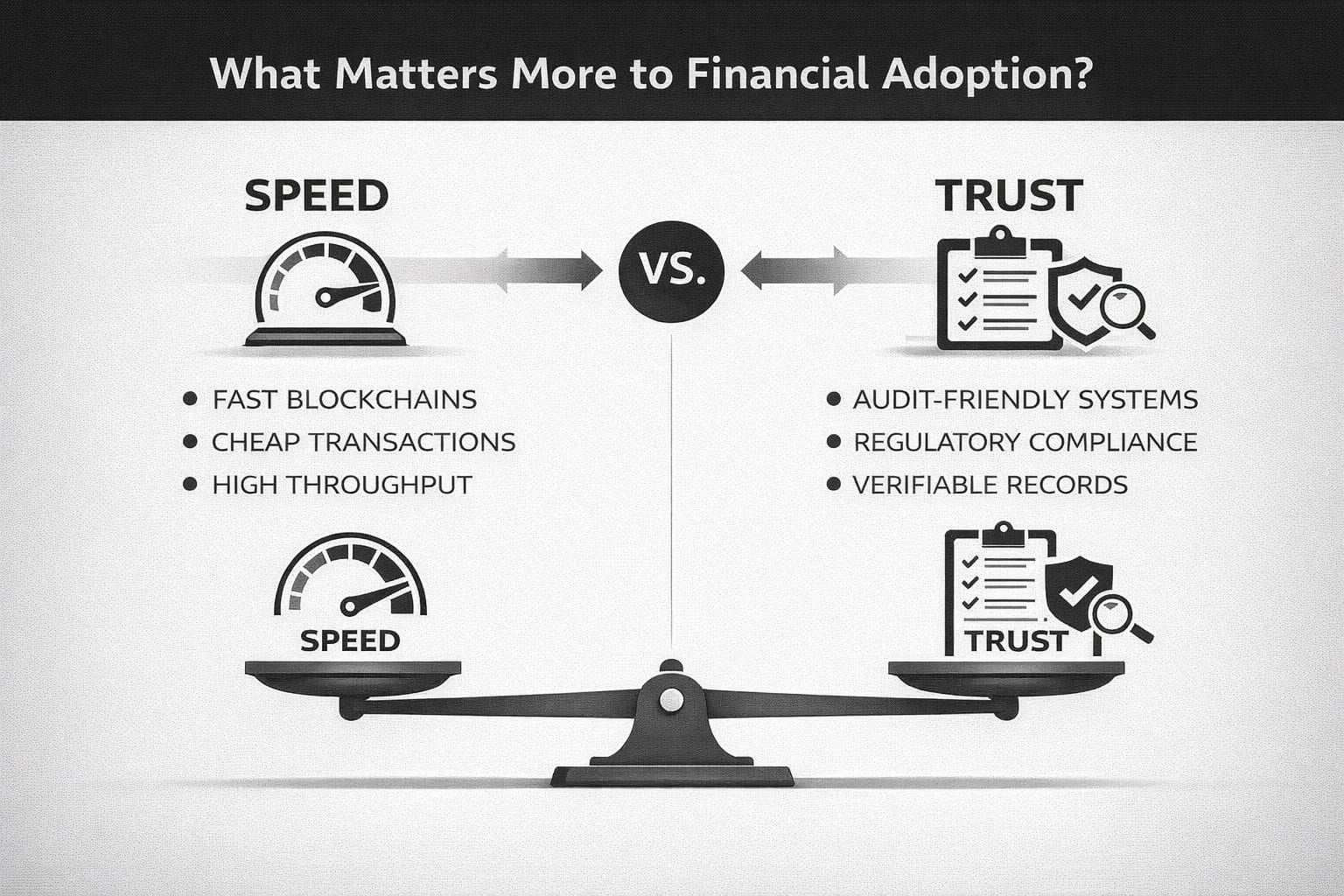
That matters because audits aren’t edge cases in finance they’re routine. Systems that make review painful eventually get replaced, no matter how efficient they are on paper.
Speed can be improved over time. Trust can’t.
In regulated markets, adoption follows systems that are easy to review defend and explain. Dusk’s focus on reviewability reflects that reality and that’s what makes its infrastructure relevant beyond experimentation.
