

Privacy has always been one of blockchain’s hardest design problems. Hiding data is relatively easy proving that hidden actions are valid is not. Many privacy-focused networks lean heavily toward confidentiality only to discover later that complete opacity creates problems around audits, disputes, and compliance. Dusk approaches this tension differently by treating confidentiality and auditability as requirements that must coexist not compete.
At the protocol level Dusk does not aim to make all data invisible forever. Instead it designs transactions so that sensitive information remains confidential by default while proofs of correctness remain accessible when verification is required. This distinction is subtle but important. Rather than exposing transaction details the network relies on cryptographic proofs that allow validators and authorized parties to confirm outcomes without learning the underlying data.
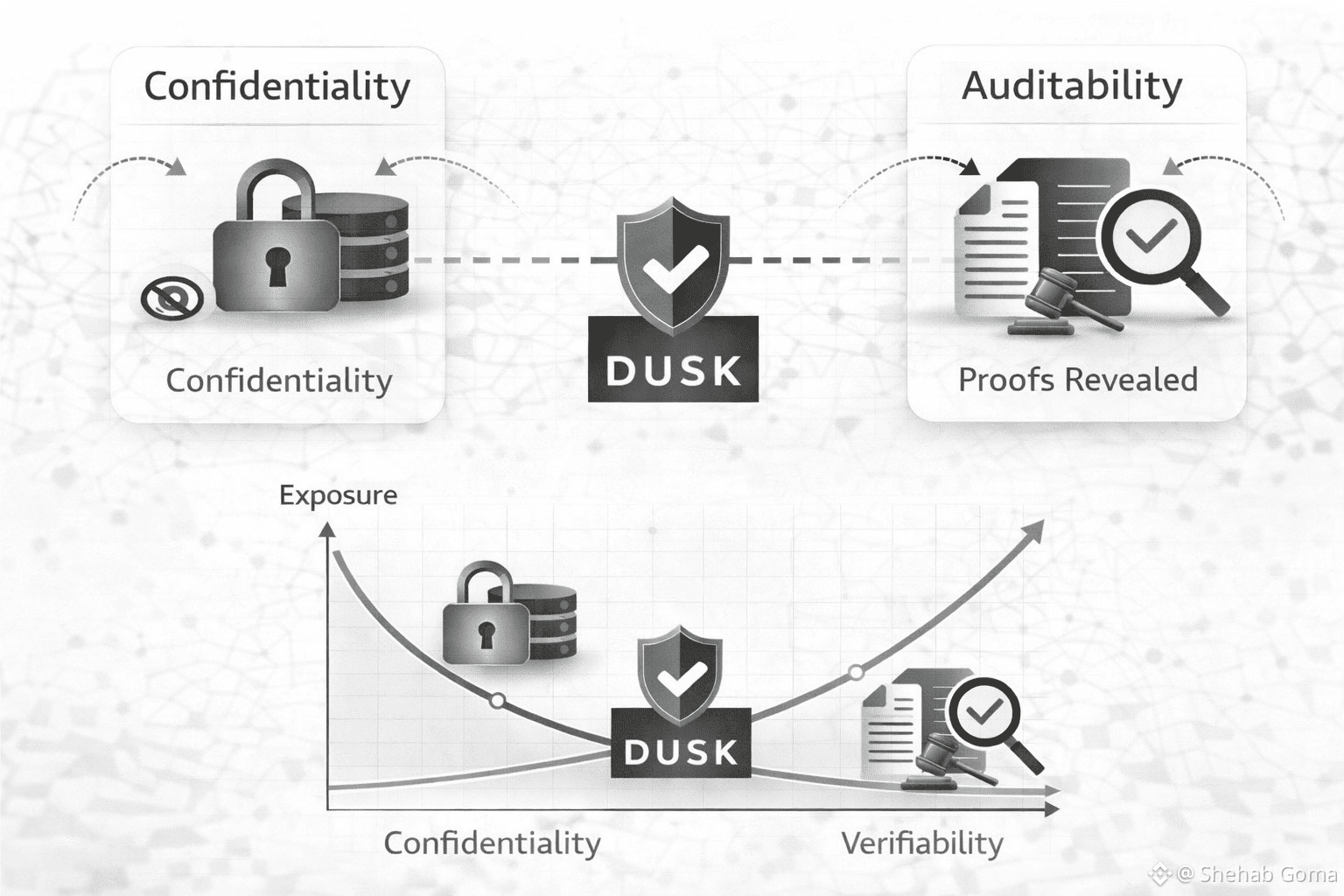
This design choice affects multiple layers of the system. Transaction validation is structured around proving state transitions rather than revealing state itself. In practical terms, the network checks whether a transaction is valid not what the transaction contains. This separation allows confidentiality to exist without weakening consensus or trust assumptions.
Auditability enters through selective disclosure mechanisms. When disputes arise, or when regulatory or institutional checks are required, specific proofs can be revealed without opening the entire transaction history. This avoids the “all-or-nothing” privacy model seen in some privacy chains, where verification becomes impossible once data is hidden. Dusk’s approach acknowledges that real-world financial systems require accountability paths even when privacy is a priority.
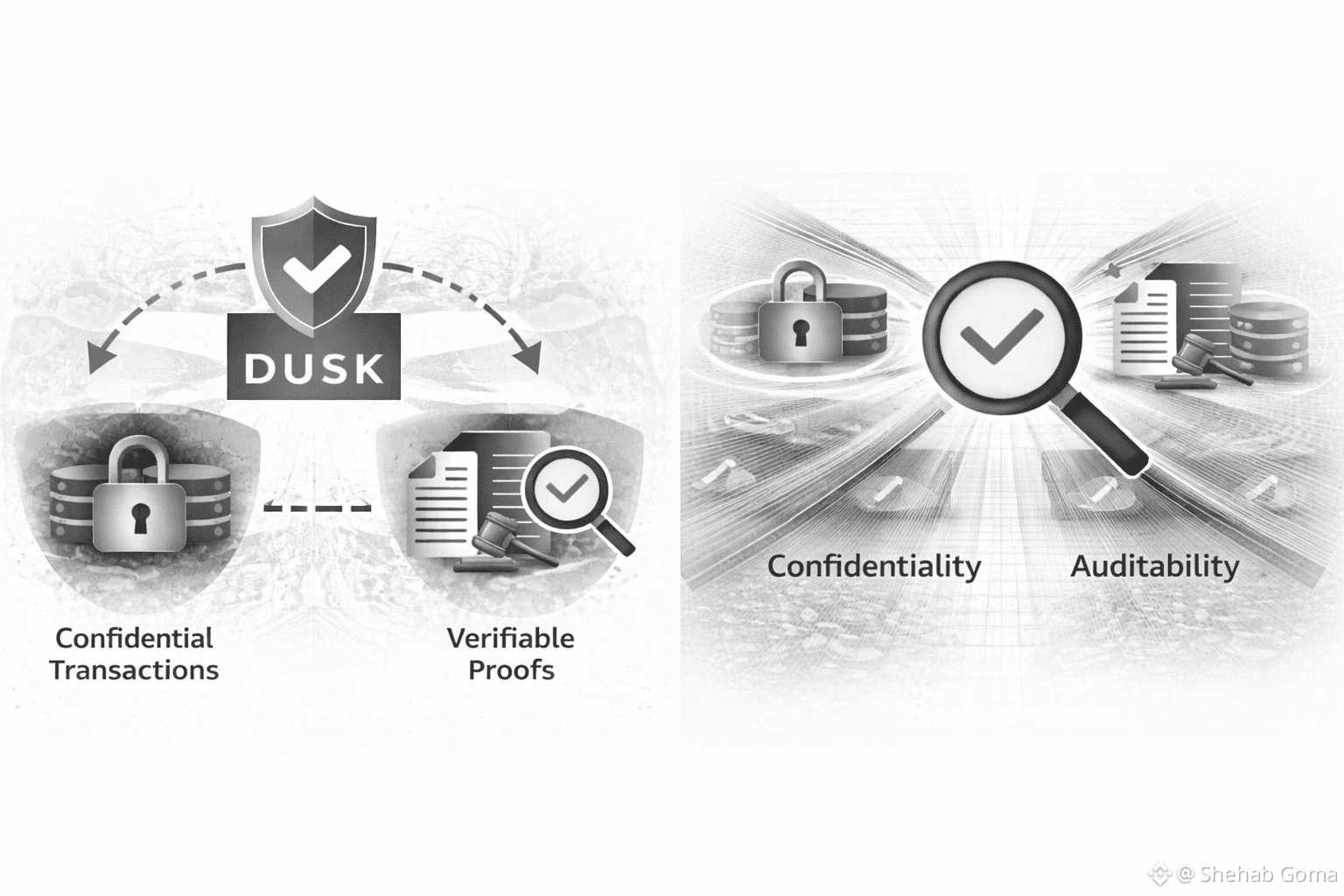
From a broader market perspective, this balance positions Dusk differently from traditional privacy coins. Those systems often optimize for anonymity at the expense of usability in regulated or institutional contexts. Dusk instead targets environments where privacy must coexist with legal and operational constraints such as compliant finance tokenized assets or enterprise use cases.
There are trade-offs. Designing confidential systems with verifiability adds complexity and places higher demands on cryptographic correctness. It also requires careful governance around who can access proofs and under what conditions. However, these challenges reflect real adoption requirements rather than theoretical ideals.
As blockchain infrastructure matures the question is no longer whether privacy is important but whether it can function within systems that still demand trust verification and accountability. Dusk’s protocol-level design offers one possible answer privacy that does not disappear when proof is required.
