
Let’s be real: in a crypto scene stuffed with big promises, Walrus quietly does the heavy lifting. While everyone’s busy making noise, this protocol just moves terabytes of real-world data behind the scenes—keeping AI models, NFT collections, and even esports archives running without a hiccup. Walrus isn’t just another storage solution on Sui. For developers and enterprises, it’s a foundation—turning raw data into something you can actually trust, use, and trade. If you’re building in Web3 or trying to ride the AI wave, you’ll want to pay attention. Walrus is setting up the groundwork for tamper-proof, scalable data markets that could completely change how we handle and believe in information.
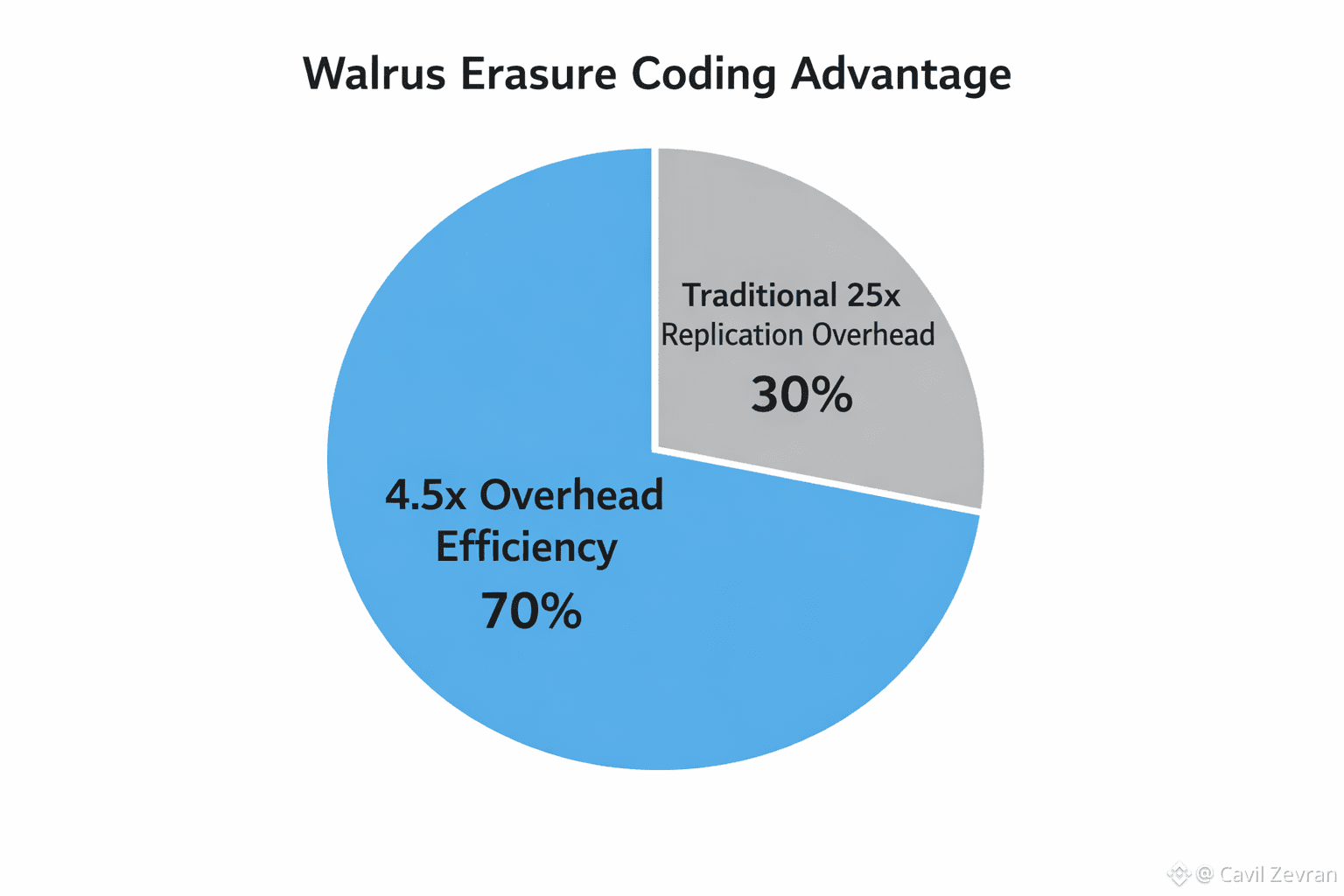
Here’s the gist. Walrus is a developer platform tightly woven into Sui’s blockchain, focused on decentralized storage that protects your data from the moment you upload it to the moment you need it back. Old-school systems waste tons of space with clunky replication, but Walrus flips the script with two-dimensional erasure coding. Imagine splitting files into shards, then spreading them out with built-in backups across both rows and columns. The result? The network can lose up to two-thirds of those shards and still recover your file without breaking a sweat. And it does all this with a fraction of the overhead—just 4.5x instead of the bloated 25x you see elsewhere. Each chunk of data, or “blob,” can be massive—up to 1GB—so it handles everything from giant datasets to hours of video. Plus, every blob is an on-chain object, so you can program it with Move smart contracts. Set expiration dates, manage who gets access, or even transfer ownership—no outside oracles messing things up.
Now, let’s get into the techy stuff. Walrus uses something called Proof of Availability (PoA) to make sure your data’s always there when you need it. Basically, nodes create certificates every epoch—these are tied to Sui checkpoints—so you can prove they’re online and doing their job, but without burning through resources. If there’s a problem, the system launches an asynchronous, Byzantine-fault-tolerant challenge protocol. It uses randomness and cryptographic evidence to settle disputes—no need to rely on strict timing, which never works out in messy, real-world networks anyway. This setup keeps things efficient but still ironclad. And if shards go missing? Nodes work together to rebuild them, using cryptographic commitments to keep everything honest. Metadata’s smart too. Vector commitments mean partial recoveries and moving shards around won’t let anyone sneak in fake data.
But here’s what matters: Walrus actually delivers. It’s not just some whitepaper project. Look at Team Liquid, the esports powerhouse. By January 21, 2026, they’d already moved over 250 TB of content—3.5 million blobs—onto Walrus. It’s a real-world stress test, and Walrus passed. Humanity Protocol trusts it with 10 million credentials. Projects like Pudgy Penguins, Everlyn, and Cudis use it for NFTs and media, slashing off-chain storage costs. The partnerships keep coming. Linera brings in fast transaction processing for big data, Talus lets AI agents store and handle data right on-chain, Baselight builds a new data economy, and Itheum manages data tokenization. And Walrus isn’t stopping at Sui—it’s already making moves to support Ethereum and Cosmos by early 2026, expanding its reach without sacrificing what makes it fast and reliable.
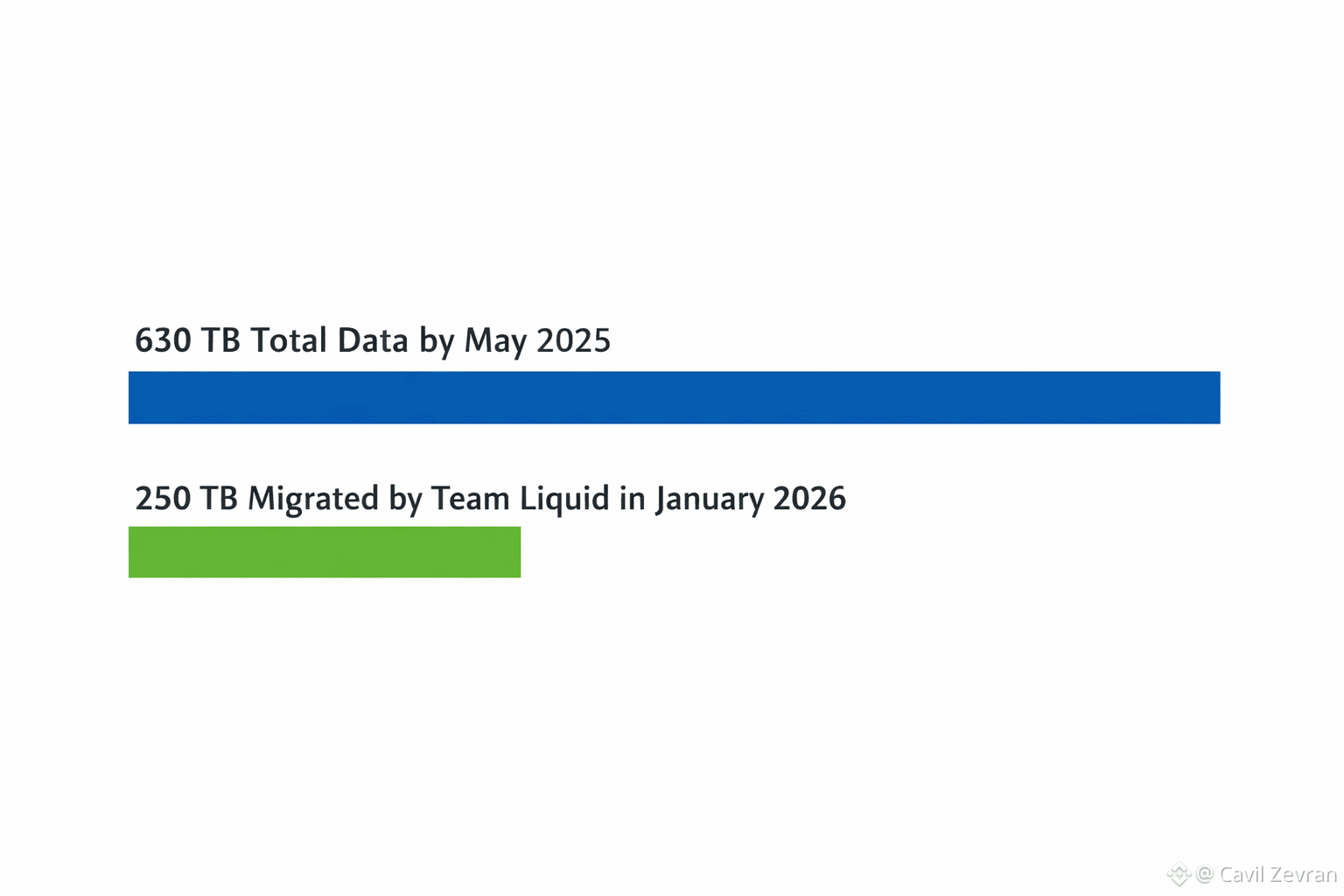
Operationally, Walrus launched its mainnet on March 27, 2025. By May, it had 103 storage node operators handling 7.5 million blobs—a total of 630 TB. That’s not just growth; it’s explosive adoption. Walrus runs a modular setup, using an external blockchain to handle node sign-ups, epoch transitions, and incentives. This leaves the storage layer focused and efficient. The system stays nimble, secure, and ready to adapt. For smaller files, the Quilt feature bundles them for efficient encoding—saving resources and making uploads smoother, even if your internet connection isn’t great.
What really sets Walrus apart? It’s not just about storing data; it’s about making it valuable and provable. Developers can spin up open data marketplaces where AI results are actually trustworthy, DeFi transactions get verified in real time, and media stays dynamic and tamper-resistant. AI teams love it because you can trace and protect every version of your data, using tools like Seal for access control. Walrus isn’t chasing hype. It’s real infrastructure, built for economic alignment. Storage rights become assets you can actually enforce, not just vague promises.


