

I’ve spent a good amount of time reading and researching Dusk Network, and the more I looked into it, the clearer one thing became. This project is not designed to capture attention quickly. It is designed to operate in environments where mistakes are costly and trust is non-negotiable. In an ecosystem where many blockchains compete on speed, hype, or narrative momentum, Dusk feels intentionally different.
From what I can tell, Dusk was never meant to be a playground for short-term speculation. It was built with regulated finance in mind from the beginning. That single design choice explains much of how the network behaves, how it evolves, and why it rarely appears exciting on the surface. Real financial systems do not move loudly. They move carefully, under rules, audits, and long decision cycles. Dusk appears comfortable operating within that reality.
One of the first things that stood out to me is how Dusk approaches privacy. In much of crypto, privacy is treated as an extreme choice. Either everything is exposed on a public ledger, or everything is hidden through anonymity. Both approaches create problems for institutions. Full transparency undermines confidentiality. Full anonymity conflicts with compliance. Dusk takes a more practical path.
On Dusk, transactions can remain private by default while still being verifiable. The network can prove that rules were followed without broadcasting sensitive information publicly. This matters in practice. Financial institutions do not want positions, strategies, or client data visible to competitors. At the same time, regulators need the ability to audit activity when required. Dusk’s architecture is built to support this balance at the protocol level rather than bolting it on later.
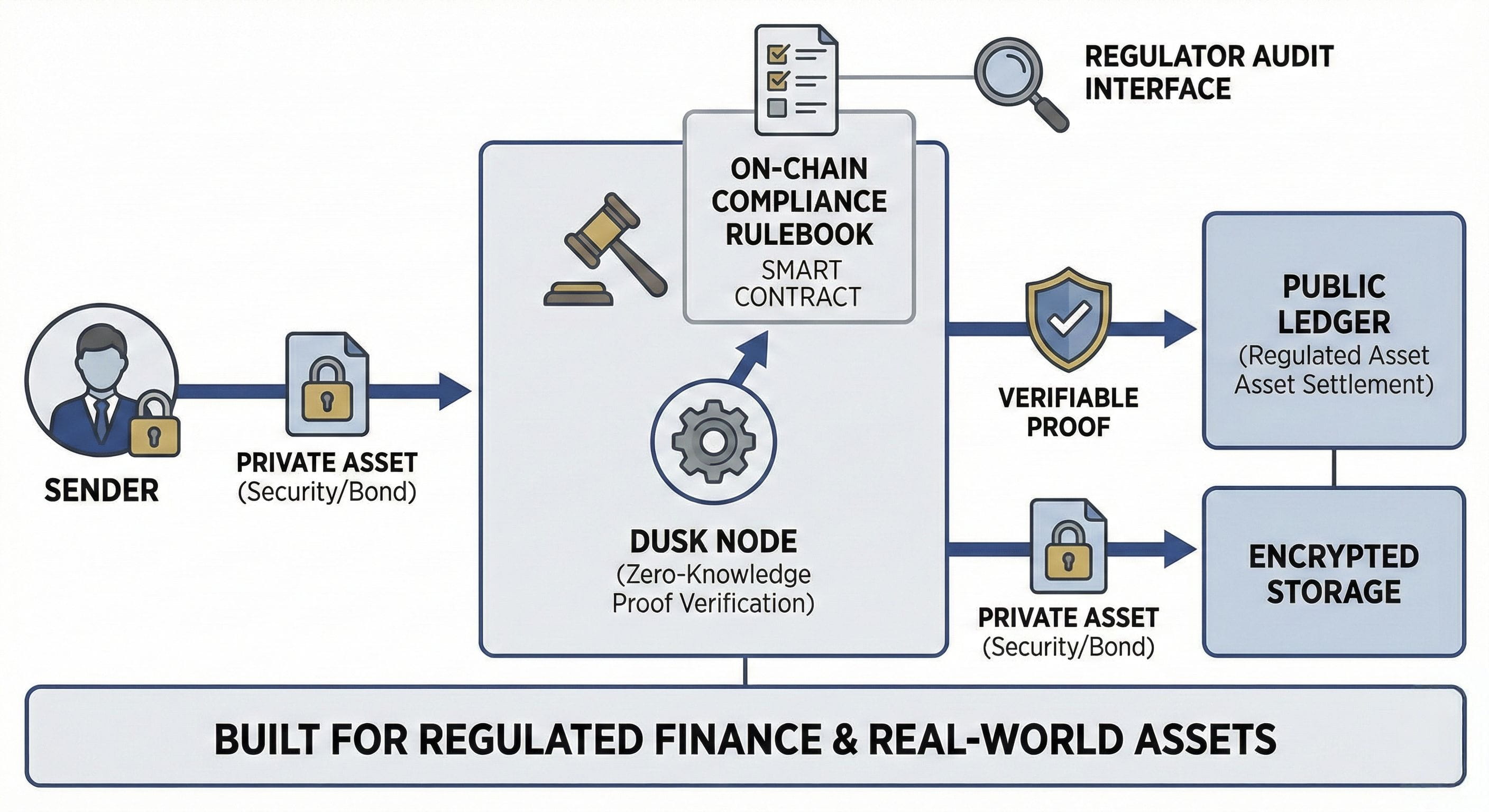
As I went deeper, it became clear that Dusk is less focused on traditional DeFi and far more focused on real-world assets. Securities, bonds, shares, and structured products are central to its vision. These assets behave very differently from speculative tokens. They come with legal constraints, transfer restrictions, investor qualifications, and reporting obligations. Most blockchains either ignore these realities or push them off-chain. Dusk incorporates them directly.
Rather than relying on trusted intermediaries or external agreements, Dusk embeds compliance rules into smart contracts themselves. Assets are aware of who can hold them, under what conditions they can move, and what disclosures apply. This reduces ambiguity and operational risk. In traditional finance, much of the cost comes from reconciling rules after transactions occur. Dusk aims to make those rules executable from the start.
The project’s timeline also stood out to me. Dusk has existed since 2018, yet it took several years before mainnet went live. In crypto, that is unusual. Many projects rush to launch and refine later. Dusk took the opposite approach. The team spent years on cryptographic research, consensus design, and regulatory alignment, particularly in Europe. From my experience, that level of patience usually signals a focus on long-term performance rather than short-term market reaction.
When mainnet finally launched, it did so quietly. There were no large campaigns or dramatic announcements. The network began producing blocks, settling assets, and running infrastructure. That transition said more about the project than any marketing push could. Functional systems tend to demonstrate value through reliability, not excitement.
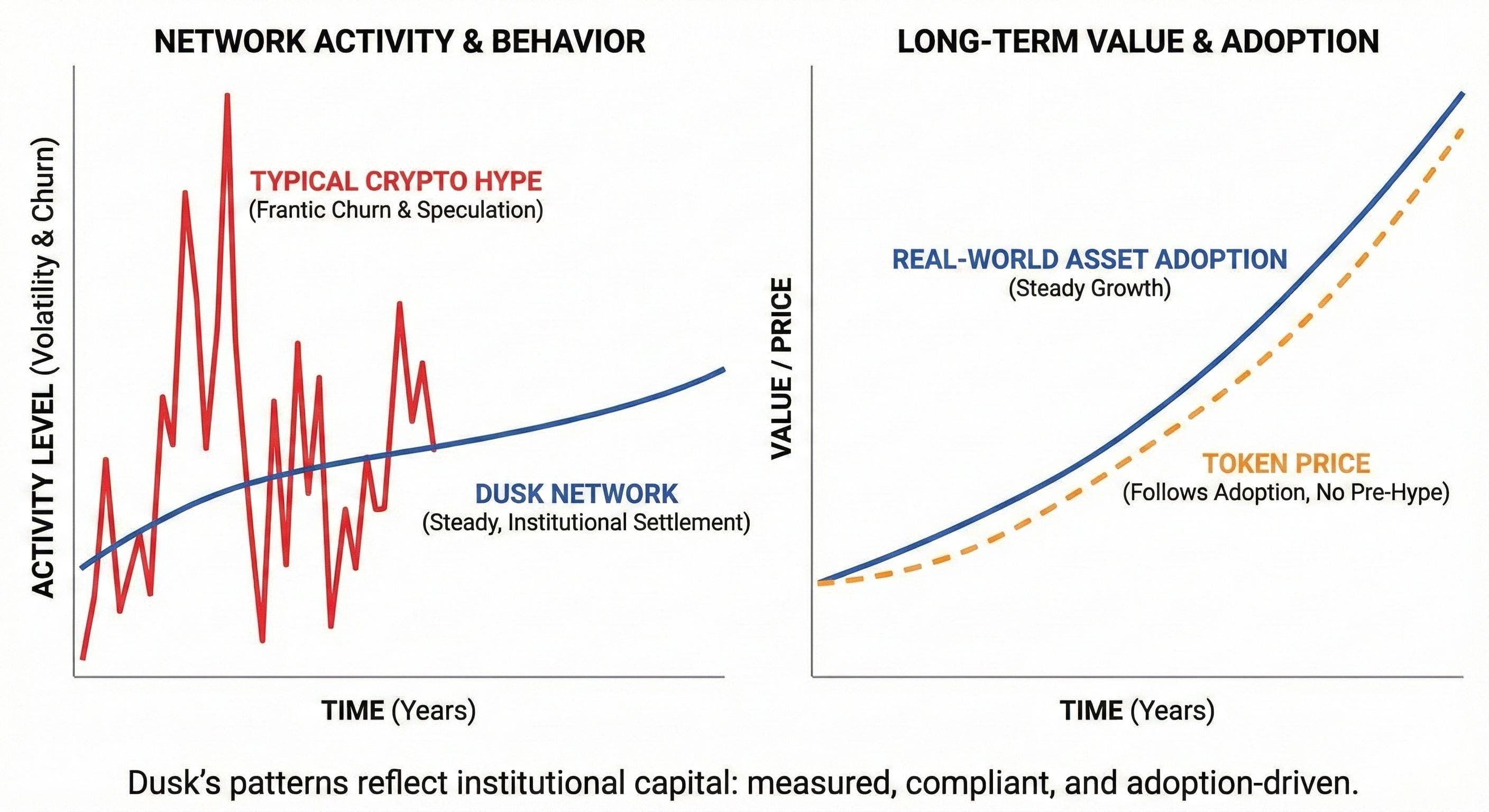
I also paid attention to how participants behave on the network. Activity patterns do not resemble retail-driven trading environments. There is little frantic movement or constant churn. Assets tend to settle and remain in place. That behavior aligns closely with how institutional capital operates. It enters carefully, works within defined constraints, and avoids unnecessary motion. In this context, the lack of hype is not a weakness. It is a signal.
Incentives follow the same philosophy. Rewards are steady rather than aggressive. There is no pressure to continuously loop capital or chase yields just to remain competitive. This discourages short-term behavior and attracts participants who value continuity. In my view, systems often fail when incentives are too loud. Dusk keeps them measured.
Governance is similarly restrained. Changes are infrequent and deliberate. That may frustrate those who prefer rapid experimentation, but in regulated finance predictability often matters more than novelty. Institutions can manage volatility. What they struggle with is disorder. Dusk reduces that risk by design.
What ultimately convinced me was the type of capital that appears comfortable in the ecosystem. Short-term traders tend to lose interest quickly. Builders and institutional participants tend to remain. That distinction says a lot. Dusk does not try to entertain the market. It aims to earn trust over time.
This approach is not without risk. Growth can be slow. Regulatory progress is uneven across regions. There is no retail frenzy to disguise quiet periods. Price tends to follow adoption rather than anticipate it. For some, that feels uninteresting. For long-term capital, it feels honest.
After spending time with the project, my conclusion is straightforward. Dusk Network is not trying to win attention. It is trying to integrate with how real finance already operates, while improving the parts that are slow, opaque, or inefficient. If regulated assets continue moving on-chain, networks built with this mindset will matter far more than louder alternatives.
Dusk is not built for noise.It is built for settlement, compliance, and trust.And that is usually where real finance ends up.
