
Digital money isnt just about flashy crypto anymore it is going mainstream and two big players are shaping the game CBDCs Central Bank Digital Currencies and stablecoins Both are digital cash but they come from very different worlds Think of CBDCs as the governments digital version of your wallet while stablecoins are private companys flexible fast moving cash
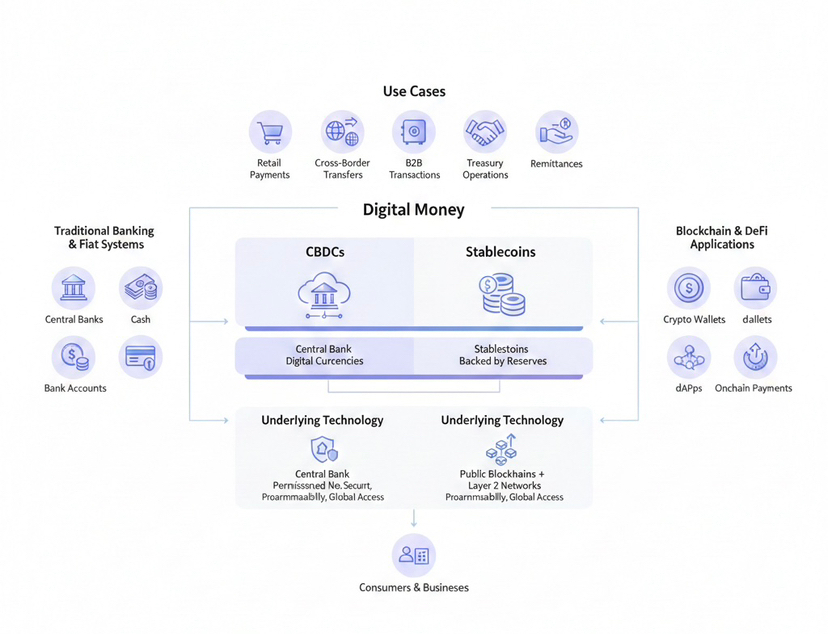
Here is the lowdown
CBDCs are straight from the central bank Stablecoins come from private companies or crypto protocols
CBDCs are backed by state reserves Stablecoins use a mix of collateral code or algorithms
CBDCs focus on policy stability and financial inclusion Stablecoins focus on payments speed and global reach
By the end of this you will know who is who in digital money and why both matter for the future of finance
CBDCs Government Backed Digital Cash
CBDCs are digital money issued directly by a countrys central bank Unlike your bank account this is a liability of the state itself It is like cash but digital with rules baked in
Retail CBDCs are for everyday people buy groceries pay rent get your salary Wallets might have privacy tiers but the central bank still watches the flow
Wholesale CBDCs are for banks and financial institutions Think fast settlement of trades real time gross settlements RTGs and Delivery versus Payment DvP magic
Governments are pursuing CBDCs for faster payments financial inclusion and more control over the economy Plus CBDCs are a hedge against private digital money eating into government control
Real world examples include Bahamas Sand Dollar Nigeria eNaira and China e CNY Some are live some in pilot but the trend is clear governments are waking up to digital cash
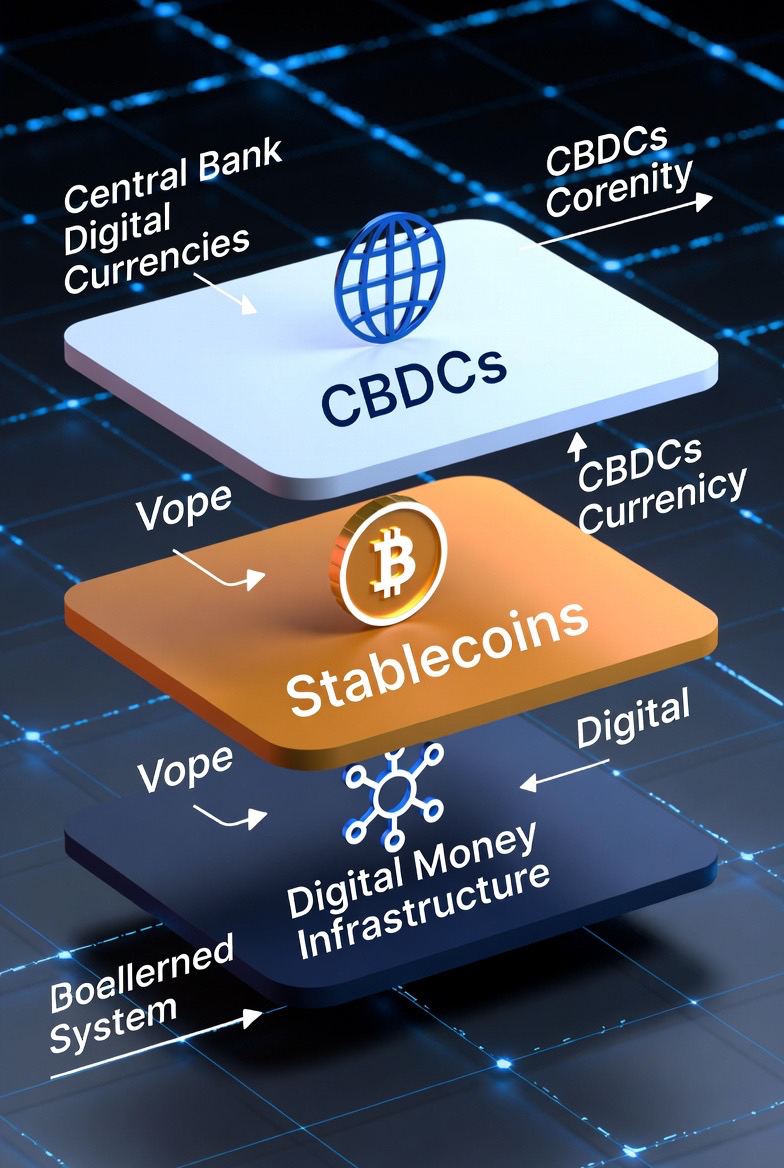
Stablecoins Private Digital Money
Stablecoins are crypto tokens pegged to a stable value dollars euros gold or even algorithms Their goal Keep value steady while being fast global and programmable
Fiat backed stablecoins include USDT and USDC pegged 1 to 1 to dollars
Commodity backed stablecoins are backed by gold or other assets like PAXG and XAUT
Crypto backed stablecoins are over collateralized with volatile crypto like USDS and LUSD
Algorithmic stablecoins use code to manage supply Terra UST failed spectacularly
Hybrid and yield bearing stablecoins combine reserves with smart contracts sometimes generating yield like FRAX or Ondo USDY
Stablecoins are already huge In 2024 transfers hit 27.6 trillion dollars beating Visa and Mastercard combined They power cross border payments remittances and treasury operations for businesses
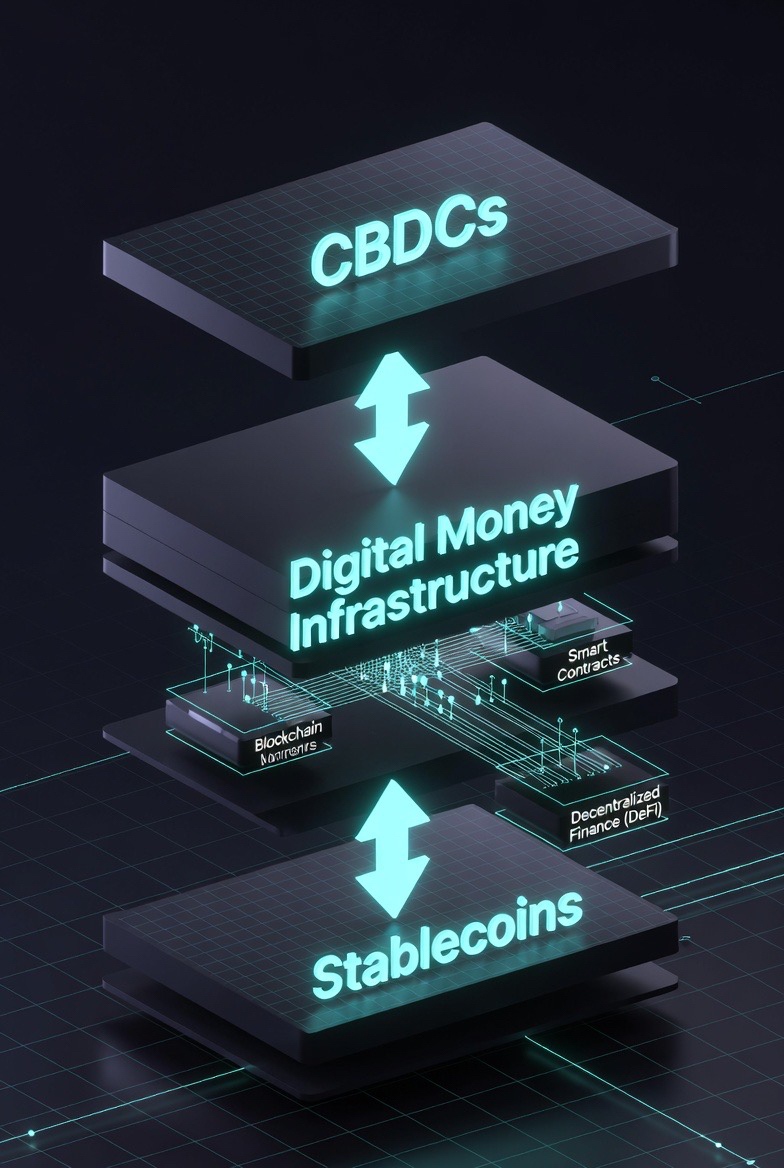
CBDCs vs Stablecoins Head to Head
Governance CBDCs are controlled by the central bank with regulated intermediaries Stablecoins are managed by private issuers or decentralized protocols
Legal Status CBDCs are legal tender Stablecoins are not legal tender they are treated as regulated assets
Backing CBDCs are backed by sovereign reserves Stablecoins are backed by fiat crypto commodities or algorithms
Privacy CBDCs offer tiered privacy with government oversight Stablecoins run on public blockchains some with optional privacy tech
Technology CBDCs use permissioned centralized networks Stablecoins run on public blockchains Layer 2 networks or hybrid systems
Policy Role CBDCs integrate with monetary policy Stablecoins are market driven with no policy control
Resilience CBDCs can be vulnerable to single point of failure Stablecoins use multi chain redundancy but issuer risk remains
Bottom line CBDCs offer stability oversight and policy tools Stablecoins offer speed flexibility and global reach but with higher risk
Risks and Challenges
CBDC risks include privacy erosion because the central bank can see your transactions potential government overreach programmable money tech vulnerabilities downtime or hacks could hit everyone and disintermediation reducing bank lending
Stablecoin risks include depegging if reserves fail transparency issues if proof of reserves is unclear regulatory uncertainty algorithmic failures Terra UST taught a hard lesson and concentration risks relying heavily on one issuer or blockchain
Global Implications
Stablecoins mostly reinforce the US dollar while CBDCs allow countries to assert monetary sovereignty settle payments instantly and reduce reliance on the dollar Cross border CBDC projects like mBridge show the potential for real time foreign exchange fewer intermediaries and geopolitical maneuvering
In the EU authorities are all in on CBDCs plus regulated stablecoins MiCA and the Digital Euro
In the US the focus is stablecoins first CBDCs are debated GENIUS Act 2025 passed but retail CBDCs face political resistance
Who Uses Them
Businesses use stablecoins for global payments and pilot CBDCs for system integration
Financial institutions provide custody settlement and treasury operations
Developers and fintechs build apps integrate wallets and ensure compliance
Policymakers craft tech neutral rules for privacy interoperability and cross border use
Individuals can explore CBDC wallets use transparent stablecoins and balance privacy with convenience
#plasma
The Takeaway
CBDCs and stablecoins show two paths for the future of money
CBDCs are government backed stable policy driven with privacy tradeoffs
Stablecoins are flexible global fast but carry issuer and tech risks
The future of money isnt either or it is a mix Governments and private innovators are shaping a world where you can pay save and move money digitally faster smarter and more connected than ever

