
The crypto world loves a good speed contest. Who’s got the highest TPS? The lowest fees? The flashiest DEX? We’ve been racing to make blockchains faster and cheaper, but here’s the uncomfortable truth: most chains are still just glorified databases on steroids. They move money quick, sure, but they don’t think. They don’t learn. They don’t coordinate anything beyond basic if-this-then-that scripts.
And that’s starting to feel… outdated.
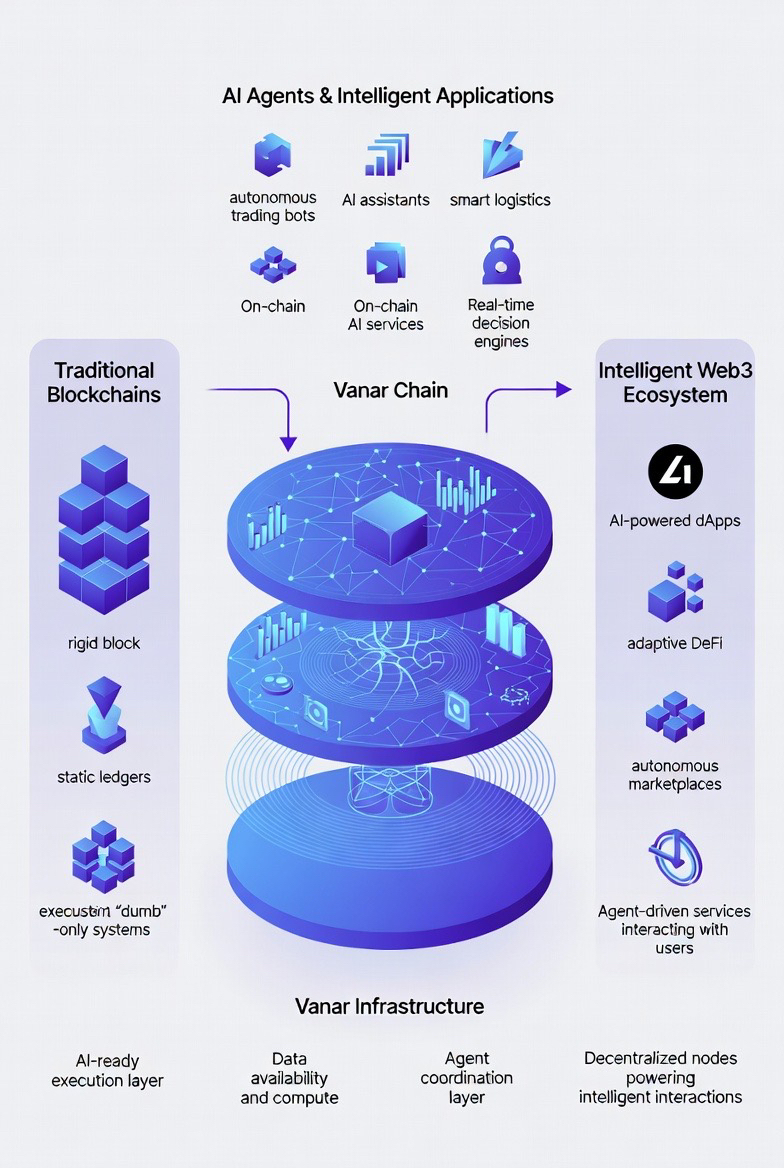
We’re heading into an era where AI agents aren’t sci-fi anymore—they’re the next wave of on-chain actors. These little autonomous programs could manage portfolios, negotiate trades, personalize experiences, handle compliance for tokenized real-world assets, or even run entire DeFi strategies without human babysitting. But right now, they’re stuck. Most blockchains treat AI like an afterthought: you run inference off-chain on some centralized server, store “memory” in a vector database owned by who-knows-who, and pray the data doesn’t get fragmented or censored. The result? Clunky user experiences, broken composability, and zero real intelligence baked into the protocol itself.
That’s where #vanar Chain quietly changes the game.
Vanar isn’t another L1 trying to out-Ethereum Ethereum on gas prices (though it’s EVM-compatible, fast, and cheap). It’s built from day one as an AI-native infrastructure stack. Think of it as a five-layer architecture designed specifically for intelligent workloads: the base modular L1 handles the secure, scalable foundation; Neutron provides semantic memory that compresses and stores data in ways AI can actually understand and reason over; Kayon powers decentralized inference so agents can think and decide on-chain with sub-second speeds. It’s not bolting AI on top—intelligence is the protocol.
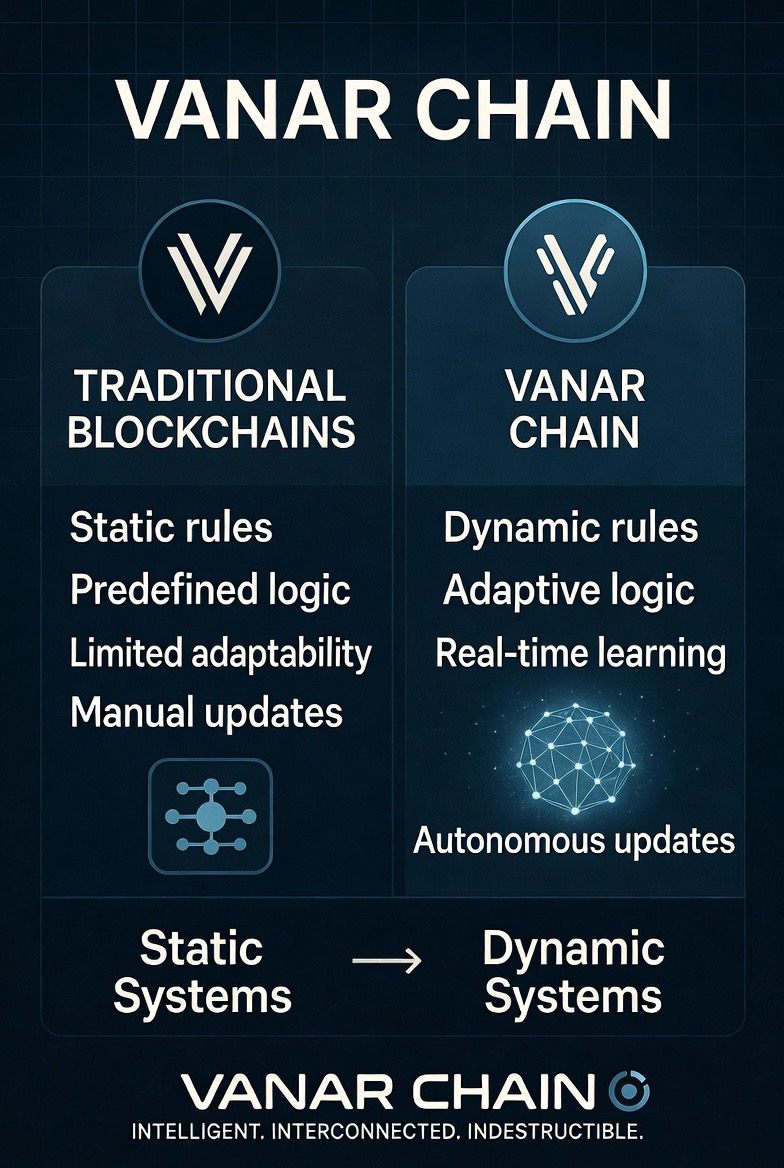
What does that mean in practice? Real utility, not hype. AI agents on Vanar can have persistent, on-chain memory that doesn’t vanish when a session ends. They can reason semantically—understanding context instead of just crunching numbers. Transactions become “semantic,” meaning they carry meaning and intent. This unlocks stuff like autonomous PayFi (smart payments that adapt to context), tokenized RWAs with built-in compliance logic, intelligent gaming NPCs that evolve, and dApps that actually learn from usage over time.
Without chains like this, we get the dystopian alternative: chains obsessed with raw throughput but empty inside. Ecosystems full of ghost towns—high TPS, zero meaningful activity. AI agents forced back into centralized silos because decentralized memory and reasoning are too expensive or impossible. Liquidity stays fragmented across chains with no smart coordination. Data silos everywhere, making true cross-chain intelligence a pipe dream. We end up with a crypto that’s fast but dumb—great for bots pumping memes, terrible for building the intelligent, agent-driven economy everyone keeps promising.
Vanar flips the script. It’s part of the bigger shift we’re seeing: crypto moving from pure execution speed to intelligence and coordination. The old phase was about making money programmable. The next phase is making it intelligent—agents that remember, reason, act, and evolve. Vanar positions itself as foundational plumbing for that world. It’s not competing in the TPS beauty pageant; it’s building the arena where AI agents can actually live and thrive on-chain, without leaning on Big Tech servers.
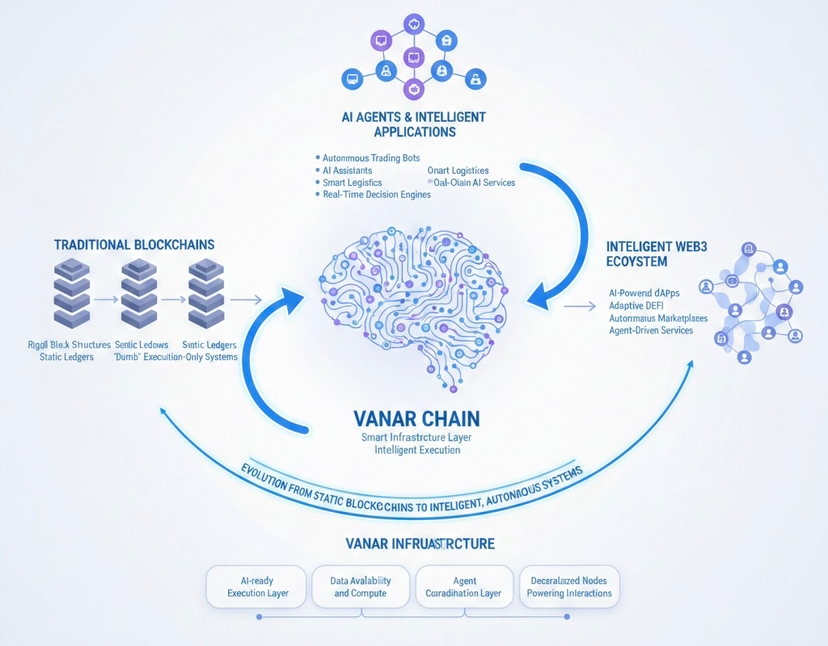
Imagine a future where your wallet isn’t just a key holder—it’s an intelligent companion powered by on-chain reasoning. Where tokenized real assets aren’t static entries but dynamic, compliant entities managed by agents that understand regulations in real time. Where gaming worlds have NPCs that adapt to players over months, not scripted loops. That’s not incremental improvement. That’s infrastructure-level change.
In a sea of chains fighting to be the fastest horse, Vanar is quietly becoming the track they all need to run on. Because in the end, speed without smarts is just noise. And the next bull cycle won’t reward noise—it’ll reward chains that make crypto feel alive.
Vanar Chain isn’t optional anymore. It’s becoming necessary.
