
When markets turn volatile, headlines about “whales fleeing” always surface first.
But the data tells a more nuanced story - not all whales are the same, and not every sell-off comes from the same kind of weakness.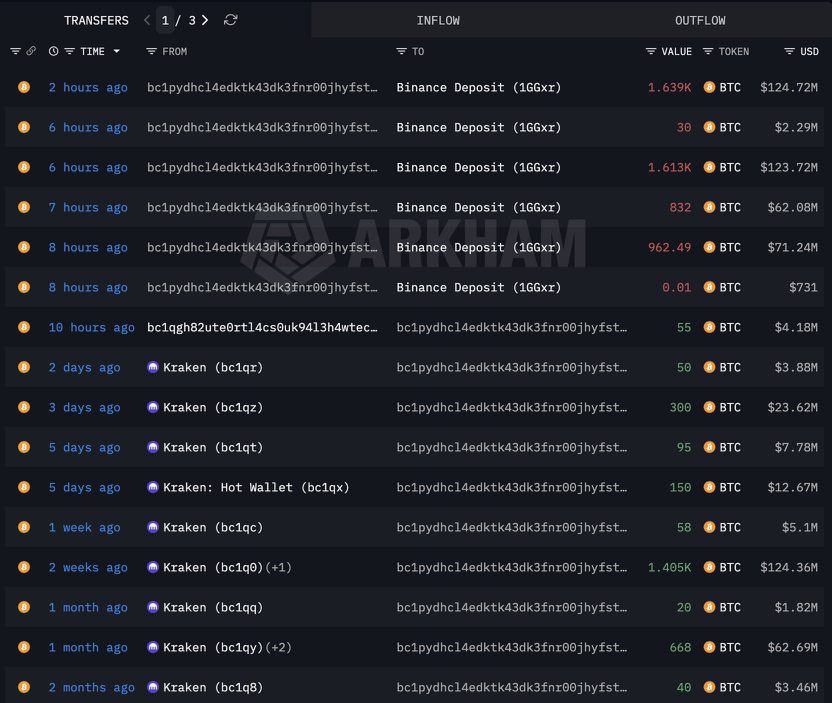
Figure 1 clearly illustrates a classic panic-phase behavior: large wallets rapidly depositing BTC into Binance, with multiple transactions worth hundreds of millions of dollars within hours. This is no longer technical wallet reshuffling or routine rebalancing =>> it is explicit loss realization. As prices fall sharply, whales with leverage exposure, poor risk management, or liquidity pressure are forced to exit at any cost. The news calls it “whales running,” but in reality, this is capitulation ==> the surrender of weak capital.
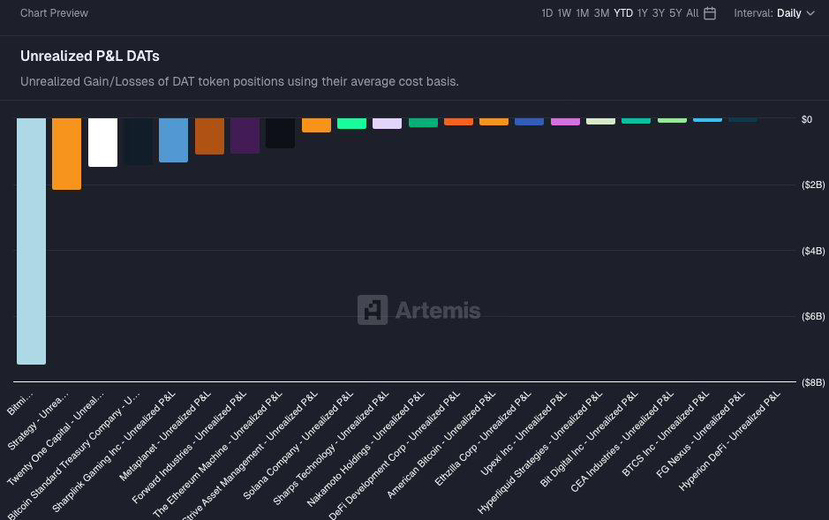
Figure 2, however, tells a very different — and far heavier - story. According to the latest data, the top 20 publicly listed companies holding digital assets are collectively sitting on more than $17 billion in unrealized losses. This is not short-term speculative capital. These are institutions that have embedded crypto directly into their balance sheets, meaning they simply cannot “go away.”
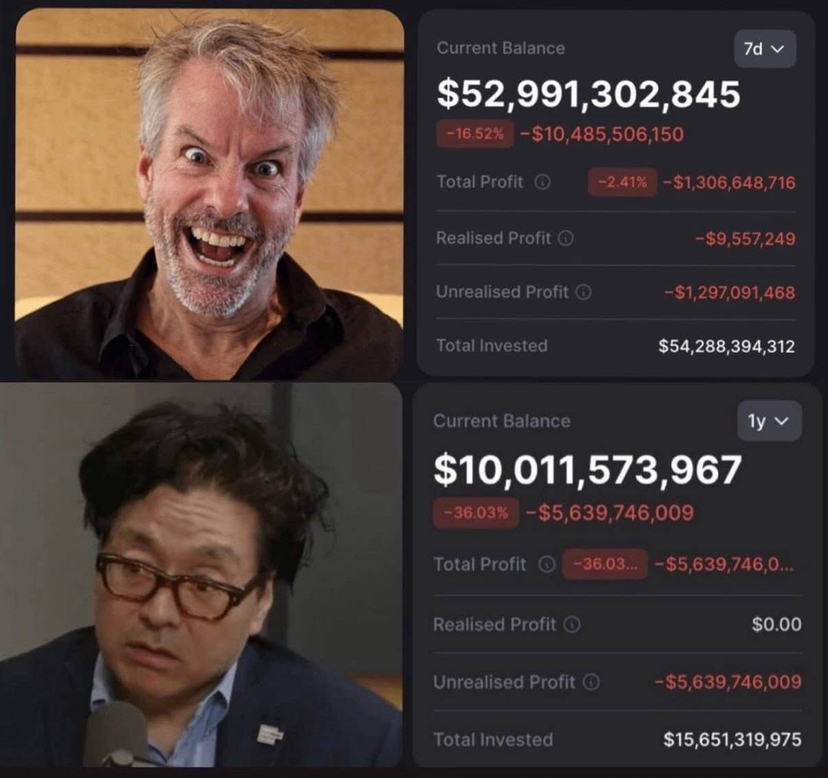
Leading the losses is Bitmine Immersion, associated with Tom Lee, accounting for nearly 44% of total unrealized losses, or over $7.5 billion, driven primarily by ETH purchases at an average price around $3,900. While these losses remain unrealized, they represent immense financial and psychological pressure as Ethereum moves through a prolonged drawdown cycle.
Following closely is Strategy, led by Michael Saylor, currently holding more than $2.2 billion in unrealized losses, with an average BTC acquisition price near $76,000. Despite Saylor’s unwavering long-term conviction, the P&L data makes one thing clear: even the strongest ideological holders are not immune to cyclical market stress.
Placed side by side, the contrast becomes obvious:
• On-chain whales: cutting losses quickly, exiting when pressure exceeds tolerance.
• Corporate whales: unable to exit, forced to endure losses and ride out the full cycle.
So when the news says whales are running and bleeding, the real question is not where the market goes next - but: Will you go away with the crowd, or choose the opposite when fear peaks?
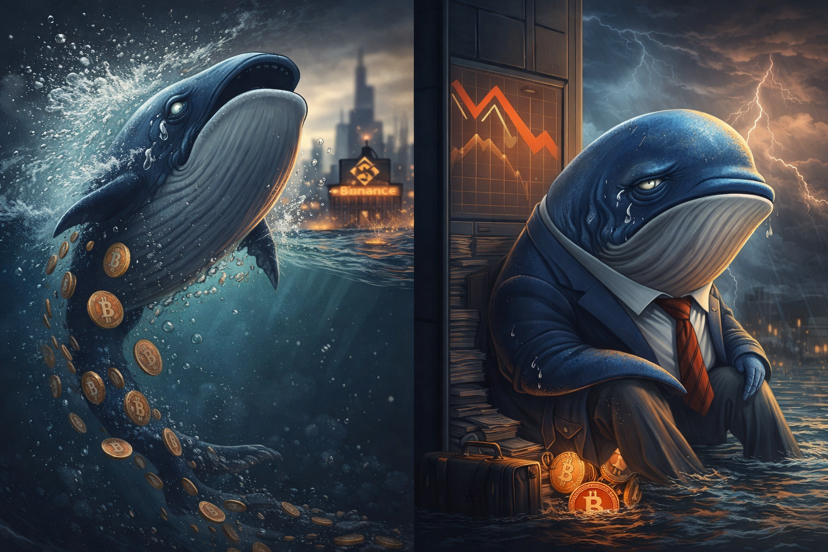
Markets are not driven by headlines. They are decided by who still has the strength to remain when fear has fully played out.
#Fualnguyen #LongTermAnalysis #LongTermInvestment