

In crypto, regulation is often painted as the villain. More rules, less freedom, end of discussion. That attitude sounds cool online, but it collapses the second real financial players show up. Banks, funds, and asset issuers don’t get to ignore the law just because a blockchain exists. They operate inside strict legal frameworks, whether they like it or not.
If a network wants to support real markets not just experiments it has to work within those rules. That’s where Dusk takes a different approach.
Instead of treating compliance as an afterthought, Dusk was designed from day one for regulated finance, especially within frameworks like the EU’s MiCA and MiFID II. The aim was never to give up privacy. The aim was to prove that privacy and regulation don’t have to cancel each other out on-chain.
Privacy isn’t about hiding from the law
One of the biggest misconceptions in crypto is that privacy equals secrecy. In regulated finance, that’s not how things work. Regulators don’t need to see everything. They need to know that rules are being followed.
What matters is verifiability.
Dusk uses zero-knowledge cryptography to make that distinction clear. Transactions stay private by default, but the network can still generate cryptographic proof that specific conditions are satisfied. Balance requirements, transaction validity, eligibility rules, and compliance checks can all be verified without exposing sensitive information.
Nothing is leaked. Nothing is blindly trusted. The proof speaks for itself.
Identity checks without turning users into targets
KYC and identity checks are unavoidable in regulated markets. The real problem is how most systems handle them — dumping personal data into massive databases and hoping nothing goes wrong. That’s a risk no one should be comfortable with.
Dusk avoids this by separating identity from activity.
Instead of placing personal information on-chain, Dusk relies on identity attestations. You can think of them as cryptographic proofs that confirm certain facts: this wallet passed KYC this entity is compliant, this participant meets jurisdictional requirements. The underlying documents and identity never needed to be revealed.
Smart contracts can require these attestations before allowing transfers or participation in regulated markets. Compliance happen automatically while user privacy remains intact.
Compliance that actually runs on-chain
Most compliance today still happens off-chain. It’s slow, manual, and expensive. Forms, reviews, approvals, delays. Dusk brings those rules into the protocol layer itself.
Through programmable compliance logic, attestations can represent things like sanction screening, investor classification, asset eligibility, or regulatory clearance. Smart contracts verify them instantly. If the rules aren’t met, the transaction simply doesn’t execute.
That shifts compliance from a human bottleneck to a deterministic system. Same rules. Same outcome. Every time.
Why audits matter more than hype
Institutions don’t chase narratives. They manage risk.
That’s why audits are non-negotiable. Dusk has undergone multiple independent security reviews across its protocol and tooling with a focus on both cryptographic integrity and system design. This matters for regulators and compliance teams who need confidence that the infrastructure can stand up to scrutiny.
Combined with cryptographic proofs, audits give regulators something rare in crypto: a system that can be examined without breaking privacy.
Why this matters for tokenization
Tokenized securities and real-world assets don’t escape the law just because they live on-chain. Ownership rules, transfer restrictions, reporting obligations none of that disappears.
Dusk’s architecture makes it possible to issue, trade, and settle regulated assets while staying inside legal boundaries. Privacy protects participants. Proofs protect the system. Compliance protects everyone involved.
That balance is exactly what institutions have been waiting for.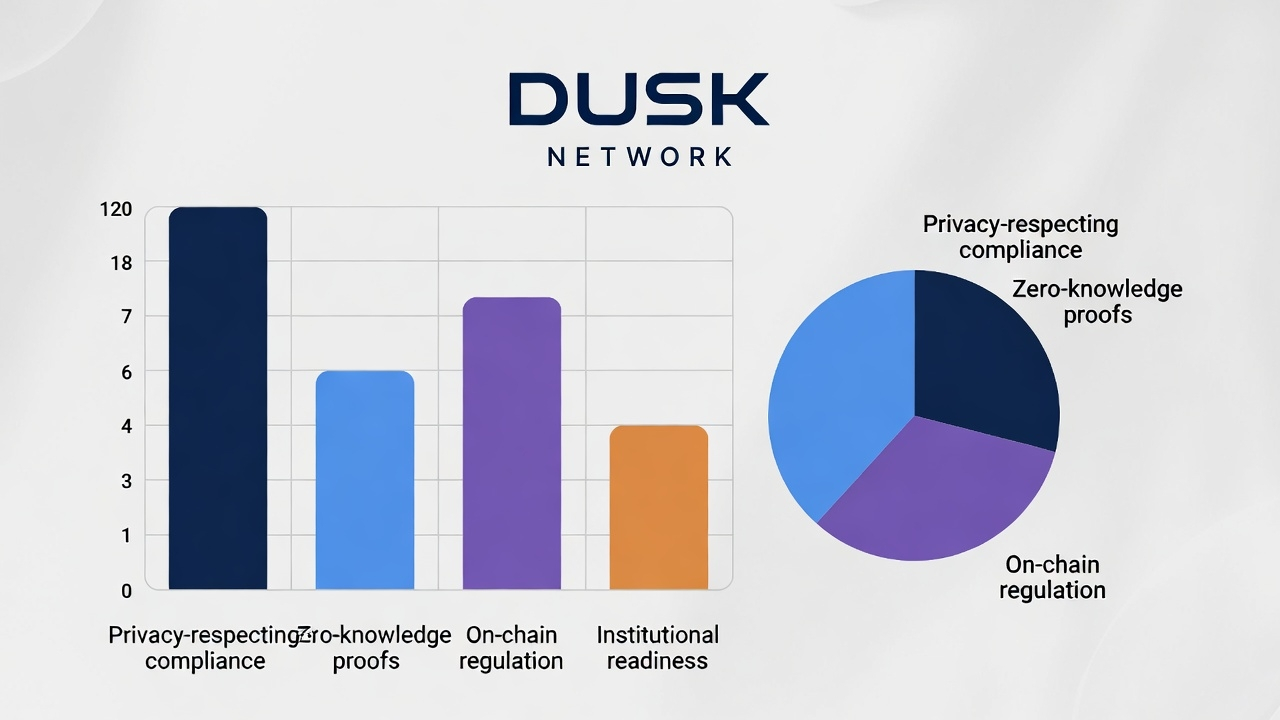
Being realistic about the limits
No blockchain magically solves regulation. Laws differ by region, interpretations change, and governance still matters. Dusk doesn’t replace lawyers or regulators. It gives them better tools to work with.
Real deployments still require trusted attesters, sound legal frameworks, and responsible governance. What Dusk removes is the unnecessary friction — the technical limitations that usually stop institutions from moving on-chain in the first place.
The takeaway
Dusk isn’t trying to rebel against financial law. It’s trying to modernize how compliance works on-chain.
Privacy by default. Compliance when required. Proof instead of exposure.
That’s not anti-crypto.
That’s crypto growing up.
