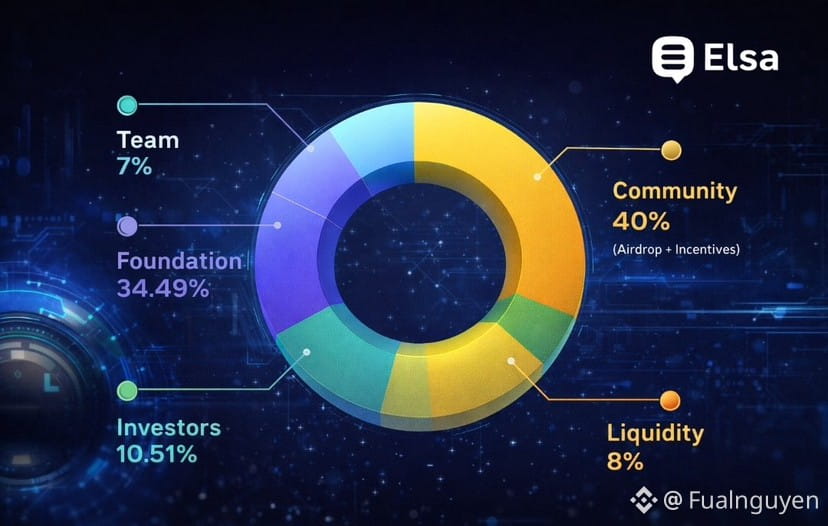
If Part 1 framed weak tokenomics as a structural issue across the market, Part 2 focuses on a more nuanced reality: Tokenomics rarely kill a project on their own. What truly pressures price is vesting — when it arrives at the wrong time.
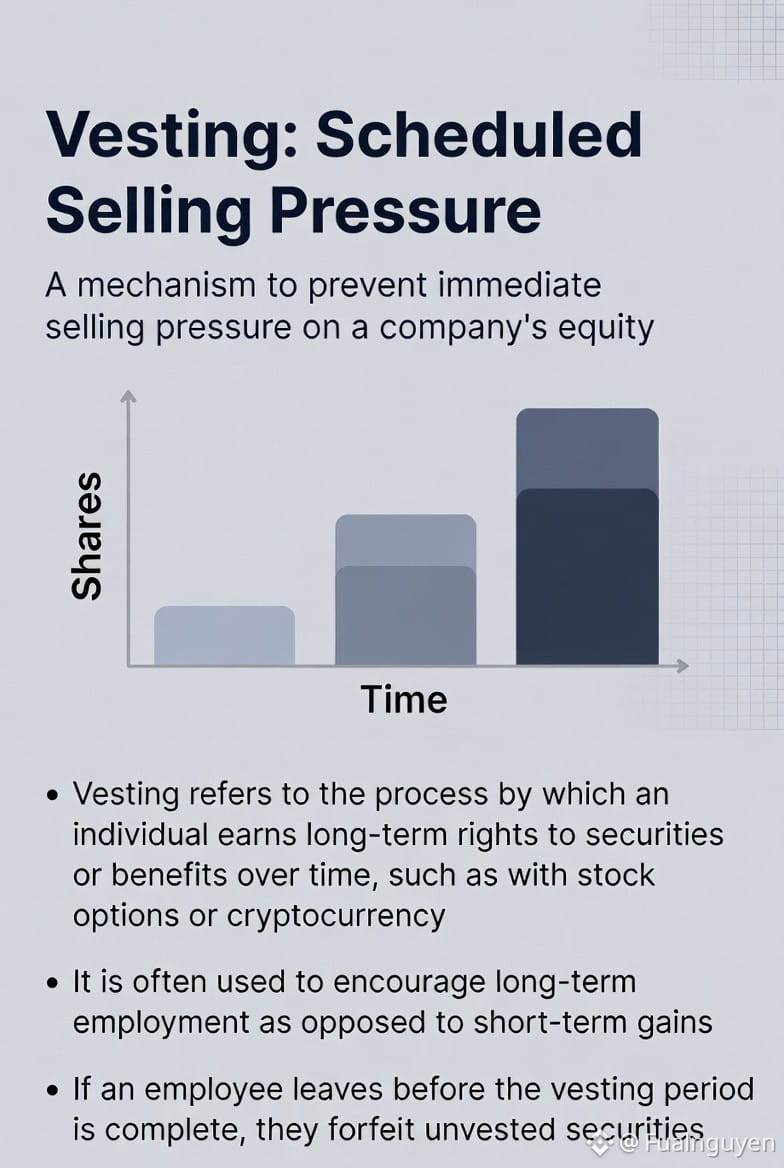
1. Vesting: Scheduled Selling Pressure
Markets can tolerate many imperfections: an unfinished product, an unclear narrative, a lack of immediate revenue. But markets never ignore supply that is guaranteed to hit the market.
By nature, vesting represents:
Identified future supply
Sellers with near-zero cost basis
Selling decisions detached from market sentiment
In a low-liquidity environment, vesting stops being a future risk and becomes present selling pressure.
2. The Common Mistake: Evaluating Vesting in an Ideal Market
Many tokenomics analyses implicitly assume:
“The market will always have enough capital to absorb new supply.”
Reality tells a different story:
Bull markets are not continuous
Capital flows are cyclical and selective
Not every project benefits from the same narrative
Vesting works well in bull markets, but in sideways or bearish conditions, it can become a multi-quarter drag on price.
3. Who Is Vesting Matters More Than How Much
Not all unlocked supply is equal:
Team / Founders: selling for risk diversification - understandable
Early VCs: selling to meet IRR targets and fund lifecycles - almost inevitable
Incentives / Rewards: selling due to lack of holding incentives
A token with modest vesting can still underperform if supply ends up in the wrong hands, while a token with larger vesting may fare better if:
Lockups are long
Unlocks are gradual
Real demand exists to absorb supply
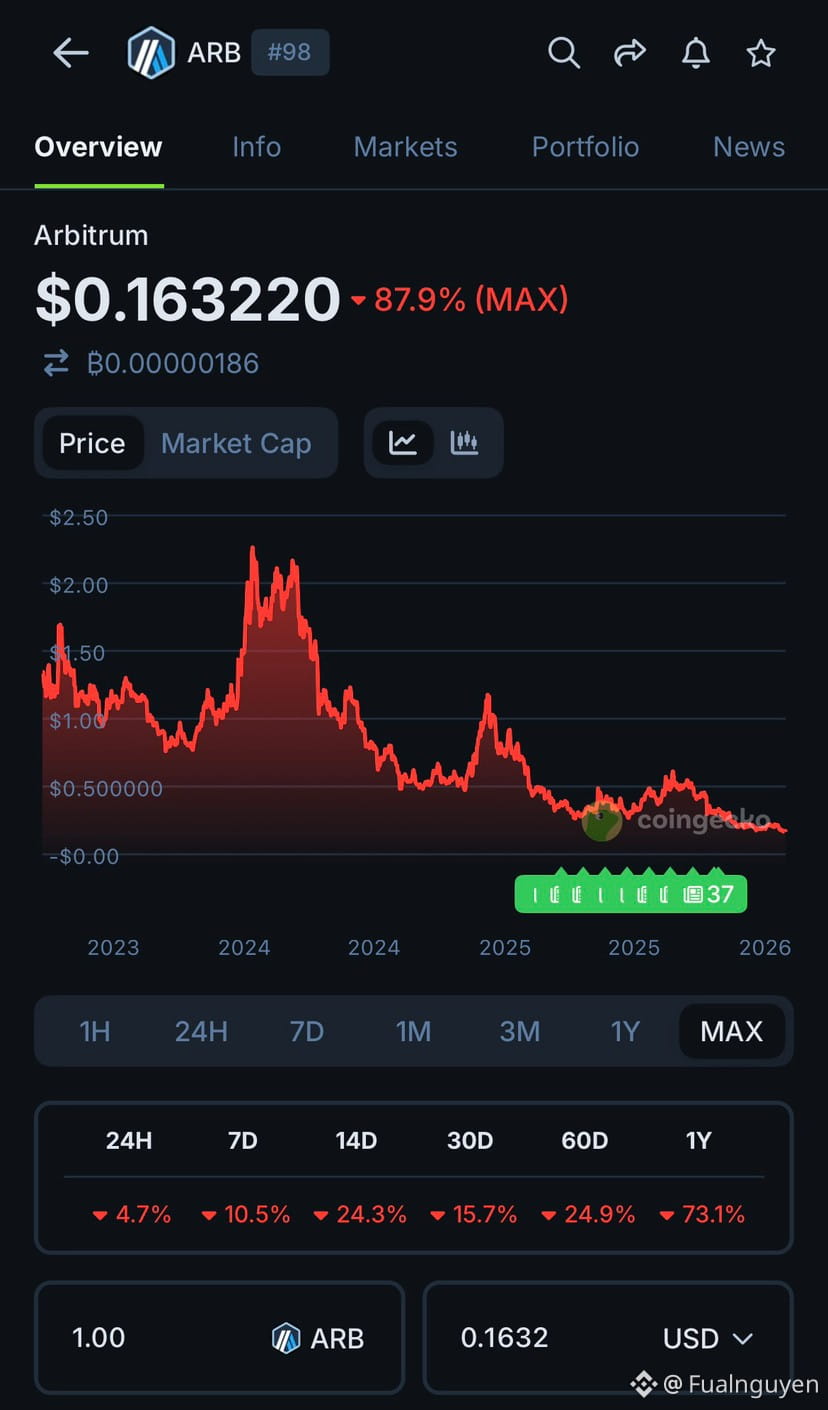
4. Case Study: Arbitrum (ARB) — Sound Tokenomics, Persistent Vesting Pressure
Arbitrum offers a clear real-world example.
Tokenomics on Paper
Total supply: 10 billion ARB
Allocation follows industry standards:
DAO Treasury
Team & Advisors (long-term vesting)
Investors (long-term vesting)
Airdrop & ecosystem distribution
From a design perspective, ARB does not suffer from poor tokenomics. Vesting is transparent and structured to avoid sudden supply shocks.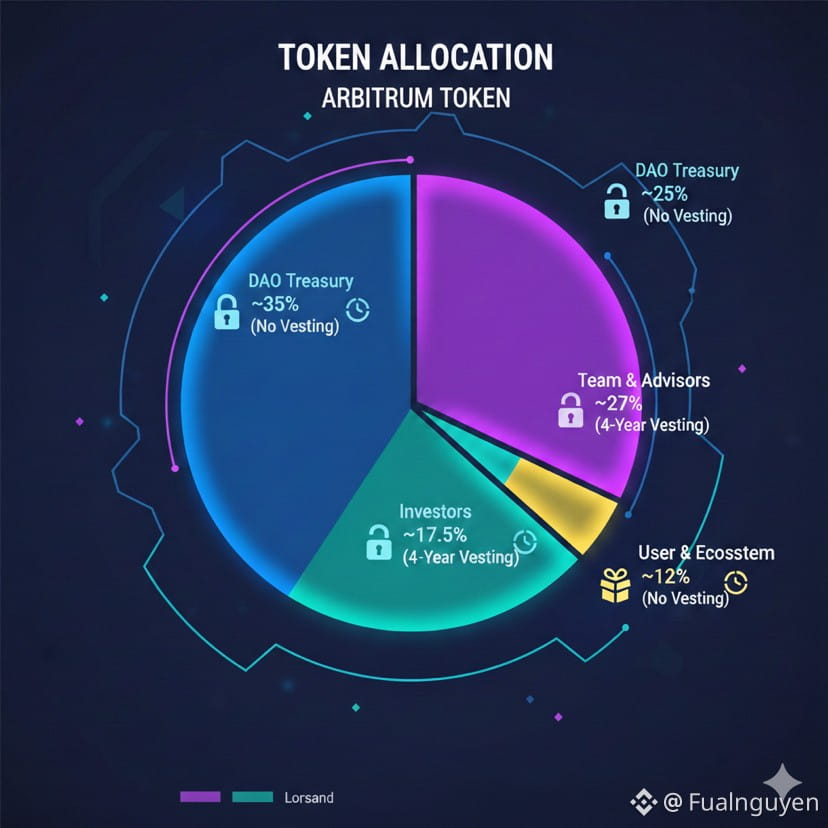
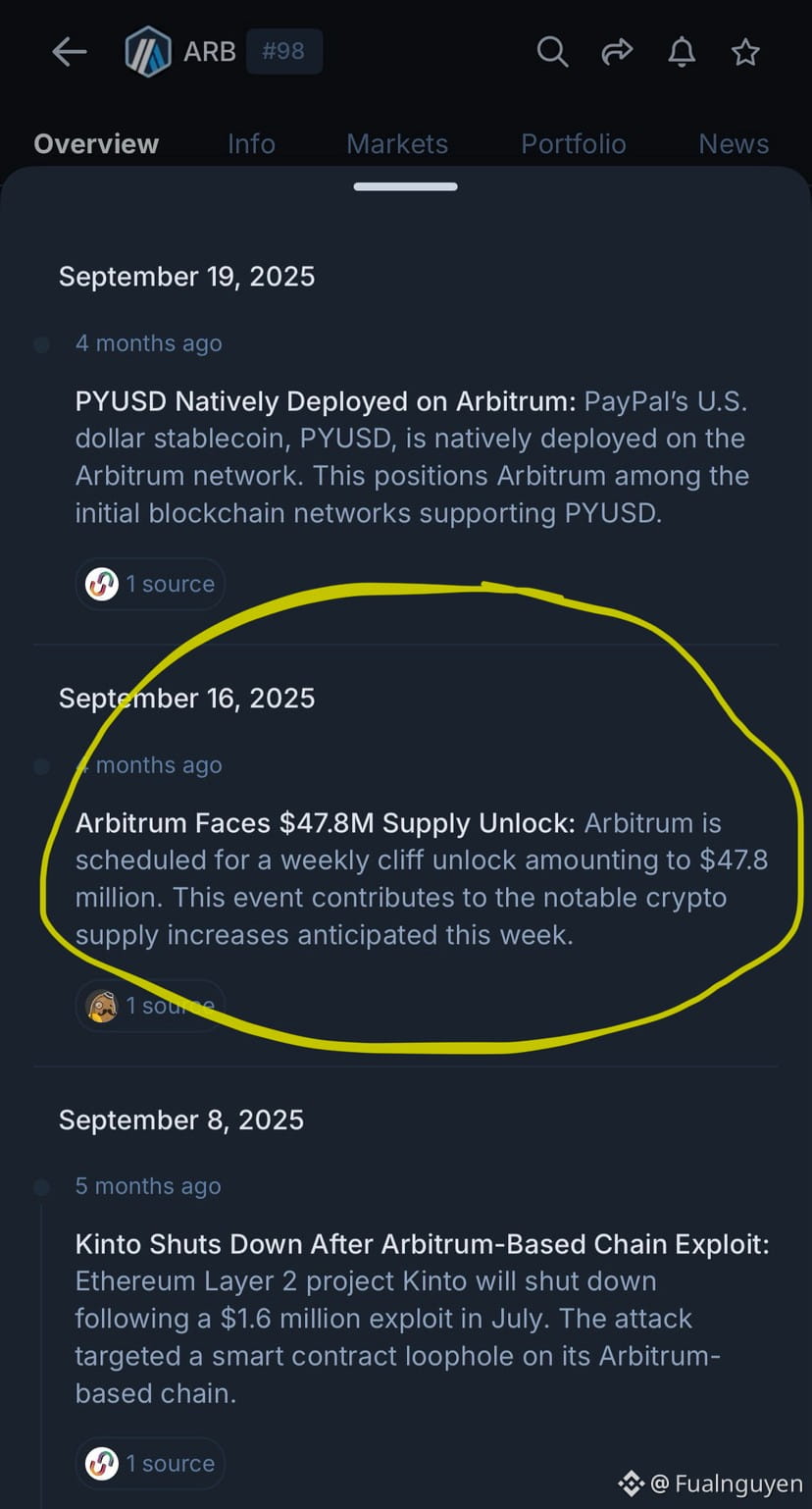
The Real Issue: Cliff Expiry in a Weak Liquidity Environment
After the one-year cliff ended, ARB entered a phase of:
Large initial unlocks
Followed by steady monthly releases over several years
The first major unlock led to:
Increased exchange inflows
Visible selling from insiders and early investors
Short-term negative price reactions
Not because the tokenomics were flawed, but because: New supply entered the market when there was insufficient opposing liquidity.
A Second Constraint: Utility That Doesn’t Absorb Supply
ARB functions primarily as a governance token:
Network usage continues to grow
On-chain activity improves
But demand for holding ARB does not scale proportionally with network adoption
As monthly supply unlocks continue, and demand remains largely speculative, sustained upside becomes difficult.
5. Good Tokenomics Can Still Fail When Timing Is Wrong
The Arbitrum case highlights a broader lesson:
Solid token design does not guarantee strong price performance
Transparent vesting does not eliminate selling pressure
Timing matters as much as structure
Correct tokenomics + poor timing = continued price pressure.
6. Investor Takeaways for 2024–2026
In the current cycle, tokenomics are no longer tools for finding upside — they are tools for managing downside risk.
Instead of asking:
“Is the vesting schedule heavy?”
Ask:
Who receives the unlocked tokens?
Do they have incentives to hold?
What capital is positioned to absorb that supply?
Vesting is not inherently bad. Tokenomics are not the enemy.
But in a liquidity-selective market, vesting at the wrong time can suppress price for multiple quarters — even for fundamentally sound projects like Arbitrum.