


Chaos is forgiven by retail crypto since it can be profitable. Institutions don't. They have a legal, reputational and operational disadvantage. That disparity makes a basic rule: in case you are constructing regulated finance, stability is not something nice. It's the product.
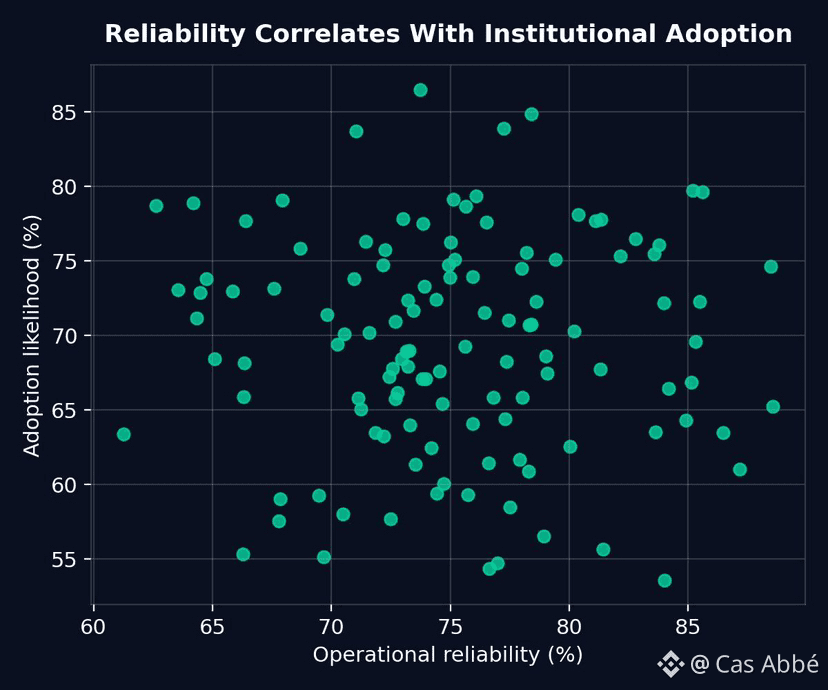
The reliability stance by Dusk appears in areas where ordinary readers do not go. Slashing design is one of them. Dusk has defined soft slashing as a mechanism that activates in case a node has failed to generate a block discouraging downtime but not considering it malicious. It is a message with a faint touch: there has to be a penalty on untrustiness, but there must be no system arranged where a single slip can bring down destruction. More in line with infrastructure operations thinking than casino thinking.
This is important in that validator economics influence validator culture. Excessive penalties will either drive operators too defensively or concentrate on a small number of large, professional players. When penalties are too weak, then you will get complacency and uptime drift. The approach taken by Dusk is that it does not want to promote destructive downtime, but rather it is realistic with regard to operations. The tradeoff is very apparent: weaker penalties may imply weaker deterrence unless the incentive system and the choice mechanisms make recurring unreliability non-profitable.
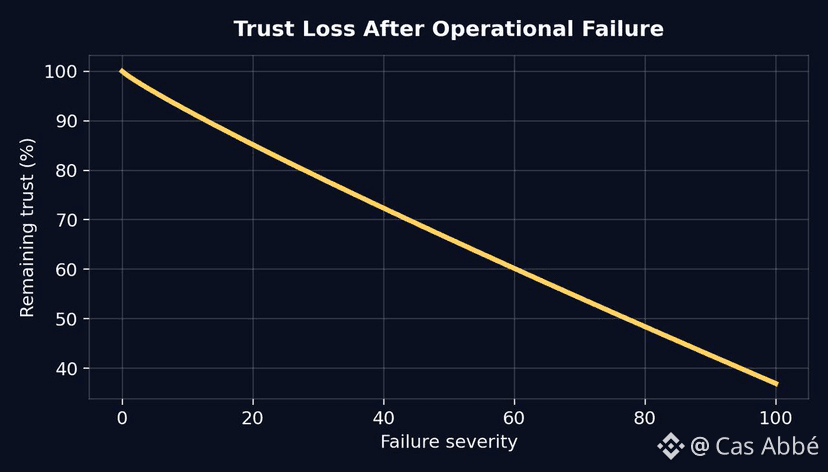
The same is the case with Tokenomics. According to what Dusk documents say, the DUSK token is the reward to participate in consensus, and the currency to pay fees with, and the migration of tokens to native DUSK is possible now that the mainnet is active. That detail of migration is important since it transfers the network out of the stage of token as idea to token as security budget. Real finance rails can only be real when the native asset is in fact securing the system which people are depending on.
Next there is the practical issue of two worlds: institutions desire controlled processes, developers desire common tools. The attempt by Dusk to bridge that gap is basically building DuskEVM and offer official bridging guidance. When you can allow developers to make use of generic EVM tooling, providing the institutions with privacy and auditability permissions, you lessen friction on both sides. However, new risks are also inherited with you: execution environments add surface area, and bridges add complexity.
The good news is that Dusk is not maximizing on attention. It is maximizing upon the sluggish compounding advantages of being dependable under control. The quiet chain of framing is applicable in this case since the idea is to become financial plumbing: ubiquitous, unspoken about, difficult to substitute.
The risk is the silent chain trap: unless adoption continues at a slow pace, the market will interpret the word boring to mean irrelevant. The narratives of infrastructure are difficult due to the fact that the worth of infrastructure is demonstrated by integration and not vibes. The very keys to success that Dusk frames in DuskEVM and integrating with partners assuming that the keys to success lie in execution and adoption implies that this team is aware that ideology is not the battlefield.
The true measure of Dusk is therefore not its ability to create a hype. Whether it can continue to add regulated actors, shipping integrations that make friction lower and demonstrating that privacy-plus-auditability is not merely a brand line but a tokenized market operating system remains to be seen.
Regulated finance, when transferred on-chain, can create a competitive moat in terms of its size. The winning chains will not be the most vocal. They will be the ones that do not leak sensitive behavior, do not break when they are upgraded, do not compel institutions to make a decision between compliance and confidentiality. The question remains open as to whether Dusk will be able to shift its emphasis to compounding adoption before the market becomes impatient.
