
When analyzing @Plasma , it’s important to avoid looking at it like a typical “new chain.” Plasma isn’t trying to win attention through features alone—it’s trying to design a system that supports real financial usage over time. Below is how each core aspect of the project fits into that thesis.
1. Vision & Core Philosophy
Plasma’s vision is simple but demanding: build infrastructure that can handle real economic activity, not just speculative traffic. Instead of positioning itself as a general-purpose chain for every possible narrative, Plasma narrows its scope toward payments and stablecoin-driven value transfer.
This matters because financial infrastructure doesn’t benefit from constant experimentation. It benefits from reliability, predictability, and uptime. Plasma’s philosophy reflects that trade-off clearly.
2. Architecture & Performance Design
Plasma is clearly optimized around throughput stability, not peak benchmarks. Many chains perform well in low-load environments but degrade under real demand. Plasma’s design choices aim to reduce fee volatility and performance drops as transaction volume increases.
This makes the chain more suitable for use cases where transactions are frequent and repetitive. For payments, settlements, or remittances, consistency matters more than theoretical max TPS.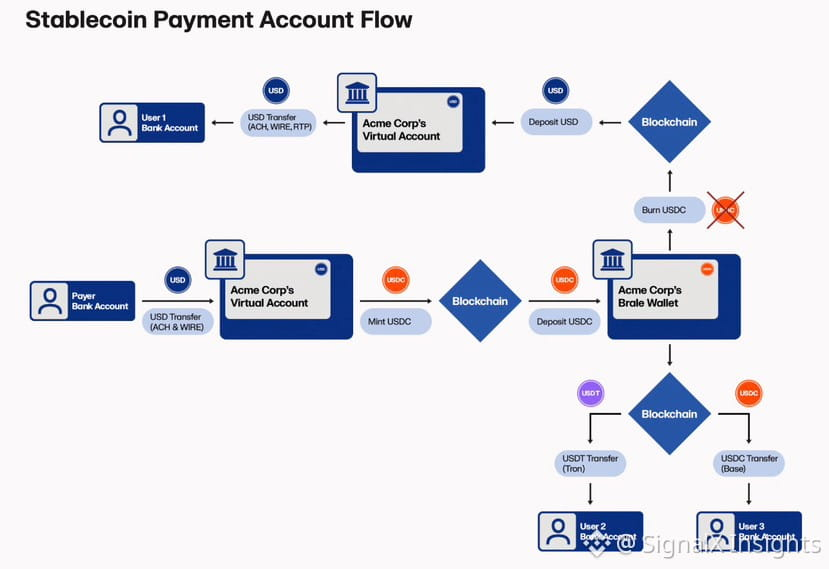
3. Payments & Stablecoin Focus
This is where Plasma differentiates itself most strongly.
Rather than chasing DeFi composability or complex execution environments, Plasma prioritizes efficient value movement. Stablecoins are central to this strategy because they already represent the majority of real on-chain economic activity.
If Plasma succeeds here, it doesn’t need thousands of applications. A small number of high-volume payment or settlement use cases can generate meaningful and durable network usage.
4. Developer Experience & Ecosystem Strategy
Plasma’s ecosystem strategy appears selective rather than expansive. The goal isn’t to attract every developer—it’s to retain builders who need reliable execution and predictable costs.
This creates a different kind of ecosystem growth. Fewer applications, but with clearer product–market fit. Over time, this can lead to stronger developer stickiness, as infrastructure reliability becomes a competitive advantage.
5. Token Role: $XPL
The $XPL token is positioned closer to network utility than narrative speculation. Its relevance depends on usage, not storytelling.
If transaction volume grows through real economic activity, $XPL becomes embedded in the system’s operation. This aligns token value with network demand rather than short-term sentiment—a slower path, but a more sustainable one.
6. Adoption Path & Growth Signals
Plasma’s adoption is unlikely to look explosive. Instead, the key signals to watch are:
• Repeat transactions• Stable fee behavior under load
• Consistent throughput growth
• Concentration of real value transfer
These are quiet metrics, but they’re the ones that matter for infrastructure projects aiming to last.
7. Risks & Trade-Offs
Plasma’s focus is also its risk. By narrowing its scope, it reduces fallback narratives. If payments and stablecoin adoption don’t materialize, growth options are more limited compared to general-purpose chains.
There’s also the challenge of competing with existing payment-focused infrastructure. Execution, partnerships, and real usage will ultimately determine success.
Final Take
Plasma is not designed to impress quickly. It’s designed to hold up under pressure.
If @Plasma can turn its infrastructure-first approach into consistent transaction flow, the project won’t need loud narratives. The usage itself will become the signal—and in that scenario, $XPL represents necessity, not speculation.

