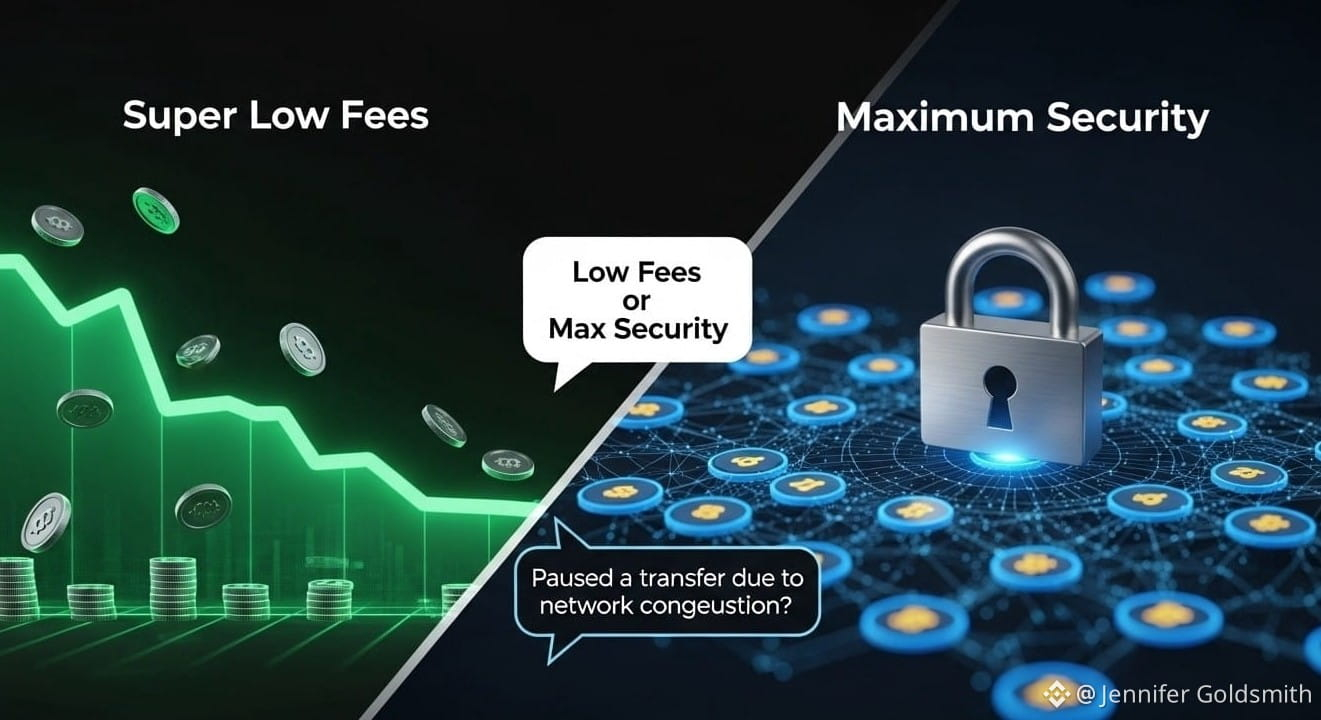
Few experiences are more frustrating in the cryptocurrency ecosystem than attempting to send funds, only to watch fees spike while transactions crawl along. I vividly recall one afternoon trying to move stablecoins during a volatile market swing. The network fees alone nearly matched the amount I was sending—it felt absurd, like paying $20 to have a $5 coffee delivered. That moment was the catalyst for my exploration of Plasma, not because it was a trending technology, but because it addressed a problem that was tangible and immediate: friction in everyday crypto transactions.
At its core, Plasma is surprisingly straightforward. Imagine Ethereum as a busy highway: secure, reliable, but prone to congestion during peak traffic. Plasma functions as a network of “side streets,” allowing smaller transactions to move off the main chain, execute quickly and inexpensively, and then reconnect when the highway is less congested. It is not flashy, but it is practical—a rare quality in a space often dominated by hype.
The potential of Plasma becomes particularly evident when considering real-world use cases for everyday users. Sending money to family abroad, paying freelancers, or simply transferring small amounts of crypto without fear of excessive fees suddenly becomes feasible. In practice, the greatest pain point is often not price volatility itself but the uncertainty of waiting for a transaction to confirm while fees climb in real time. Plasma addresses this by making transactions predictable, fast, and reliable—bringing a sense of normalcy to digital money, akin to sending a text rather than mailing a letter.
While Plasma is not without its limitations, such as potentially slower or complex exits back to the main chain, its influence on modern scaling solutions is undeniable. Concepts pioneered by Plasma laid the groundwork for subsequent innovations, including rollups and sidechain frameworks, which have refined usability and speed. In many ways, Plasma resembles early smartphones: somewhat clunky at first, but foundational ideas that have since become indispensable.
Looking ahead, the philosophy underpinning Plasma remains critical. As cryptocurrency adoption expands in regions where microtransactions and remittances are essential, infrastructure that emphasizes speed, predictability, and security will prove more valuable than features designed for spectacle or virality. The challenge lies in making this infrastructure accessible and intuitive, ensuring that users can transact confidently without technical friction.
The broader lesson from Plasma is clear: scalable, practical solutions matter. Reducing transaction costs, increasing throughput, and maintaining reliable performance are not just technical achievements—they are the enablers of real-world crypto adoption. As the ecosystem grows, these capabilities will define which networks are used not just for speculation, but for the daily movement of value.
As adoption grows, the questions for users and developers alike remain: What matters more—ultra-low fees or maximum security? How can networks ensure that congestion never forces hesitation or delays in value transfer? Plasma may not be the flashiest solution, but it represents a vision of crypto infrastructure built for real life—a vision of digital money that moves as quickly and reliably as the people who use it.