

I spent the last week exploring different Layer 1 networks, sending stablecoins, watching transactions, and testing what happens when real users show up. Most chains promise speed, efficiency, and low fees, but the reality is often…messy. Transactions stall, gas spikes unpredictably, and finality claims sound good on paper but feel unreliable when real value moves.
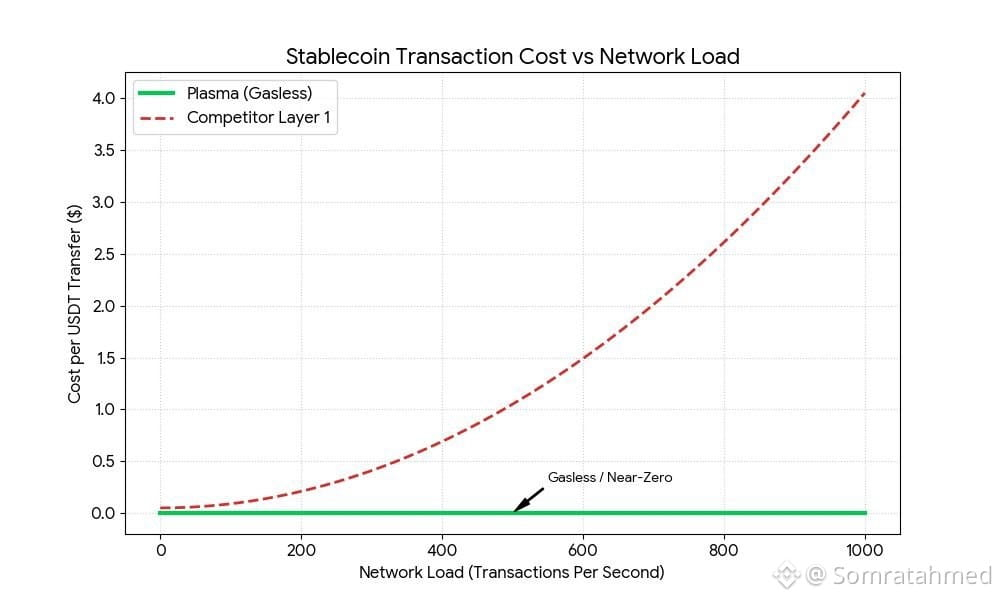
Then there’s Plasma. From the first transaction, it feels different. Gasless USDT transfers and a stablecoin-first gas model don’t just exist as features—they shape the experience. I sent some USDT to a friend in seconds, without worrying about fees, and it felt effortless. Not gimmicky, not promotional. Just seamless. That’s when I realized infrastructure can subtly change behavior. When cost and friction vanish, usage becomes natural and frequent, not a chore.
Watching the network under heavier activity was revealing. A cluster of transactions came in simultaneously, simulating a mini real-world stress test. Most Layer 1s would start to struggle—delays creeping in, confirmation times spiking—but Plasma handled it without breaking stride. Sub-second finality and execution-first architecture kept everything smooth. Execution and settlement were separated in a way that made congestion almost invisible. It wasn’t flashy; it was reliable, and reliability like that is far more valuable than hype.
Security is often overlooked until it matters. Here, Plasma quietly delivers. Bitcoin-anchored finality ensures that transactions remain neutral and censorship-resistant, giving confidence to users and institutions alike. Predictable gas costs prevent nasty surprises. Combined with full EVM compatibility, builders can focus on product logic instead of wrestling with the network. This combination of features isn’t accidental; it reflects intentional design for real usage, not headlines.
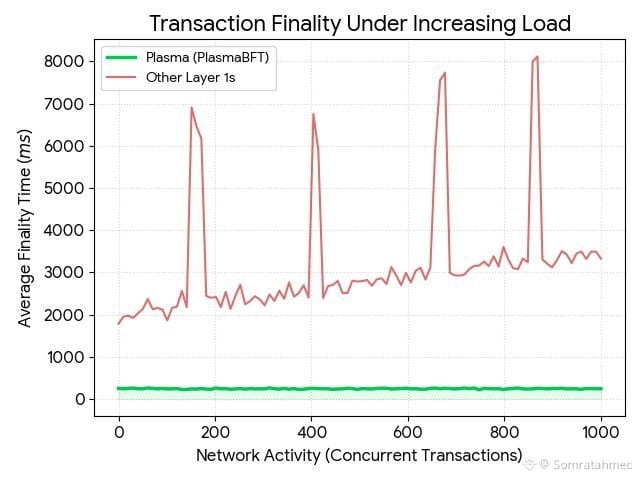
The small details reinforce the bigger picture. Stablecoin-first design, gasless transfers, execution separation, sub-second finality, security anchoring, and EVM support—they all work together to create an environment where transactions flow naturally, developers build confidently, and end-users benefit quietly but consistently. These are the features that matter when a network moves beyond hype and into daily usage.
What impressed me most is the way Plasma feels alive under real conditions. It’s not about flashy announcements or sudden spikes in attention. It’s about the network behaving predictably, every transaction, every block. I can’t stress enough how different it feels when you actually use a chain versus just reading about its performance metrics. You feel trust accumulate over time, almost invisibly.
Even the psychology of it matters. When transfers are effortless, confirmations are instant, and security is invisible but solid, users and developers gain confidence without thinking about it. That’s rare. Most Layer 1s claim performance, but when you stress them in real situations, inconsistencies appear. Plasma feels like it was designed to exist under pressure, quietly proving that infrastructure-first design can outperform hype-driven chains.
I also noticed the subtle ways the network supports real adoption. Predictable gas makes budgeting and scaling easier. Gasless transfers encourage stablecoin usage, which is crucial in high-adoption markets. Execution-first architecture ensures that spikes don’t cripple real-world applications. Bitcoin-anchored security creates trust in a way that’s almost subconscious—it’s there, you know it matters, but you don’t see it cluttering your workflow.
As a developer or a user, the difference is clear. You can experiment without friction, send payments without worrying about fees, and rely on confirmations even when the network is under load. You can build applications that actually handle real-world usage patterns, not just idealized demos. That is the real value of Plasma.
In a world of announcements, promises, and flashy metrics, I keep returning to what matters: predictable, reliable behavior under pressure. Plasma doesn’t shout. It doesn’t try to impress in headlines. It quietly delivers, transaction after transaction. That’s where $XPL earns value—not by hype, but by functioning exactly as it should when it matters most.
For me, this is the kind of infrastructure Layer 1 networks should aspire to. It’s human-centered, usage-focused, and purpose-built. Watching it in action has shifted my perspective. Performance isn’t what a network promises—it’s what it consistently delivers. And Plasma delivers.

