
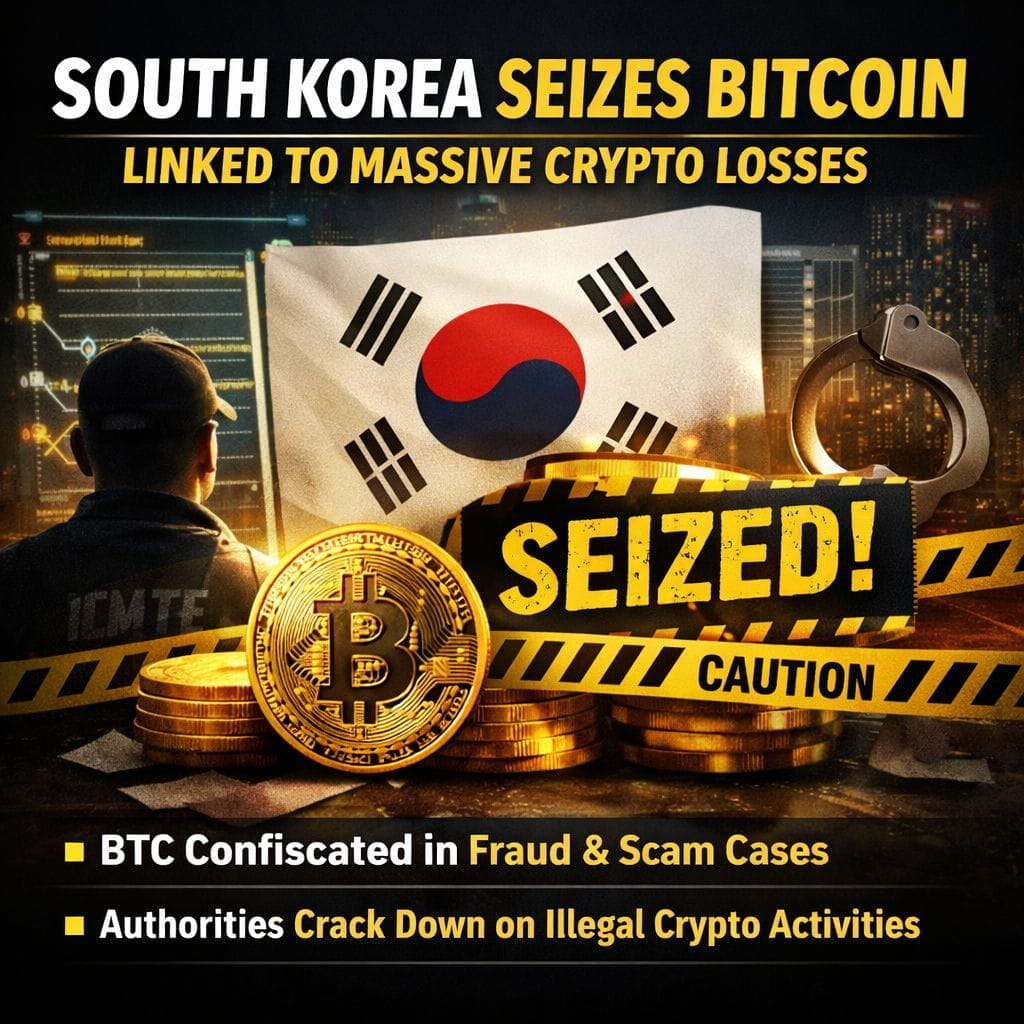
A story trending under #SouthKoreaSeizedBTCLoss has sparked debate after reports claimed Bitcoin seized by South Korean prosecutors went missing while in official custody.
Early estimates put the value near ₩70B (~$48M), though exact figures remain unclear.
But the real issue isn’t the number.
It’s the question this raises 👇
If seized crypto can disappear after authorities take control, what does “secure custody” actually mean?
🔍 What reportedly happened
• Missing BTC discovered during a routine audit of seized assets
• Some reports point to a phishing-style incident
• If true, this wasn’t a blockchain failure — it was an operational security failure
In simple terms:
👉 Bitcoin wasn’t broken. Custody procedures were.
⚖️ Why this hits differently than a normal crypto hack
Seized assets aren’t like personal wallets or exchanges.
They’re tied to:
• Court evidence
• Victim restitution
• Government auctions
• Legal accountability
When seized BTC vanishes, the fallout isn’t just financial — it’s legal and reputational.
🔐 The real lesson: custody is a system, not a wallet
Institutional custody should be built like a bank vault, not a single device.
Best-practice custody includes:
• Multi-signature control (no single point of failure)
• Separation of duties
• Tamper-evident logs + strict audits
• Hardware-based key protection
• Training against social engineering (phishing)
If phishing can drain seized BTC, it suggests someone, somewhere, had too much control.
🌍 Why the crypto world is watching
Governments are seizing more crypto every year.
If custody standards don’t mature, incidents like this could:
• Fuel calls for tighter regulation
• Undermine trust in state-managed asset recovery
• Push debates around third-party custodians & independent audits
🧠 Bottom line
This isn’t just another “crypto loss” headline.
It’s a warning about institutional readiness.
Because in crypto, the rule applies to everyone —
exchanges, whales, and governments alike:
🔑 Whoever controls the keys controls the funds.
#bitcoin #cryptocustody #SouthKorea #blockchain #Security #BTC


