

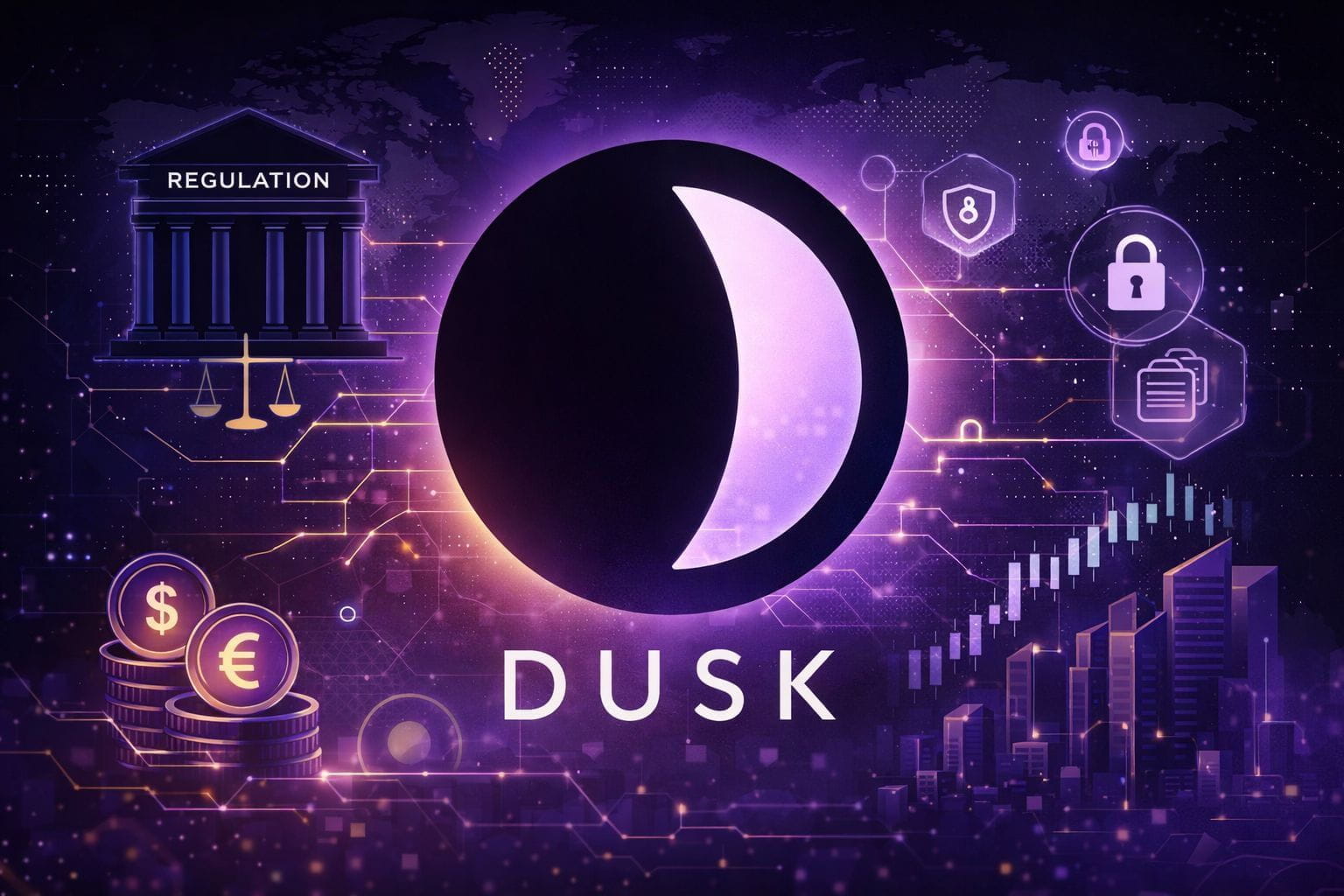
 Every time I take a closer look at what’s unfolding inside the Dusk ecosystem, I walk away with the same feeling: this project is moving to a different rhythm than the rest of the market. It isn’t chasing whatever narrative is trending this week. It isn’t trying to dominate timelines with noise. Instead, it’s steadily putting together the kind of financial infrastructure that the next phase of crypto will actually require. And that, to me, is what truly sets it apart.
I spend a lot of time reviewing blockchains, upgrades, and integrations. Most of them blur together. Speed, low fees, broad claims, big promises. When I look at Dusk, though, the atmosphere feels different. There’s focus. There’s restraint. There’s a clear sense of identity. Rather than copying what’s already out there, Dusk seems to know exactly what problem it exists to solve.
Following the project more closely only reinforces this view. The updates feel deliberate. Announcements aren’t made just to fill space. Everything points toward a larger, coherent vision. In an industry that often gets distracted by short-term excitement, Dusk comes across as a team that’s playing a long game and that earns my respect.
We’re entering a much more serious chapter of digital finance. Institutions are no longer on the sidelines. Regulators are actively shaping the rules. At the same time, privacy is becoming non-negotiable. Financial data isn’t something people want broadcast to the world. In this environment, generic Layer 1 chains start to feel insufficient. What markets need is infrastructure that balances confidentiality with compliance. That balance is rare, difficult, and incredibly valuable. And it’s exactly where Dusk positions itself.
What stands out most to me is Dusk’s approach to privacy. This isn’t privacy for the sake of hiding everything forever. It’s structured, intentional confidentiality protecting users while still allowing oversight when it’s legitimately required. That’s the only model that can scale to institutional adoption. Regulators need visibility. Institutions need assurance. Dusk sits right between those two realities, and that’s why its design makes so much sense.
DuskEVM deserves special attention here. Full EVM compatibility combined with privacy at the protocol level is a massive unlock. Developers don’t need to abandon their tools or workflows. They can deploy familiar logic while building applications that are private, compliant, and audit-ready by default. This opens the door to an entirely new class of regulated DeFi, and that’s where I believe Dusk will truly differentiate itself.
Seeing projects like Magnetar Finance emerge on the DuskEVM testnet only strengthens this belief. A complete exchange environment taking shape without loud marketing speaks volumes. It suggests confidence in the foundation. Design systems, governance frameworks, liquidity modules, dashboards, wallet integrations this isn’t a casual experiment. It looks like serious teams preparing real products.
When you zoom out and consider the global backdrop, the picture becomes even clearer. Regulation is tightening everywhere. Europe is moving quickly. The US is slowly aligning. Asia is developing its own digital settlement infrastructure. Across regions, the demand is the same: systems that offer privacy without disorder, and compliance without full transparency to the public. Dusk was built precisely for this intersection.
My personal take is simple. Dusk is underestimated because it doesn’t demand attention. But in crypto, the most important foundations are often laid quietly. Strip away the hype, focus on structure and intent, and Dusk starts to look like one of the most thoughtfully positioned blockchains in the space.
Prices fluctuate. Narratives rotate. But infrastructure endures. Dusk is building for a future where massive volumes of tokenized assets need a secure, compliant home. Those assets won’t settle on networks that leak sensitive data. They’ll flow toward systems that protect information while respecting regulation and that’s the blueprint Dusk is following.
I also appreciate the project’s culture. Communication is professional and grounded. The conversations revolve around proofs, identity, auditability, compliance layers, and real-world use cases. There’s maturity here. There’s direction. Paired with a community that understands the long-term vision, the ecosystem feels solid and credible.
From where I stand, the road ahead looks compelling. Each upgrade strengthens the architecture. Each testnet discovery signals growing activity. And as regulated digital finance becomes the norm, Dusk seems increasingly well-positioned to meet that reality.
So here’s my honest conclusion: Dusk isn’t trying to win the spotlight. It’s trying to earn trust. And in the world of regulated finance, trust is the most valuable asset of all.
That’s why I believe Dusk has the potential to help shape the foundations of tomorrow’s digital economy not through hype or noise, but through careful engineering and clear purpose. In a market full of distractions, that’s exactly what makes it stand out.
