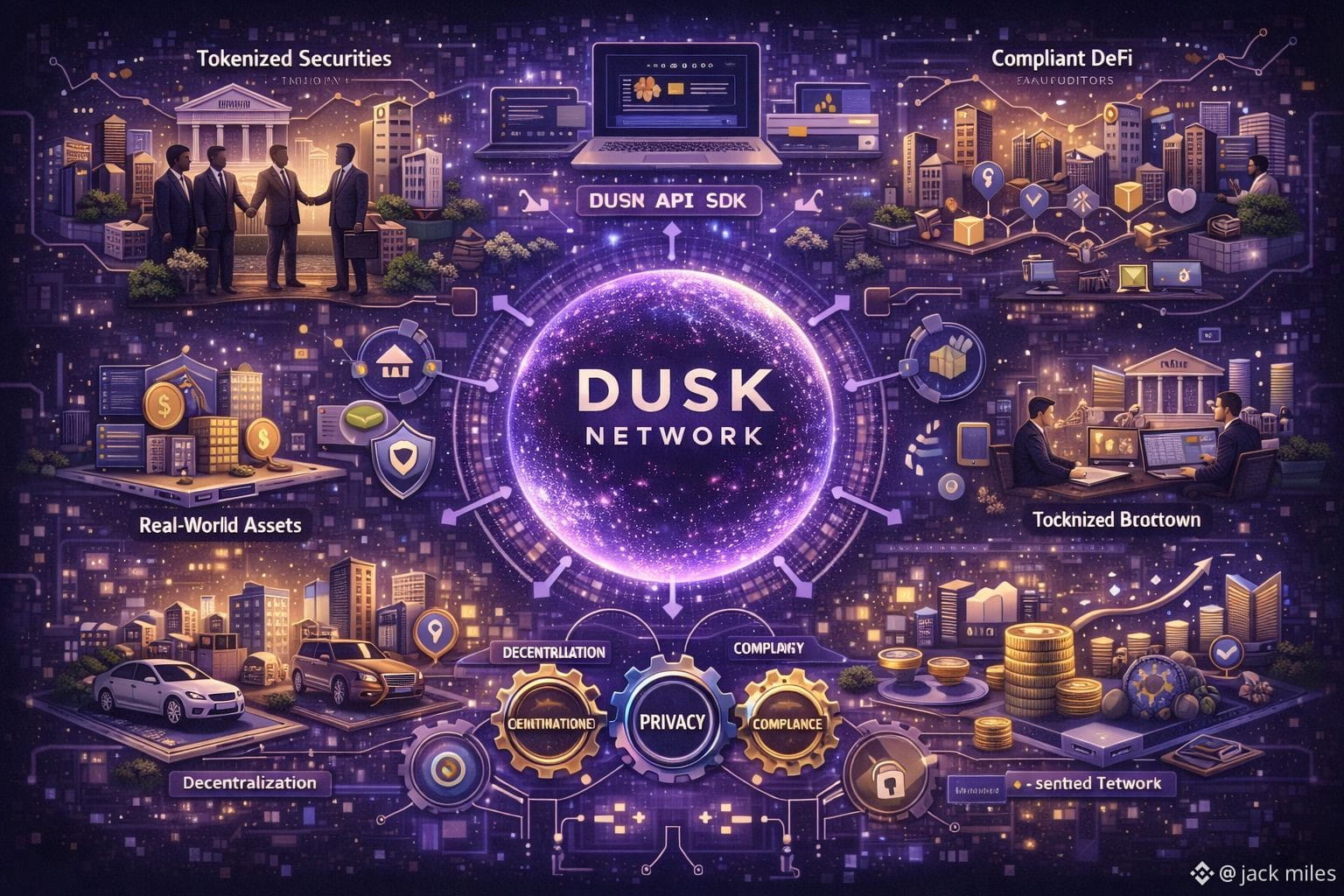
#Dusk Network was not born from hype or noise, it rose from frustration, from the quiet realization that finance could not step into the future if privacy and regulation were treated like enemies of innovation instead of its foundations, and behind the code were people who understood that banks, institutions, and real economies cannot run on radical transparency alone because real money carries real responsibility, legal obligations, human identities, and consequences that cannot simply be exposed to the world in the name of decentralization, so Dusk became a mission to build a system where trust is engineered, not assumed, and where technology respects the rules of the world it wants to change.
At its heart, Dusk exists for one emotional reason as much as a technical one, which is to remove fear, the fear institutions have of public blockchains, the fear regulators have of losing oversight, and the fear users have of their financial lives being permanently visible, and instead replace that fear with controlled transparency, programmable compliance, and cryptographic privacy that proves honesty without forcing exposure, creating an environment where financial players can innovate without feeling like they are stepping into legal darkness, and where privacy is not a loophole but a right balanced with accountability.
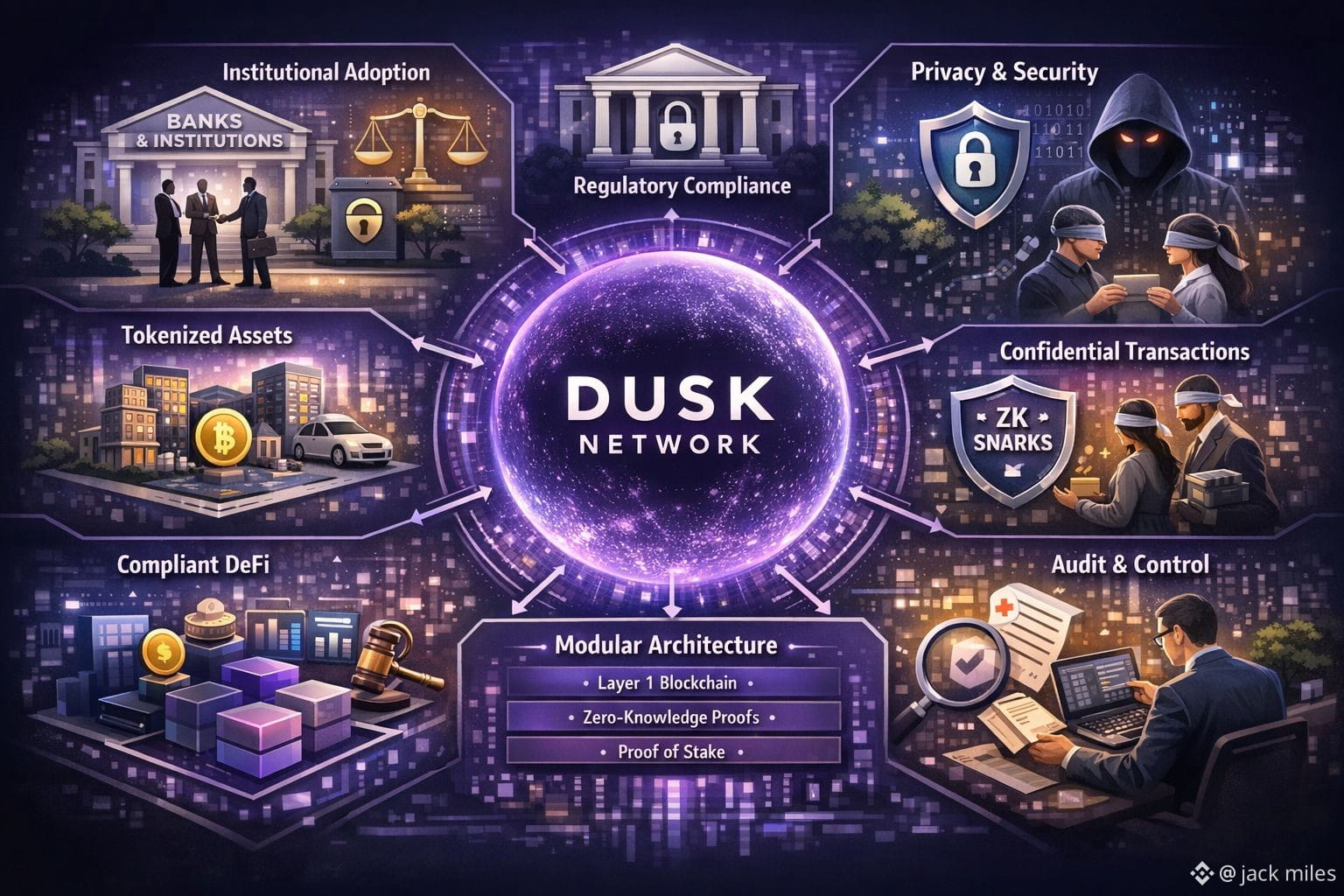 Technically, $DUSK is built as a modular Layer 1 blockchain, meaning it separates different responsibilities inside the network so each part can be optimized, with privacy powered by advanced zero knowledge cryptography that allows transactions and smart contract logic to be verified as valid without revealing the sensitive information behind them, while its architecture supports financial instruments that can carry rules directly in their code, such as who is allowed to hold an asset, how it can move, or what regulatory limits apply, turning compliance from paperwork into programmable logic that lives on chain and acts automatically.
The mechanism that makes this possible combines Proof of Stake security with confidential transaction models, giving the network both performance and protection, and allowing two worlds to coexist, one where transactions can remain shielded when confidentiality is required, and another where visibility is available when transparency is legally necessary, which means institutions can operate without exposing strategies or client data while still being able to prove to auditors or regulators that everything is legitimate, a balance that traditional finance has always needed but older blockchains struggled to deliver.
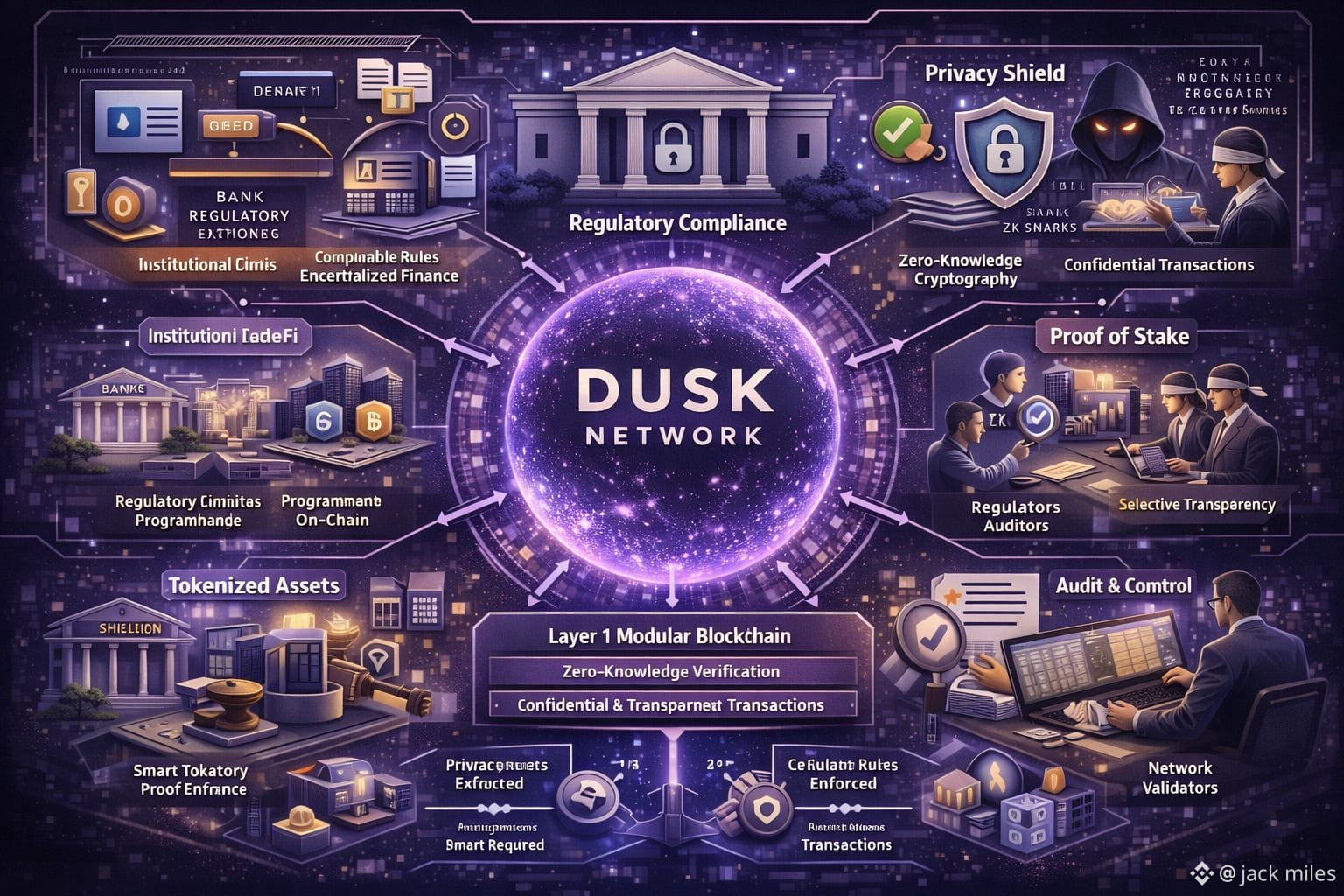 Looking forward, Dusk aims to become the invisible infrastructure beneath tokenized securities, real world assets, and compliant DeFi systems, focusing on tools that help developers build regulated financial applications and partnerships that bring real institutions onto the network, with the belief that the next wave of blockchain growth will not come from speculation but from real financial activity moving onto programmable rails that settle faster, reduce intermediaries, and open global access while still respecting the legal frameworks that keep markets stable.
Of course the road carries risks, because privacy technology is complex, regulation changes across countries, and competition is intense from both crypto networks and traditional financial tech companies, yet within those risks lies enormous possibility, because if a system truly succeeds in blending decentralization, privacy, and compliance, it could unlock massive pools of capital, make asset ownership more accessible, and reshape how trust is built in digital finance, not by breaking the rules, but by encoding them into the system itself so innovation and regulation finally move in the same direction instead of pulling against each other.