
The first time most people hear the word “blockchain,” their mind jumps to charts, tokens, and fast money. That reaction is understandable. For years, the loudest stories in crypto have revolved around speculation rather than use. But every once in a while, a project emerges that feels less like a trading vehicle and more like an attempt to fix something broken. Vanar belongs to that quieter category. Its Layer-1 blockchain is not trying to win a race for the highest yields or the flashiest narratives. Instead, it is asking a more uncomfortable question: what would blockchain look like if it were built for normal people first?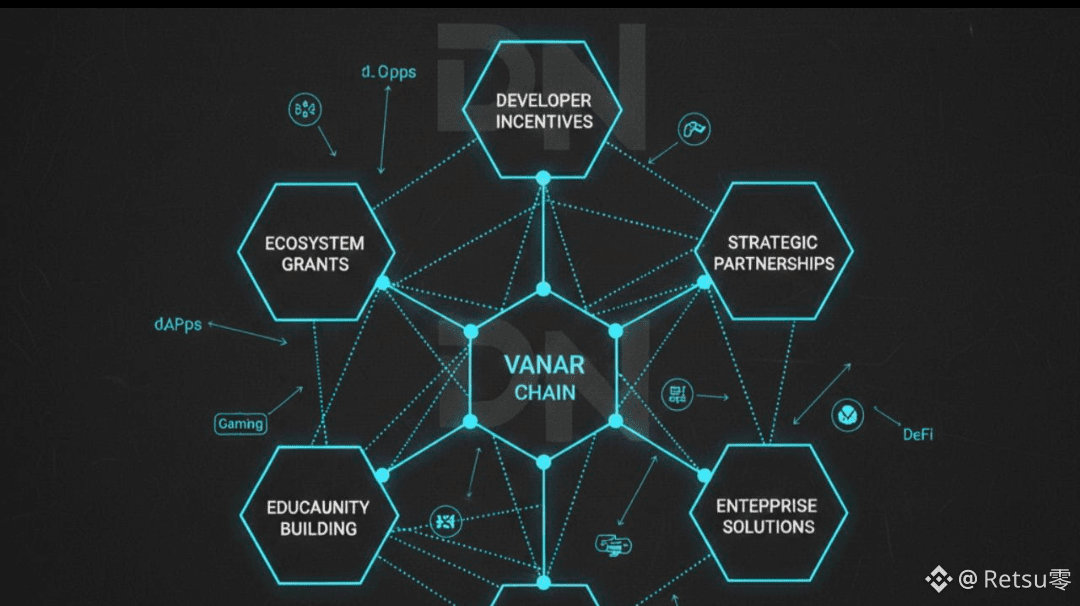
At its core, Vanar is designed around the idea that mass adoption will not come from financial complexity. It will come from familiarity. Games, entertainment platforms, digital communities, and brands already attract billions of users every day without anyone needing to understand databases or payment rails. Vanar’s approach is to hide the machinery of blockchain behind experiences that already make sense. This is a subtle shift, but it changes everything. When a user interacts with a game or a digital collectible on Vanar, they are not meant to feel like they are “using crypto.” They are simply participating in something interactive, persistent, and owned.
Technically, Vanar is a full Layer-1 blockchain, meaning it does not depend on another network for security or execution. This independence allows it to make design choices that prioritize stability over experimentation. One of the most telling decisions is its predictable transaction cost model. Instead of fluctuating fees that rise and fall with network congestion, Vanar aims to keep transaction costs extremely low and consistent. For traders, this may sound unexciting. For developers building consumer apps, it is critical. Predictable costs make it possible to design products for millions of users without worrying that a sudden spike in fees will break the experience.
The choice to support EVM compatibility also signals where Vanar sees its future. Rather than forcing developers to learn entirely new tools, it allows existing Ethereum developers to deploy familiar smart contracts with minimal friction. This is not about ideological purity. It is about pragmatism. If mainstream adoption depends on builders, then lowering barriers for those builders is not optional. It is foundational. Vanar seems to understand that ecosystems grow not through promises, but through the quiet accumulation of usable infrastructure.
What really separates Vanar from many Layer-1 competitors is where it focuses its energy. DeFi is not ignored, but it is not the centerpiece. The emphasis instead falls on sectors where people already spend time: gaming, virtual worlds, digital identity, and brand engagement. These are areas where ownership matters, but speculation is secondary. In a game, a digital item has value because it is meaningful to the player, not because it can be flipped tomorrow. Vanar’s architecture is built to support these kinds of interactions at scale, where speed, cost, and reliability matter more than financial engineering.
There is also a longer-term vision forming around intelligence and data. Vanar has been exploring ways to integrate AI-driven logic directly into its ecosystem, allowing applications to store memory, context, and behavior on-chain. This opens up possibilities that feel closer to everyday technology than to finance. Imagine applications that remember preferences across platforms, or digital assets that evolve based on how they are used. These ideas are not about chasing trends. They are about making blockchain applications feel alive and responsive in ways users already expect from modern software.
From a market perspective, this approach places Vanar in an interesting position. Projects that do not lean heavily into speculation often receive less short-term attention. Price action can lag, and narratives can feel muted compared to louder ecosystems. But this can also be a strength. As broader crypto markets mature, there is increasing scrutiny on whether blockchains actually serve non-trading users. Infrastructure that supports real activity tends to age better than infrastructure built purely for financial velocity. Vanar’s challenge is patience: adoption through utility is slower, but often more durable.
Another important piece of the story is education and onboarding. Vanar has invested in community learning initiatives aimed at developers and newcomers who may be curious but cautious. This matters because mainstream adoption does not just require good products. It requires people who understand how to build and maintain them. By lowering the cognitive barrier around blockchain development, Vanar is attempting to grow its ecosystem organically rather than through incentives alone.
None of this guarantees success. The blockchain space is crowded, and execution matters more than vision. Vanar will need to prove that its network can handle real usage, not just theoretical demand. It will need applications that people return to daily, not once out of curiosity. And it will need to navigate a market that still rewards speculation more loudly than quiet progress. Acknowledging these challenges is part of taking the project seriously.
Yet there is something refreshing about a blockchain that is comfortable stepping out of the trading spotlight. Vanar’s story is not about getting rich quickly. It is about making decentralized technology usable, predictable, and human. If blockchain is ever going to feel less like a niche financial experiment and more like part of everyday digital life, it will be because projects like Vanar chose to build for experiences rather than hype.
In that sense, Vanar’s Layer-1 is not just targeting mainstream adoption. It is redefining what mainstream adoption might actually look like.
