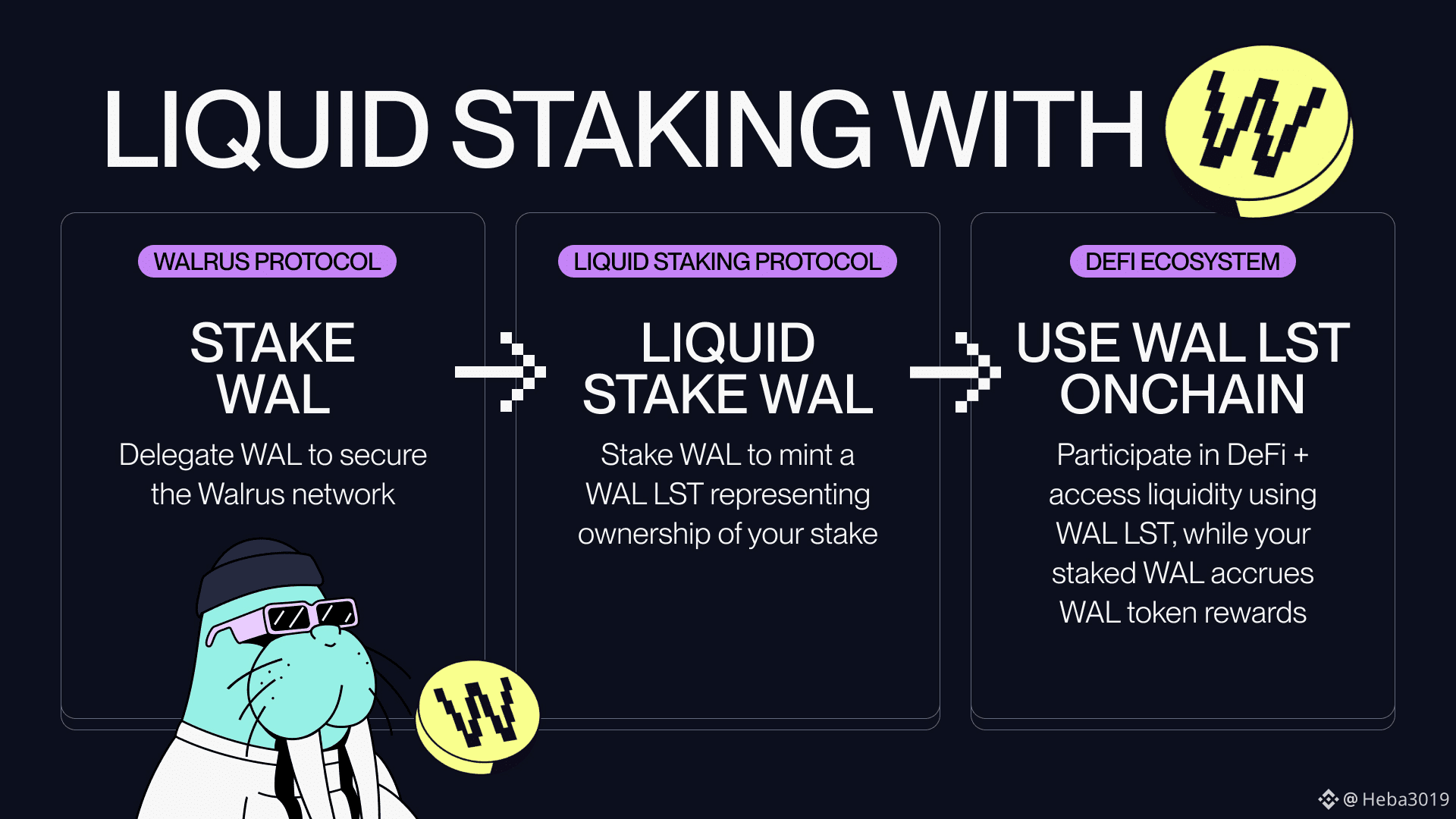
The cryptocurrency ecosystem is evolving rapidly, and staking has become one of the most popular ways for investors to earn passive income. Traditional staking involves locking up tokens in a blockchain network to support its operations and security, earning rewards in return. However, this comes with a major drawback: once staked, the tokens are often illiquid, meaning investors cannot access or trade them until the lock-up period ends. Walrus, a leading decentralized finance (DeFi) platform, is addressing this challenge through liquid staking, which provides both yield and liquidity simultaneously.
What Is Liquid Staking?
Liquid staking is an innovative mechanism that allows investors to stake their tokens while still maintaining liquidity. When users stake assets through Walrus, they receive derivative tokens representing their staked assets. These derivative tokens can be freely traded, used as collateral, or deployed in other DeFi applications. Essentially, investors can earn staking rewards while retaining the ability to participate in other opportunities, creating a much more flexible and efficient use of capital.
How Walrus Enables Liquid Staking
Walrus simplifies liquid staking by integrating a secure, user-friendly interface with smart contract technology. When users deposit tokens into the Walrus staking protocol, the platform automatically stakes them on the underlying blockchain network. In return, users receive a staked derivative token, often called wToken, which is pegged to the original asset but remains liquid. These wTokens can be traded on decentralized exchanges, used to provide liquidity, or used in yield farming, unlocking additional earning potential for investors.
Benefits for Investors
One of the biggest advantages of liquid staking on Walrus is flexibility and liquidity. Unlike traditional staking, it removes the constraint of long lock-up periods, allowing users to respond quickly to market movements. Investors also enjoy dual earnings, as they can earn staking rewards while simultaneously generating additional yield through DeFi strategies using their derivative tokens. Moreover, liquid staking reduces opportunity cost, preventing users from missing out on trading or leveraging assets in other protocols. Finally, security is a key benefit, as Walrus employs audited smart contracts and robust risk management systems to ensure the safety of staked tokens.
Impact on the DeFi Ecosystem
Liquid staking on Walrus contributes to the broader DeFi ecosystem by increasing capital efficiency and liquidity. It encourages more participation in staking networks without penalizing investors for locking up assets. Additionally, derivative tokens can move between DeFi protocols, creating a more dynamic market and fostering innovation in financial products and services.
Conclusion
Walrus’ liquid staking solution represents a significant evolution in crypto asset management. By combining staking rewards with liquidity, it addresses one of the key limitations of traditional staking, offering flexibility, security, and multiple earning avenues for investors. As DeFi continues to grow, platforms like Walrus are paving the way for smarter, more efficient capital use, empowering users to maximize their crypto holdings while participating in a thriving, interconnected ecosystem.