
With silver prices shattering the historic $50 ceiling and currently stabilizing at a remarkable $94.15 per ounce, the landscape for precious metal investors has fundamentally shifted. As of January 2026, the market is no longer driven by speculation alone, but by a "perfect storm" of global supply deficits, intense industrial demand for green tech, and geopolitical hedging.
If you are looking to enter or expand your position in this high-velocity market, the debate remains: 1-ounce silver bars or 1-ounce silver coins? While both contain the same amount of Ag, their performance in your portfolio varies significantly during times of extreme volatility.
The Case for 1-Ounce Silver Bars: The Purist’s Choice
In an environment where silver is nearing triple digits, minimizing "frictional costs" (premiums) is vital for maximizing ROI.
Lowest Premium Over Spot: Bars are typically minted by private refineries rather than sovereign governments. This results in lower labor and licensing costs, meaning more of your money goes directly into the metal content.
Stacking Efficiency: Due to their uniform rectangular dimensions, bars are the gold standard for storage. If you are holding thousands of ounces in a safe or vault, the space-saving nature of bars is a logistical win.
Zero Ambiguity: Bars are valued strictly on weight and purity. There is no "collector value" to track, making them the ultimate tool for those who view silver purely as a hedge against currency devaluation.
The Trade-off: While you save money on the way in, bars can sometimes be slightly harder to sell to private parties who may require professional testing to verify the bar's authenticity.
The Case for 1-Ounce Silver Coins: The Liquidity King
Sovereign coins like the American Silver Eagle or the Canadian Silver Maple Leaf carry a different kind of weight: trust.
Instant Recognition: Because these are government-minted, they are recognizable worldwide. In a fast-moving market, being able to sell your silver instantly without a "testing delay" is a massive advantage.
Legal Tender Status: While you wouldn’t spend a coin with a $1 face value when silver is at $94, the government backing provides an implicit guarantee of weight and fineness that private bars lack.
Premium Retention: During market panics, the "buyback" price for coins often stays higher than for bars. If demand spikes, you may actually recoup a larger portion of the premium you paid at the start.
The Trade-off: You will pay a higher "door price" for coins. In a $94/oz market, a high premium can feel like a steep entry fee if you are trying to accumulate bulk weight.
Comparison at a Glance
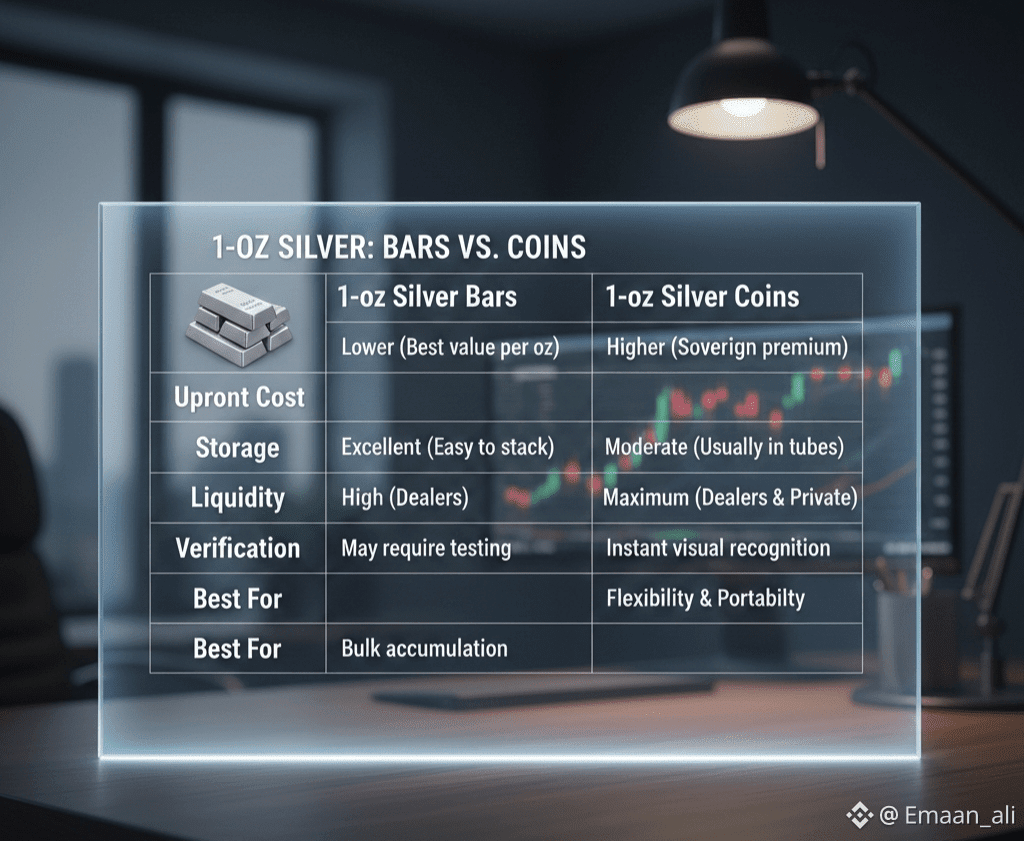
Strategy: How to Decide in 2026?
The "right" choice depends entirely on your exit strategy.
The "Prepper" or Short-Term Trader: If you think you might need to sell small amounts of silver quickly for cash or supplies, coins are the superior choice due to their universal trust.
The Wealth Protector: If you are moving a large amount of capital into silver to protect against inflation and plan to hold for a decade, bars allow you to acquire more total ounces for the same investment.
The Hybrid Approach: Most seasoned investors "split the difference." They keep 20-30% of their holdings in recognizable coins for liquidity and the remaining 70-80% in bars to maximize their total silver weight.
At $94 an ounce, silver is no longer a "cheap" hobby; it is a serious institutional asset. Whether you choose the efficiency of the bar or the prestige of the coin, ensure you are buying from a reputable dealer to protect your capital in this high-stakes environment.#GrayscaleBNBETFFiling #USIranMarketImpact #ETHMarketWatch

