
Support and Resistance are two of the most important concepts in technical analysis. Almost every trading strategy—simple or advanced—relies on them in some way.
They help traders answer three key questions:
Where price may stop falling
Where price may stop rising
Where good entries, exits, and risk levels exist
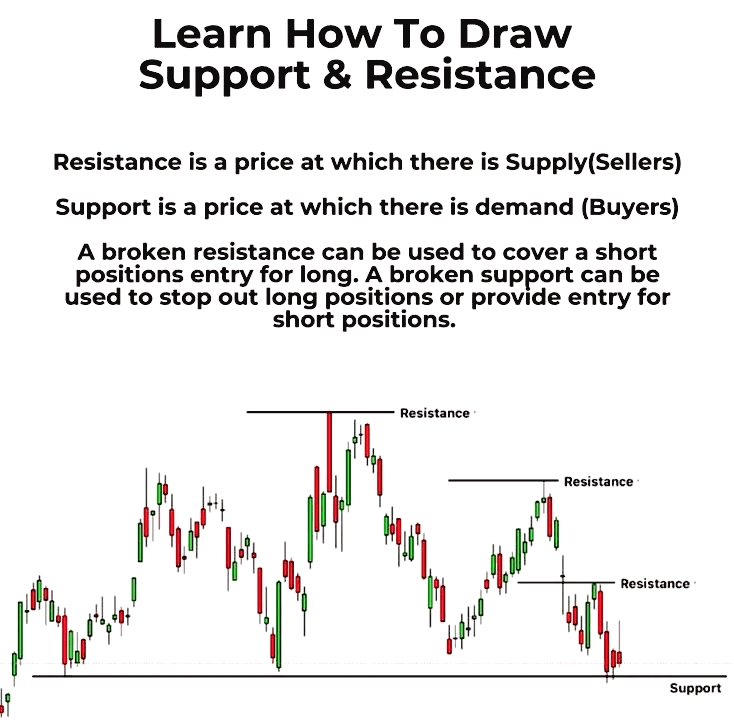
What Is Support?
Support is a price level where buying pressure is strong enough to stop or slow down a decline.
In simple terms:
Support is a floor where buyers step in.
When price approaches support:
Buyers see value and start buying
Selling pressure weakens
Price often bounces upward
If support breaks, it usually turns into resistance.
Examples of support:
Previous lows
Demand zones
Moving averages (like 50 EMA, 200 MA)
Psychological levels (e.g., $90,000 on BTC)
What Is Resistance?
Resistance is a price level where selling pressure is strong enough to stop or slow down an upward move.
Think of resistance as a ceiling where sellers take control.
When price approaches resistance:
Sellers take profits or open shorts
Buying momentum weakens
Price often pulls back
If resistance breaks, it often flips into support.
Examples of resistance:
Previous highs
Supply zones
Trendline resistance
Round numbers (e.g., $100,000 BTC)
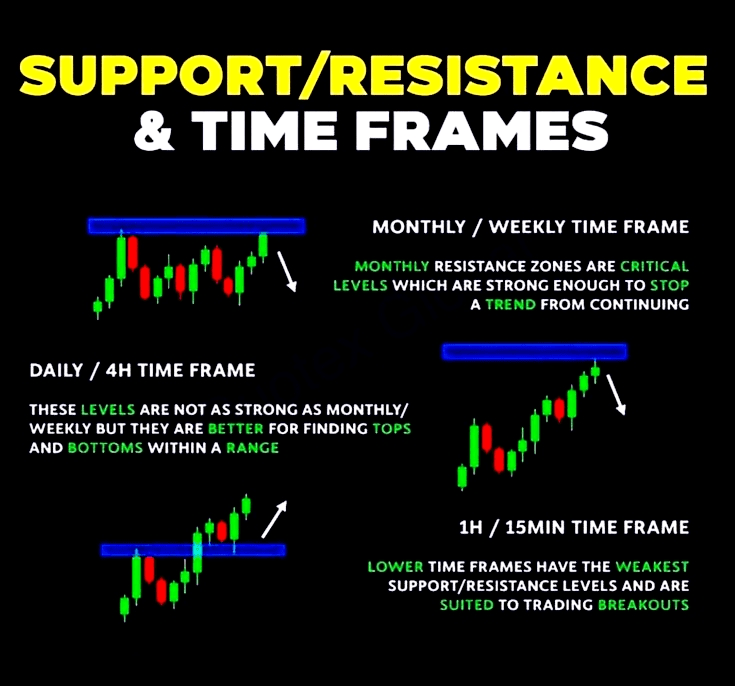
Why Support & Resistance Work
Support and resistance exist because of market psychology.
Traders remember price levels where:
Price reversed strongly
Big moves started
Heavy volume entered
This creates reactions, not magic.
The more times a level is tested and respected, the stronger it becomes.
How Traders Use Support & Resistance
1. Entry Points
Buy near support
Sell or short near resistance
2. Stop-Loss Placement
Stop below support (for longs)
Stop above resistance (for shorts)
3. Target Areas
Targets are often set near resistance in uptrends
Or near support in downtrends
Important Rules to Remember
Support and resistance are zones, not exact lines
Higher timeframes = stronger levels
A broken level often changes its role
Always wait for confirmation (price action, volume, indicators)
Support & Resistance in Crypto Markets
In crypto, these levels are especially powerful because:
Markets are highly emotional
Liquidity clusters around key levels
Whales often defend or attack obvious zones
This is why Bitcoin frequently reacts at:
Previous weekly highs/lows
CME gaps
Major moving averages
Final Thoughts
Support and resistance are the foundation of technical analysis.
Mastering them won’t make you rich overnight—but ignoring them will make trading much harder.
If you can correctly identify:
Where buyers are strong
Where sellers take control
You already have an edge most beginners don’t.
Lets Trade Accordingly 👇🏻


#BinanceSquare #TechnicalAnalysis #SupportAndResistance #PriceAction #WriteToEarnUpgrade