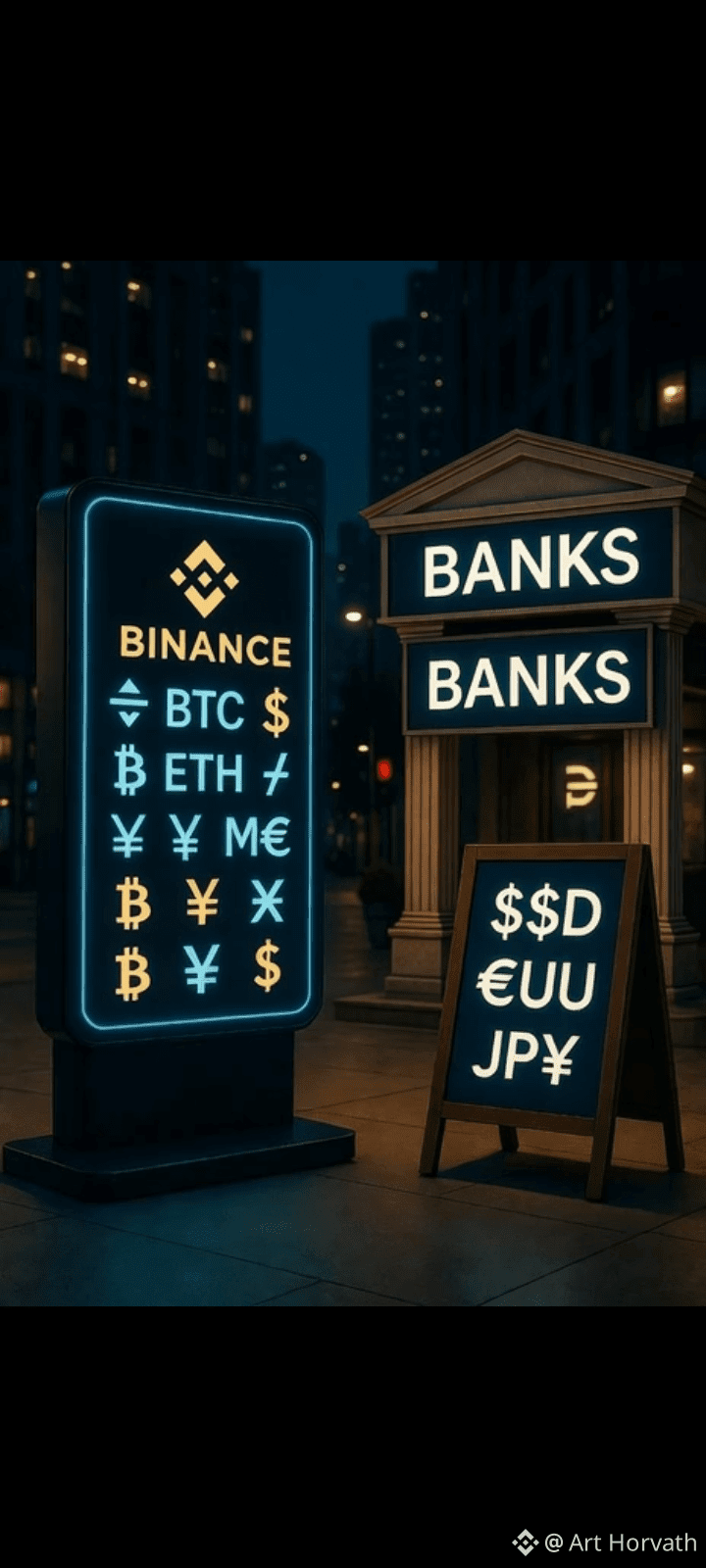
Cryptocurrencies and Banks
January 19, 2026
In a world where your morning coffee can be paid for with a tap of your phone or a swipe of invisible digital tokens, the battle between centralized and decentralized money is heating up. On one side, you've got the stalwarts of traditional finance: banks, backed by governments and centuries of history. On the other, the wild frontier of cryptocurrencies, epitomized by platforms like Binance, where decentralization promises freedom from the old guard. But is one really better than the other? Let's dive in, unpack the pros, cons, and what this all means for the average person in 2026.
The Old Guard: Centralized Money and Banks
Centralized money is what most of us grew up with—fiat currencies like the US dollar, euro, or Pakistani rupee, controlled by central banks such as the Federal Reserve or the State Bank of Pakistan. Banks act as the gatekeepers: they hold your money, facilitate transactions, lend it out, and earn interest along the way. Everything runs through a central authority, which means governments can regulate it, print more when needed (hello, inflation), and even freeze accounts if they deem it necessary.
Think about how it works. You deposit money in a bank, and they use it to make loans or investments. In return, you get security—FDIC insurance in the US, for example, protects your deposits up to a certain amount. Transactions are straightforward: wire transfers, checks, credit cards. But this centralization comes with strings attached. Banks charge fees for everything from overdrafts to international transfers, and they're beholden to regulations that can slow things down. Remember the 2008 financial crisis? Centralized systems can fail spectacularly when the people at the top make bad calls, leading to bailouts funded by taxpayers.
In essence, centralized money is like a well-oiled machine run by a committee: reliable most of the time, but prone to bureaucracy, corruption, and exclusion. Billions of people worldwide are unbanked because they lack the ID or credit history to open an account. Banks decide who gets in the club.
The New Kid on the Block: Decentralized Money and Cryptocurrencies via Binance
Enter decentralized money, powered by blockchain technology. Cryptocurrencies like Bitcoin, Ethereum, and a slew of altcoins operate on distributed ledgers—networks of computers worldwide that verify transactions without a single boss in charge. No central bank printing money willy-nilly; supply is often capped (Bitcoin maxes out at 21 million coins), and changes require community consensus.
Binance, founded by Changpeng Zhao (CZ) back in 2017, has become the poster child for this world. It's not just an exchange; it's a full ecosystem with its own token (BNB), decentralized finance (DeFi) tools, NFTs, and even a blockchain (Binance Smart Chain). Users can trade crypto, stake assets for rewards, or borrow/lend without a bank intermediary. Transactions are peer-to-peer, often faster and cheaper for cross-border payments—no waiting for SWIFT approvals or paying hefty fees.
The beauty of decentralization?
Empowerment. Anyone with an internet connection can participate, no ID required in many cases. It's censorship-resistant: governments can't easily shut it down (though they've tried, like China's crypto bans). During economic turmoil—say, hyperinflation in places like Venezuela or Argentina—crypto has been a lifeline for people to preserve wealth. Binance has expanded massively, handling billions in daily volume and offering services in over 180 countries, including user-friendly apps that make crypto accessible to newcomers.
But it's not all sunshine. Decentralization means no safety net. Lose your private keys? Your funds are gone forever—no customer service to call. Scams are rampant: rug pulls, phishing, and hacks have cost users billions. Volatility is insane—Bitcoin can swing 10% in a day. And while Binance touts decentralization, it's still a centralized exchange (CEX) in many ways; users trust it to hold their assets, which led to scrutiny after the FTX collapse in 2022. Regulators have cracked down, with Binance facing fines and restrictions in places like the US for compliance issues.
Head-to-Head: Banks vs. Binance and Crypto
So, how do they stack up? Let's break it down.
**Control and Security:**
Banks win on stability. Your money is insured, and fraud protection is built-in (think chargebacks on credit cards). Crypto? It's on you. Binance offers two-factor authentication and insurance funds, but hacks like the 2019 breach (where they lost $40 million but covered it) remind us it's riskier. Decentralization shines in privacy—crypto transactions can be pseudonymous—but banks track everything for anti-money-laundering reasons.
**Speed and Cost:**
Crypto often edges out here. Sending money internationally via banks can take days and cost 5-7% in fees. On Binance or blockchain networks, it's minutes and pennies, especially with layer-2 solutions like Lightning Network for Bitcoin. During the 2022-2023 bear market, though, high gas fees on Ethereum showed scalability issues.
**Accessibility and Inclusion:**
Decentralized wins big. Banks exclude the underbanked; crypto doesn't care about your background. Binance's mobile-first approach has onboarded millions in developing regions, including Pakistan, where crypto adoption is booming despite regulatory hurdles. But usability? Banks are idiot-proof; crypto requires learning curves, wallets, and avoiding scams.
**Innovation and Returns:**
Crypto is a hotbed of innovation—DeFi on Binance lets you earn yields way higher than bank savings accounts (sometimes 10-20% APY vs. 1-2%). NFTs, Web3, and token economies are reshaping finance. Banks are catching up with digital banking and CBDCs (central bank digital currencies), but they're slower, more conservative.
**Regulation and Trust:**
Banks are heavily regulated, which builds trust but stifles innovation. Crypto's Wild West appeal is also its Achilles' heel—Binance has settled lawsuits for billions, and ongoing debates about whether tokens are securities could reshape the industry. In 2026, with spot Bitcoin ETFs approved and more institutional money flowing in, crypto is maturing, but it's still seen as speculative.
The Future: Coexistence or Collision ?
Ultimately, it's not a zero-sum game. Hybrid models are emerging—banks like JPMorgan are building blockchain tech, and Binance is complying more with regs to go mainstream. Centralized money offers safety and familiarity; decentralized brings freedom and efficiency. For everyday folks, a mix might be ideal: keep savings in a bank, dip into crypto for high-reward plays.
But here's a bold take: As AI and blockchain evolve, decentralized systems could disrupt banks more than we think. Imagine a world where your money is truly yours, not loaned out without your say. Yet, without some oversight, crypto's volatility could lead to more crashes. In places like Karachi, where economic instability is real, crypto via platforms like Binance isn't just trendy—it's a hedge against the system.