
Most Layer-1 blockchains begin with abstract promises—higher throughput, novel consensus models, or improved decentralization metrics. Vanar starts from a different premise altogether. Instead of optimizing for crypto-native benchmarks, it frames blockchain as a consumer technology problem. The question it attempts to answer is not how to outperform other chains on paper, but how to build infrastructure that aligns with how people already interact with digital products in their daily lives.

This orientation matters because mainstream users do not adopt technology for ideological reasons. They adopt what feels intuitive, reliable, and useful. Vanar’s design reflects an understanding that mass adoption will not come from explaining blockchain better, but from embedding it more quietly and more effectively into experiences users already value.
The Layer-1 landscape has become increasingly crowded, with many networks converging toward similar technical goals. In that context, Vanar’s differentiation is not a single architectural innovation, but a consistent focus on end-use realities. Games, virtual environments, entertainment platforms, and brand-driven digital experiences behave very differently from financial protocols. They generate high interaction frequency, require predictable responsiveness, and depend heavily on user experience continuity. Vanar’s infrastructure choices are shaped around these requirements rather than treating them as secondary use cases.
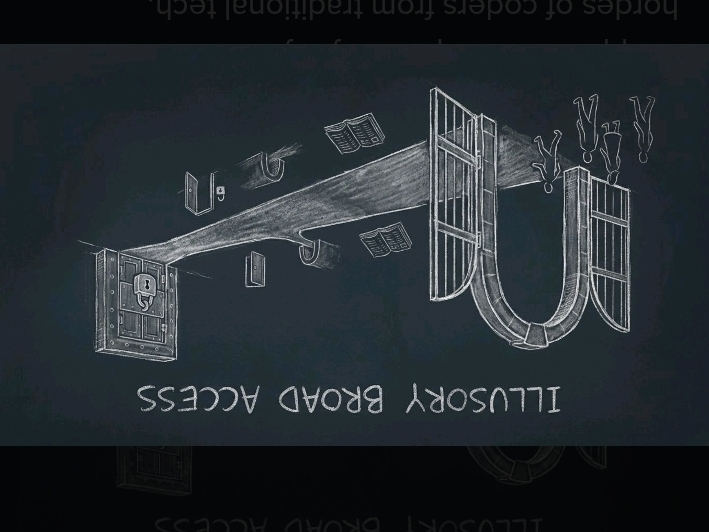
This consumer-aware foundation is reinforced by the team’s background in gaming and entertainment. Instead of retrofitting blockchain into existing products, Vanar is built to support immersive, content-heavy environments from the outset. Performance consistency, asset interoperability, and seamless onboarding are treated as baseline expectations, not optional optimizations. This reflects an understanding that in consumer-facing applications, friction is not merely inconvenient—it is adoption-ending.
One of the more distinctive aspects of Vanar’s strategy is its emphasis on products before protocols. Rather than relying on future developer adoption as a primary growth driver, Vanar anchors its ecosystem around functioning platforms that already attract users. Virtua Metaverse exemplifies this approach by focusing on licensed content, recognizable intellectual property, and structured digital environments designed for entertainment rather than speculation. Its design prioritizes familiarity and accessibility, lowering the psychological barrier that often prevents non-crypto users from engaging with Web3 products.
Similarly, the Vanar Games Network is designed to abstract blockchain complexity away from both developers and players. The goal is not to make every interaction explicitly “on-chain,” but to use blockchain where it enhances ownership, interoperability, or trust, while remaining invisible where it would otherwise add friction. This reflects a broader industry realization that successful consumer blockchain applications will likely feel less like crypto products and more like conventional digital services with enhanced properties.
Within this ecosystem, the VANRY token functions as more than a narrative asset. Its relevance is tied to participation, coordination, and activity across Vanar-supported applications. While market dynamics inevitably influence any token, grounding its utility in actual usage helps align economic incentives with ecosystem growth. As consumer applications expand, token demand becomes increasingly linked to engagement rather than speculative cycles alone.
Vanar’s positioning aligns with several structural shifts currently underway in the blockchain sector. The industry is gradually moving beyond its infrastructure-first phase and rediscovering the importance of consumer experiences. There is also growing recognition that the most successful blockchain applications may be those where users are barely aware of the underlying technology. At the same time, brands exploring Web3 are seeking controlled, predictable environments rather than experimental playgrounds. Vanar sits at the intersection of these trends, offering a framework that emphasizes usability, familiarity, and integration.
This approach does introduce trade-offs. A consumer-first blockchain must balance abstraction with transparency and ease of use with decentralization ideals. It also places Vanar in competition not only with other blockchains, but with established Web2 platforms that already excel at user experience. The challenge will be to demonstrate that blockchain-based features—such as true digital ownership and cross-platform interoperability—deliver tangible benefits rather than conceptual ones.
Evaluating Vanar therefore requires a different lens. Metrics like raw transaction volume or total value locked provide limited insight into its long-term potential. More meaningful indicators will be sustained user engagement, developer retention within targeted verticals, and repeat participation from brands and content creators. These signals better reflect whether Vanar’s consumer-oriented thesis is translating into real-world traction.
Vanar’s broader contribution to the blockchain conversation lies in its reframing of the adoption problem. Instead of assuming that users must adapt to blockchain, it assumes blockchain must adapt to users. This perspective challenges long-held industry assumptions and suggests that the next phase of Web3 growth may be driven less by technical novelty and more by thoughtful design. Whether Vanar ultimately succeeds remains an open question, but its approach highlights a direction the industry can no longer afford to overlook.
