
A look at the current developments in the Layer 1 sector reveals that Dusk Network is also silently building momentum, and where the strongest signs are can only be found in on-chain data points like transaction numbers and active addressee numbers. As someone observing this landscape, it’s my personal take that it is important to keep track of these two pieces of information because they are less susceptible to being gamed than the noise on social media, and also help a person determine whether a chain is really being used by people or not. The presence of increasing transactions alongside the number of active addressees is a sure sign that it is no random pop hysteria.
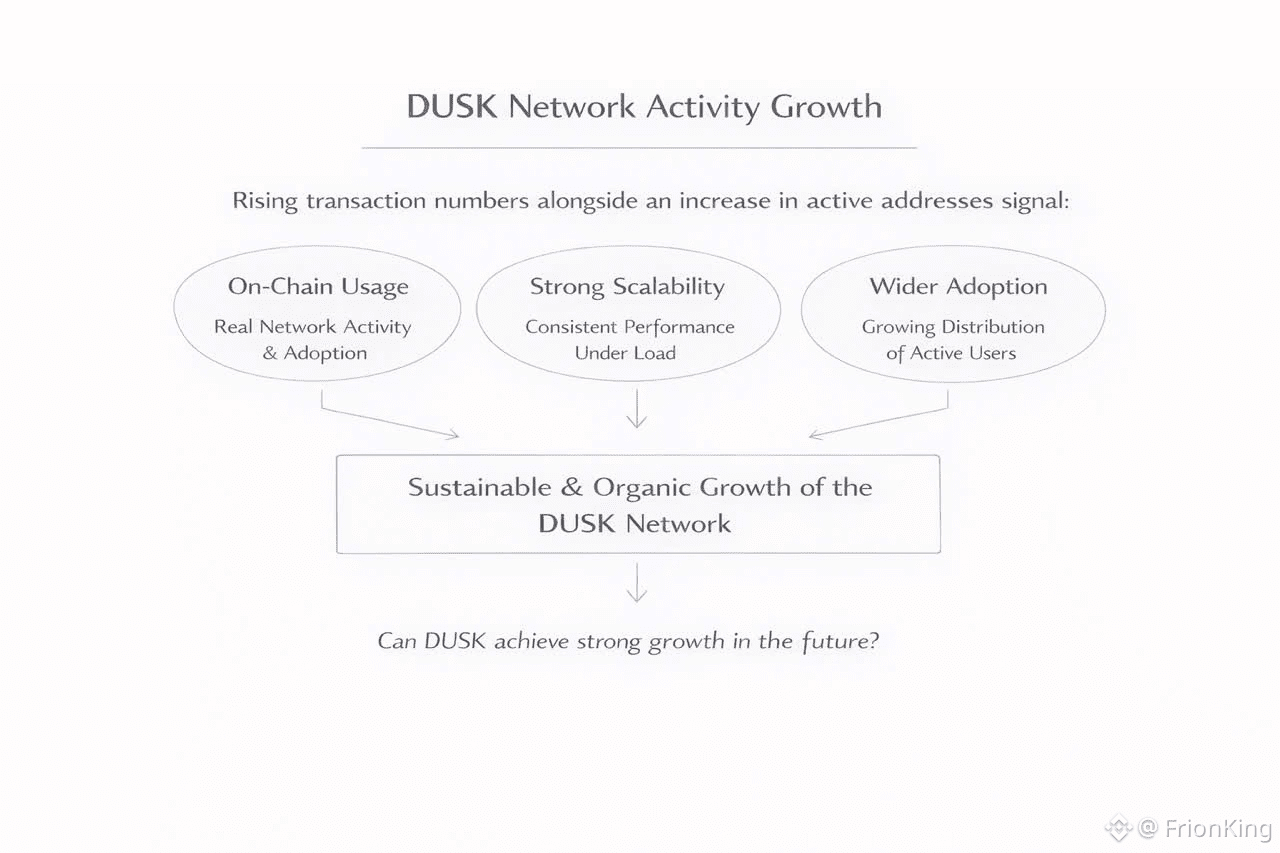
Scalability which doesn’t break under stress is definitely among the more significant factors driving the activity story of Dusk. This is because, obviously, it is easy for the chain to be beautiful when everything is going well, but as the chain gets busier and its ability to maintain predictable confirmation times is called upon, it definitely has to ensure fees aren’t the inhibitor, or else it will be tough to develop products which are perceived as reliable, and it is exactly this perception of reliability which translates curiosity into habit. This is especially the case in crypto, where habits breed, and the more people, the more apps, the more apps, the more transactions, and so forth.
Active addresses are equally as indicative, as they indicate distribution of activity. When there are more transactions but fewer active addresses, it may be represented by a select few or bots. However, if there is an escalation in active addresses, there is greater activity represented in what is viewed as a surface area of activity, with more unique addresses and greater diversity in activity patterns and behavior, which is essential when it comes to Dusk Network, which is privacy and security-focused, as activity patterns
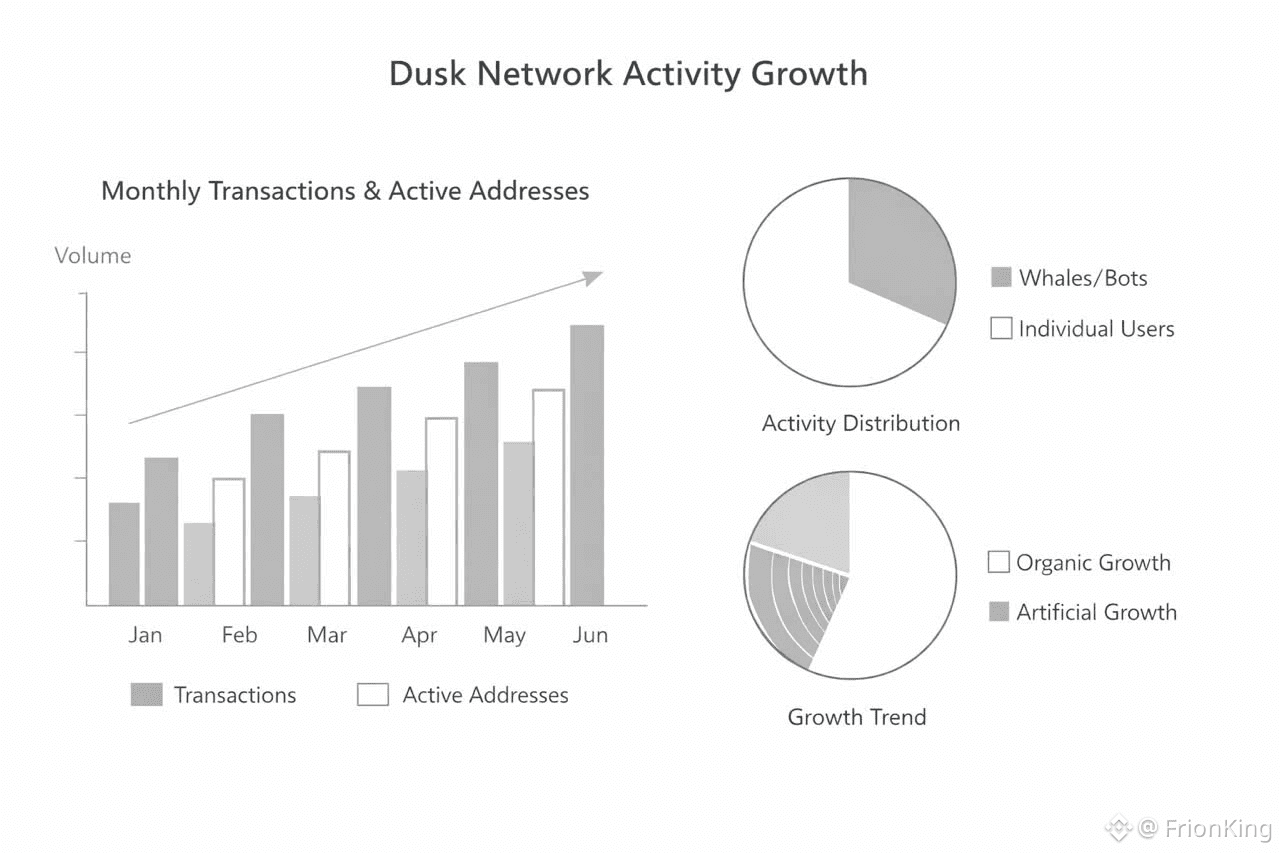
What I also like to watch is whether activity growth looks organic or forced. Organic growth tends to be choppy but directional, it climbs, cools off, then climbs again as new releases, integrations, and community adoption stack over time. Forced growth is smoother on the chart but fragile in reality, it fades the moment incentives shift. Dusk’s edge, if it continues to execute, is that it is positioned around security and privacy demands that do not disappear with a changing market narrative. “Not chasing short term trends” is not just a slogan in this context, it is a strategy that can translate into stickier demand if the network keeps delivering credible infrastructure.
Looking ahead, the most constructive scenario for Dusk is simple, sustained expansion in transactions and active addresses driven by practical usage, better tooling, and a growing builder ecosystem. If that happens, on-chain activity becomes more than a metric, it becomes proof that Dusk is turning its design priorities into real adoption. And in a market where many projects struggle to convert attention into usage, that kind of signal is worth taking seriously. I have a question for you, do you think Dusk Network can achieve strong growth in transaction volume and activity in the future?
