
Dusk positions itself as a fundamentally different kind of Layer 1 blockchain, one shaped less by the early crypto ethos of radical transparency and more by the structural requirements of regulated financial markets. While many networks evolved from open experimentation and later attempted to retrofit compliance and privacy, Dusk is designed from inception to support financial use cases where confidentiality, auditability, and legal alignment are not optional features but baseline conditions. Founded in 2018, the project aims to bridge the gap between decentralized infrastructure and institutional finance, positioning the chain as a settlement and execution environment for digital securities, compliant DeFi, and tokenized real-world assets.
At the core of this orientation is a modular architectural philosophy that separates concerns such as execution, privacy, and compliance logic into interoperable layers rather than embedding all functionality in monolithic smart contracts. This design allows the protocol to support complex financial instruments while maintaining adaptability as regulatory standards evolve. Instead of assuming that full public transparency is always desirable, the system is designed to enable selective disclosure, where transaction details can remain confidential to the public while still being provable to authorized parties. This shifts the blockchain model from one of universal visibility to one of controlled verifiability, aligning more closely with how financial institutions already operate.
Data handling within Dusk reflects this privacy-first yet auditable approach. Traditional public chains expose transaction flows and balances openly, which can be incompatible with institutional requirements around trade secrecy, counterparty confidentiality, and regulatory reporting frameworks. Dusk integrates advanced cryptographic techniques that allow transaction validity to be proven without revealing underlying sensitive data. Transaction metadata and financial logic can be shielded on the public ledger while remaining accessible to auditors, regulators, or counterparties through cryptographic proofs and permissioned disclosure channels. This architecture treats privacy not as an obfuscation tactic but as a structured component of system design, where transparency and confidentiality coexist in calibrated forms.
A key engine within this framework is the protocol’s privacy and compliance layer, which operates alongside the base execution environment. This layer is designed to support features such as confidential asset issuance, programmable compliance rules, and identity-aware logic without embedding personally identifiable information directly on-chain. Financial institutions and issuers can define conditions under which assets move, who can hold them, and how reporting obligations are met, all while retaining the benefits of decentralized settlement. Rather than forcing institutions to choose between public blockchains and private ledgers, Dusk aims to offer a middle path where open infrastructure can still respect legal and operational constraints.
AI-driven and automated systems are expected to integrate naturally into such an environment. In regulated markets, automation already plays a significant role in risk management, compliance monitoring, and transaction processing. On Dusk, intelligent agents can be designed to interact with smart contracts representing financial instruments, enforce rule-based constraints, and monitor activity patterns for anomalies. Because these systems operate within a framework that supports selective disclosure and verifiable state, automated processes can remain accountable and auditable. This allows algorithmic decision-making to function in tandem with regulatory oversight, rather than in opposition to it.
The broader ecosystem model reflects a multi-stakeholder structure aligned with institutional finance. Financial institutions issue and manage tokenized securities and structured products. Developers build compliant DeFi protocols, trading venues, and financial tooling. Validators secure the network and process transactions under the protocol’s consensus rules. Service providers such as custodians, compliance firms, and identity solutions integrate as part of the operational stack. End users, whether retail or professional investors, access tokenized assets and financial services through interfaces that abstract much of the underlying complexity. This structure aims to create a regulated digital asset ecosystem rather than a purely crypto-native market.
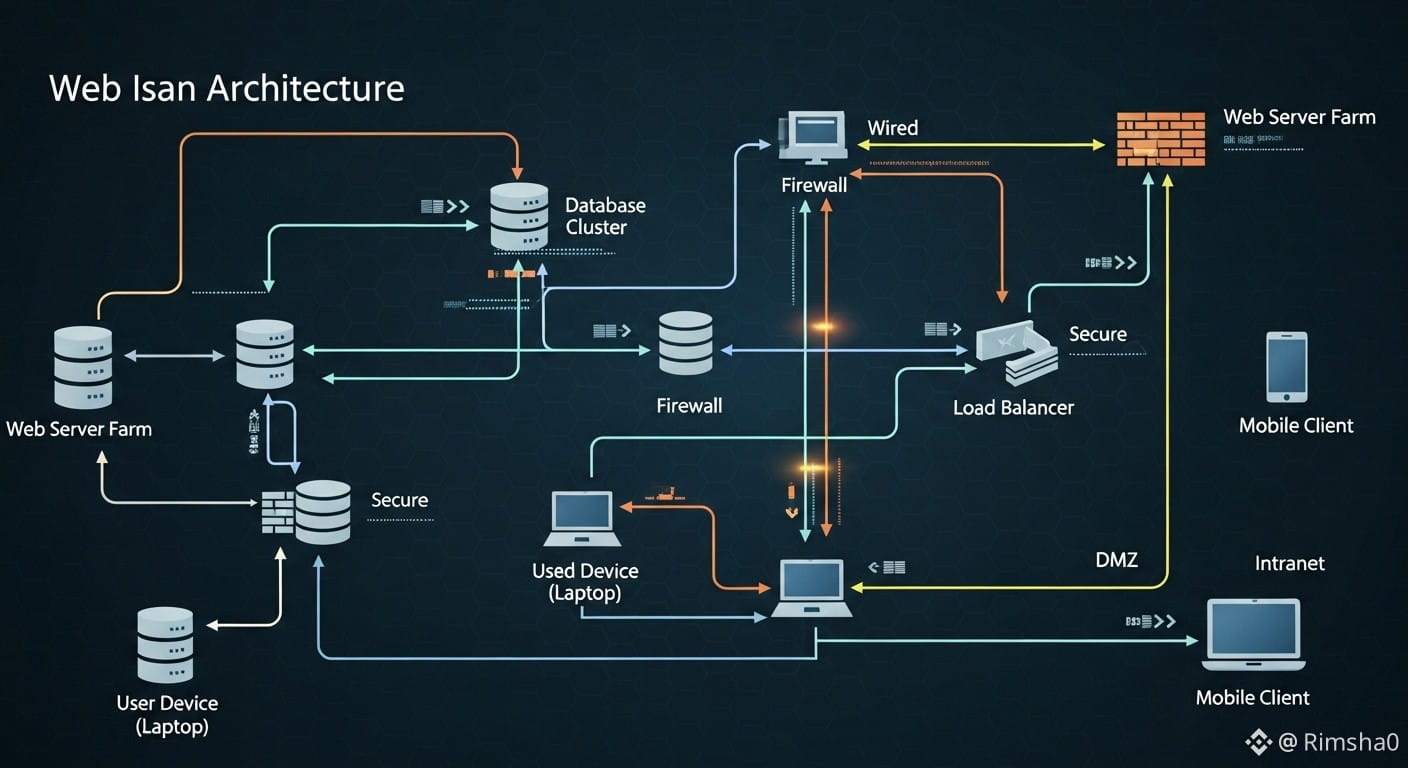
Consensus within Dusk is designed to balance decentralization with the performance and predictability required for financial applications. The model emphasizes deterministic settlement and strong security guarantees while supporting the network’s privacy features. For financial instruments, where settlement finality and state integrity are critical, consensus design must minimize ambiguity around transaction outcomes. This pragmatic orientation reflects an understanding that capital markets infrastructure must meet operational standards comparable to traditional systems, even as it leverages decentralized architectures.
The transaction fee model is also shaped by practical usage. Financial applications often involve high-value but structured transactions, periodic reporting, and institutional workflows rather than purely speculative trading. Fees are therefore designed to remain predictable and sustainable, enabling applications such as tokenized securities trading, asset lifecycle management, and compliant DeFi operations to function without extreme cost volatility. This stability supports business planning for institutions integrating blockchain into existing financial processes.
Sustainability considerations are increasingly important for institutional adoption. Energy-efficient consensus mechanisms and infrastructure optimization aim to reduce the environmental impact of network operations, aligning Dusk with ESG expectations that many financial institutions must meet. Carbon-aware infrastructure is not merely a branding element but a factor in procurement decisions, regulatory positioning, and public accountability for large organizations exploring blockchain-based systems.
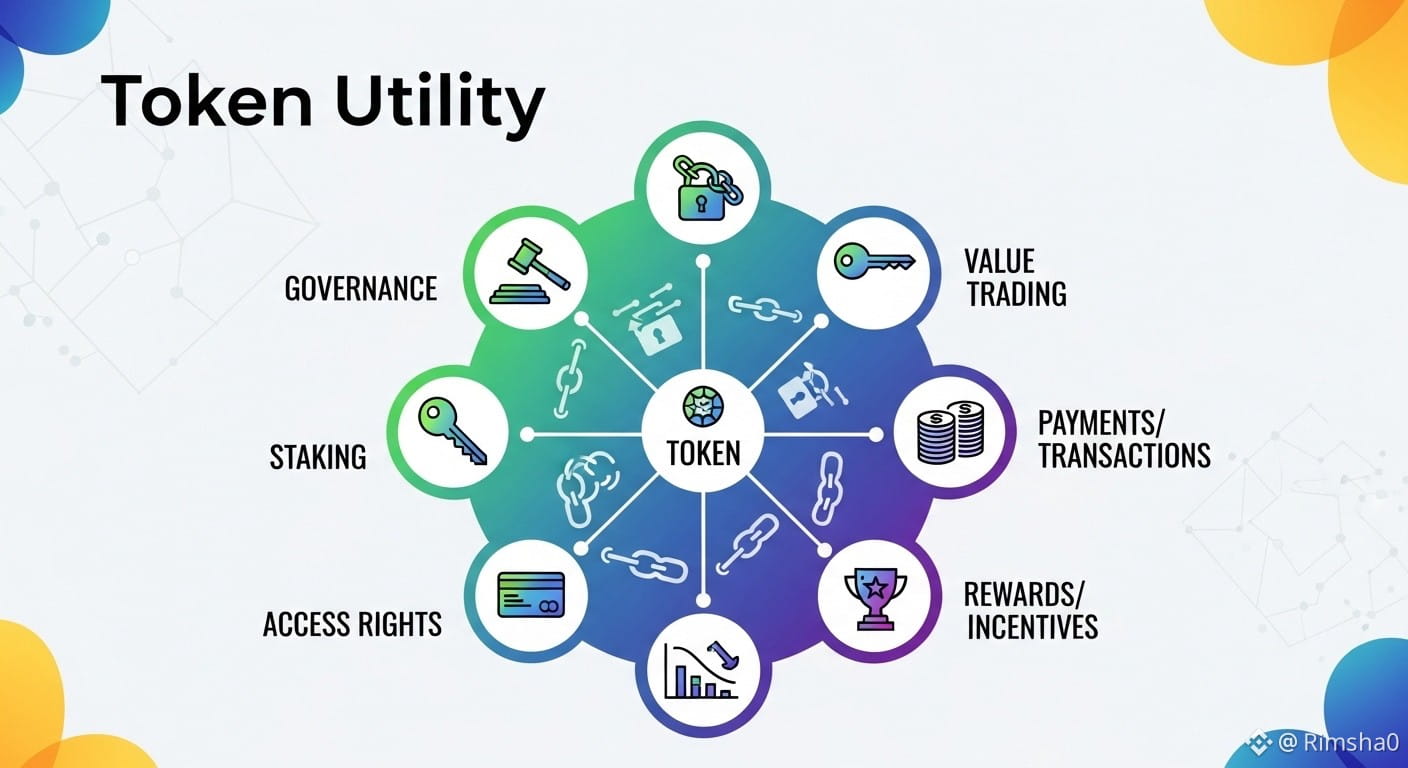
The tokenomics framework is structured to support network security, ecosystem growth, and long-term operational alignment. Token supply design and emission schedules aim to incentivize validators who maintain the network’s integrity and performance. At the same time, allocations are structured to support developer funding, ecosystem grants, and infrastructure expansion, recognizing that application diversity and institutional tooling are essential for adoption. Community-oriented distributions encourage participation in governance and network evolution, aligning token utility with active roles in maintaining the protocol. The token functions as a coordination mechanism across consensus, governance, and ecosystem development rather than as a vehicle for speculative expectations.
Dusk’s connection to real-world assets is central to its strategic positioning. Tokenization of equities, bonds, funds, and other financial instruments requires infrastructure capable of supporting legal ownership models, transfer restrictions, and reporting obligations. By integrating privacy-preserving mechanisms with programmable compliance, the network aims to support digital representations of traditional financial assets in a manner consistent with regulatory frameworks. In parallel, compliant DeFi applications can extend these assets into new financial primitives such as on-chain lending, collateralization, and secondary market trading, all within rule-aware environments.
Compatibility with broader blockchain ecosystems remains important. While Dusk is specialized, interoperability with Ethereum and other networks allows assets and liquidity to move across environments, enabling institutions to access wider markets without sacrificing the compliance and privacy features of the base chain. For developers, this interoperability reduces isolation risk and supports cross-chain innovation.
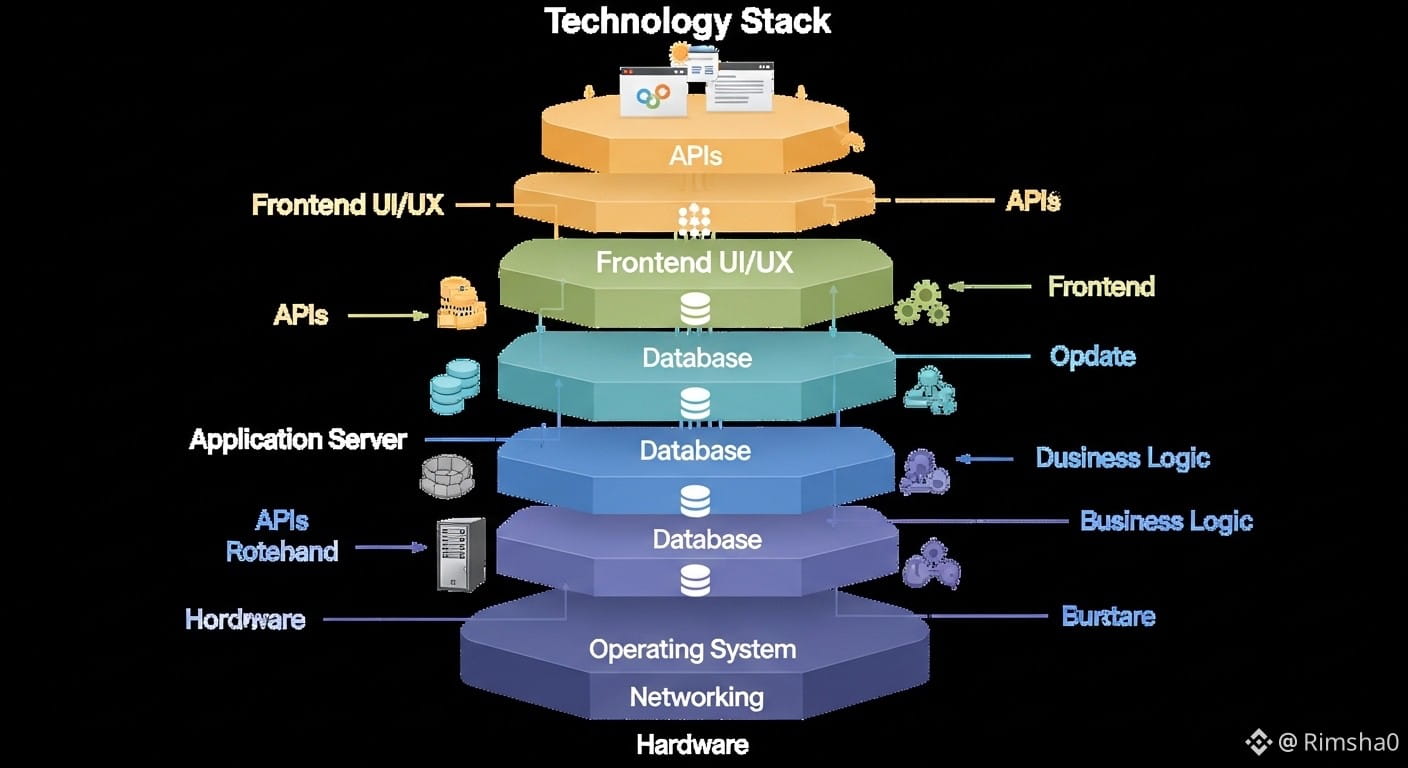
Technically, the system can be viewed as a modular stack. A base runtime layer handles consensus and core transaction processing. Above it, privacy layers implement zero-knowledge and cryptographic techniques for confidential transactions and selective disclosure. Compliance and asset layers provide programmable rule frameworks for regulated instruments. Interoperability components connect the chain to external networks and financial systems. This layered approach allows each component to evolve as legal, technological, and market conditions change.
Ecosystem growth has centered on building institutional-grade tooling, regulatory-aligned frameworks, and partnerships within the digital securities and compliant DeFi sectors. Milestones tend to focus on protocol upgrades, platform launches, and integrations with financial service providers rather than purely retail-facing metrics. This reflects a strategy aimed at long-term infrastructure relevance over short-term visibility.
From a long-term perspective, Dusk’s potential lies in its attempt to align blockchain infrastructure with the structural realities of regulated finance. By embedding privacy and auditability into its core design, it addresses barriers that have limited institutional participation in public chains. However, challenges remain. Regulatory landscapes continue to evolve, and alignment requires ongoing adaptation. Competition from both specialized blockchains and traditional financial infrastructure providers is significant. Adoption depends on the willingness of institutions to transition critical systems onto decentralized rails. If these hurdles are navigated effectively, Dusk positions itself to play a role in the gradual transformation of financial markets toward programmable, privacy-aware digital infrastructure.
