
Plasma positions itself as a departure from the general-purpose philosophy that has defined most Layer 1 blockchains, where networks attempt to be neutral substrates for every possible use case but often struggle to optimize for any single one. Instead, Plasma is designed from the ground up as a settlement environment tailored specifically for stablecoins, digital dollars, and real-world payment flows. This focus reshapes its technical and economic architecture, framing the network less as a speculative asset platform and more as a financial rail engineered for reliability, speed, and predictable cost structures. By treating stablecoins as the primary economic unit rather than a secondary tokenized asset, Plasma positions itself to address the growing demand for blockchain infrastructure that behaves more like modern payment systems than experimental distributed networks.
At the core of this differentiation is an architectural blend of full EVM compatibility and a performance-oriented consensus system. By integrating an Ethereum-equivalent execution environment through Reth, Plasma is designed to inherit the maturity of existing smart contract tooling, developer libraries, and security practices. This compatibility lowers the barrier for teams already building in the Ethereum ecosystem, allowing contracts, applications, and developer workflows to migrate or extend into Plasma with minimal friction. Complementing this is PlasmaBFT, a consensus model engineered to deliver sub-second finality. Rather than relying on probabilistic settlement windows that can complicate payment assurance, the network aims to provide rapid confirmation times aligned with the expectations of financial applications, where latency and certainty directly affect usability.
Data handling within Plasma reflects its payments-first orientation. Traditional chains often treat transaction data and contract state in uniform ways regardless of use case, leading to inefficiencies when supporting high-frequency, low-value transfers. Plasma is designed to optimize state management around stablecoin flows, where transaction patterns resemble payment streams rather than infrequent high-value movements. By structuring the system to efficiently process token transfers, account updates, and contract calls tied to stablecoin logic, the network aims to support sustained throughput without forcing developers to design around infrastructure bottlenecks. This makes it better suited, in principle, to environments such as remittance corridors, merchant payments, and consumer wallets, where transaction volume can be high and tolerance for delay is low.
A defining innovation in the system is its stablecoin-centric fee and execution model. Instead of requiring users to hold a volatile native token solely to pay for gas, Plasma introduces mechanisms such as stablecoin-first gas and gasless USDT transfers. This design aims to abstract away one of the most persistent frictions in blockchain adoption: the need to manage multiple tokens just to complete basic transactions. By enabling fees to be paid in stable assets, or in certain flows subsidizing user costs entirely, the network aligns more closely with the mental model of traditional digital payments. For retail users in high-adoption markets, this reduces cognitive overhead. For institutions, it simplifies accounting, treasury management, and user onboarding.
Intelligent automation is expected to play an increasing role within this environment. AI-driven agents, payment routers, and compliance-aware systems can be designed to interact directly with smart contracts, stablecoin balances, and on-chain identities. These agents may handle tasks such as automated treasury operations, liquidity routing between protocols, fraud pattern detection, or dynamic fee optimization. Because they operate within a verifiable on-chain framework, their actions can remain auditable and bounded by protocol rules. This interaction model positions Plasma not just as a transaction processor, but as an execution environment where automated financial logic can operate continuously across wallets, applications, and institutions.
The ecosystem model that emerges is multi-layered. Retail users access the network through wallets, payment apps, and embedded financial services. Developers deploy payment protocols, lending markets, and merchant tools that treat stablecoins as default money. Validators secure the chain and maintain consensus under the PlasmaBFT model. Institutions integrate custody, compliance, and settlement services, leveraging the network as a backend rail rather than a consumer-facing brand. AI agents and automated services operate alongside human users, managing flows and optimizing system performance. Real-world assets and financial instruments can be represented as tokenized forms, with stablecoins serving as the primary settlement medium that links these instruments to everyday economic activity.

Consensus design within Plasma emphasizes practicality over ideological extremes. PlasmaBFT is structured to provide fast finality and predictable performance, characteristics essential for payment systems where transaction reversals or long confirmation windows are unacceptable. Validator coordination and finality rules are designed to minimize latency while preserving Byzantine fault tolerance, creating a trade-off profile more aligned with financial infrastructure than with purely permissionless experimentation. This approach acknowledges that for payments and settlement, operational reliability and clarity of state are as important as decentralization metrics.
The fee model reinforces this orientation toward real-world use. Low and predictable transaction costs, combined with stablecoin-denominated gas options, aim to make the network viable for micropayments, gaming economies, subscription services, and high-frequency application interactions. In such contexts, volatile or high gas fees can destroy user experience and business models. By aligning fee mechanics with stable assets, Plasma is designed to offer cost structures that resemble traditional payment processing while retaining blockchain-level transparency and programmability.
Sustainability and infrastructure efficiency are also part of the system’s institutional positioning. Energy-conscious consensus design and optimized node requirements aim to reduce the environmental footprint associated with transaction processing. For financial institutions and payment providers operating under ESG frameworks, carbon-aware infrastructure is increasingly a prerequisite. By integrating efficiency at the protocol level, Plasma positions itself to align with regulatory and corporate sustainability expectations as blockchain-based settlement becomes more mainstream.
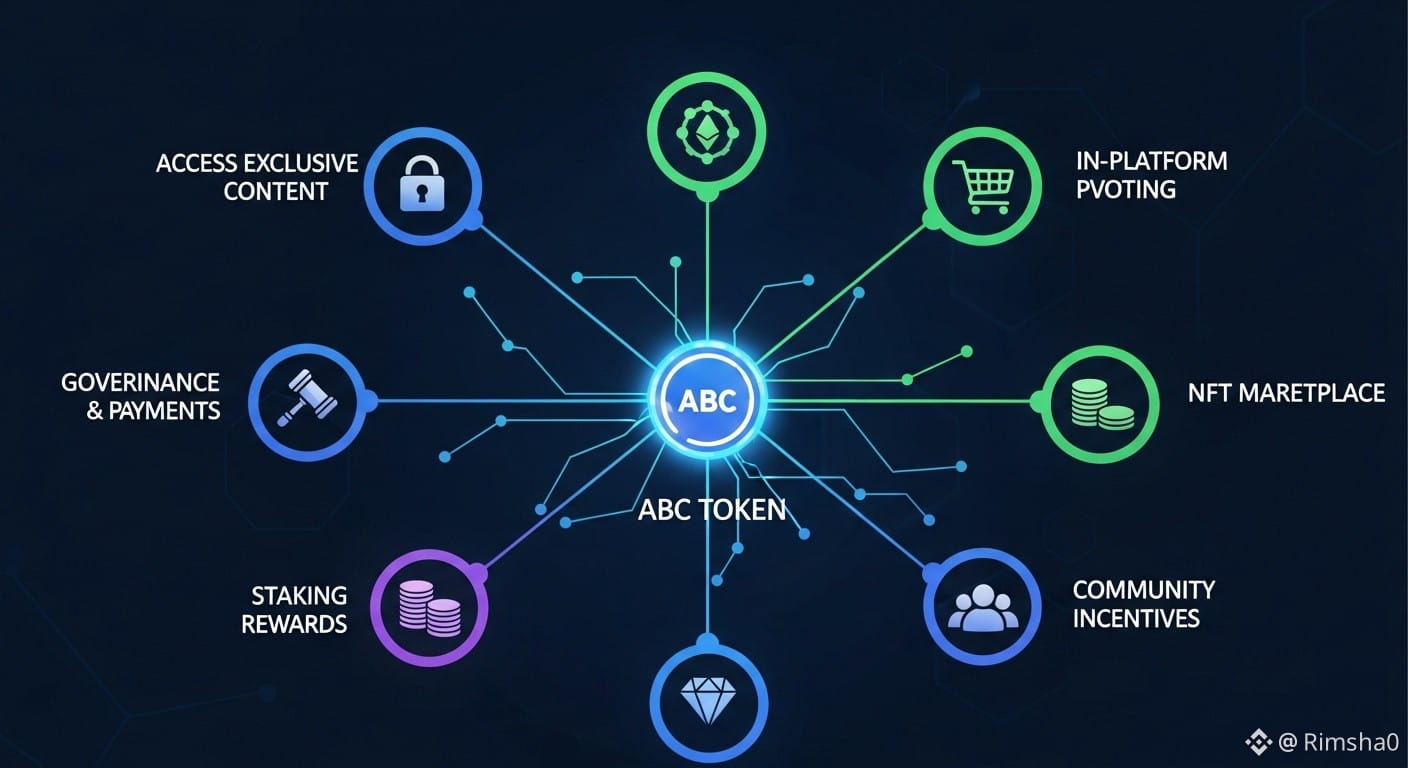
Tokenomics within the network are structured to support security, ecosystem development, and long-term operational stability rather than short-term market dynamics. The native token plays roles in validator incentives, governance participation, and protocol-level coordination, while stablecoins dominate user-facing economic activity. Emission schedules are designed to reward validators for maintaining network integrity and performance, gradually evolving toward a model where transaction activity and ecosystem usage contribute more significantly to network economics. Allocations aimed at developer funding and ecosystem grants support the growth of payment applications, infrastructure tools, and institutional integrations. Community-oriented distributions encourage participation in governance and network operations, aligning token utility with active roles in maintaining and expanding the ecosystem.
Plasma’s connection to real-world financial activity is central to its value proposition. Stablecoins already function as digital representations of fiat value in global markets, particularly in regions with currency volatility or limited banking access. By providing a settlement layer optimized for these assets, the network aims to support remittances, cross-border commerce, on-chain payroll, and merchant payments. In gaming and digital economies, stablecoins can serve as pricing and settlement units, reducing exposure to token volatility for both users and developers.
EVM compatibility ensures that this payments-focused model remains accessible to the broader Web3 developer community. Existing Ethereum contracts, tooling, and developer practices can be leveraged, enabling teams to deploy familiar logic while benefiting from Plasma’s performance and fee characteristics. This compatibility positions the network as an extension of the Ethereum ecosystem rather than an isolated alternative, facilitating cross-chain liquidity and shared innovation.
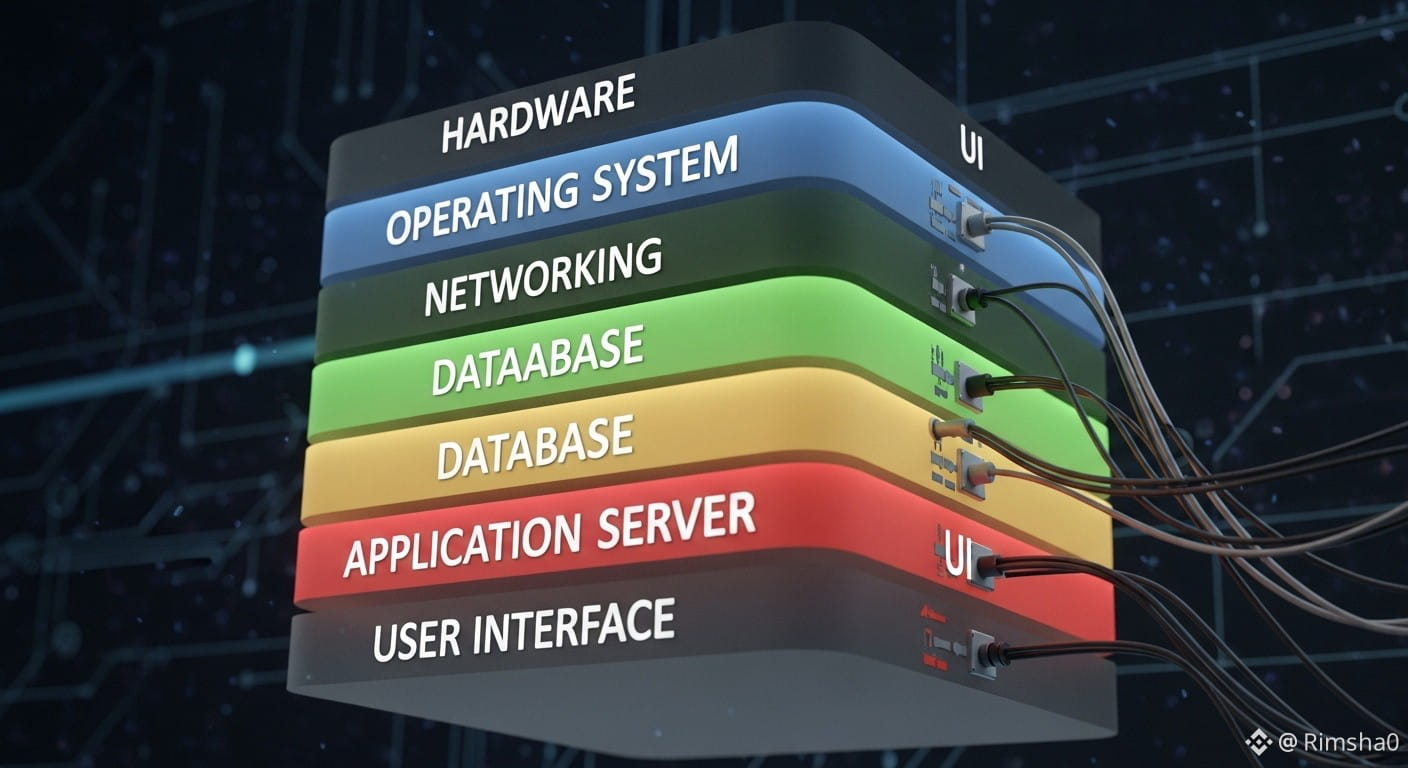
Technically, the system can be understood as a modular stack. A base layer provides consensus, security, and Bitcoin-anchored guarantees designed to enhance neutrality and censorship resistance. Above this, an EVM execution layer powered by Reth supports smart contracts and application logic. A payments-optimized middleware layer manages stablecoin-specific features such as gas abstraction and transaction routing. Interoperability components connect the network to other chains and financial systems, enabling asset movement and cross-network settlement. This layered design is intended to allow performance, execution, and interoperability components to evolve independently while maintaining a coherent system.
Ecosystem growth is likely to be measured through integration with wallets, payment platforms, and financial service providers rather than purely through speculative metrics. Milestones such as institutional partnerships, merchant adoption, developer deployments, and product launches in consumer-facing applications represent tangible indicators of progress. The emphasis on execution, infrastructure readiness, and compliance-aware design suggests a strategy oriented toward gradual but durable integration into digital finance.
From a long-term perspective, Plasma’s potential lies in its narrow but deep focus. By optimizing for stablecoin settlement, it addresses a clear and expanding segment of blockchain usage. However, this specialization also introduces risks. Adoption depends on sustained stablecoin growth, regulatory clarity, and competition from other high-performance settlement layers. Governance must balance institutional integration with open network principles. Technical execution must maintain performance without compromising security. If these challenges are managed effectively, Plasma positions itself to play a foundational role in the evolution of blockchain from speculative platforms toward practical financial infrastructure.


