
My journey into decentralized data
For most of our digital lives, we trust a small group of giant tech companies to store the data that powers everything we use apps, games, media, AI models. It’s convenient, fast, and familiar. But it comes with hidden costs: censorship risk, single points of failure, opaque control, and the uncomfortable reality that we don’t really own our data.
When I started exploring Web3 and AI more deeply, a problem became obvious. Blockchains are excellent at consensus and security, but terrible at handling large files. Videos, datasets, and rich media simply don’t belong on-chain replicating them across hundreds of validators is expensive and inefficient.
Decentralized storage networks tried to solve this, but most relied on full replication or static storage models. That led me to a simple but powerful question:
Can we build a storage layer that is decentralized, secure, affordable, and programmable?
Walrus is the first project that made me believe the answer is yes.
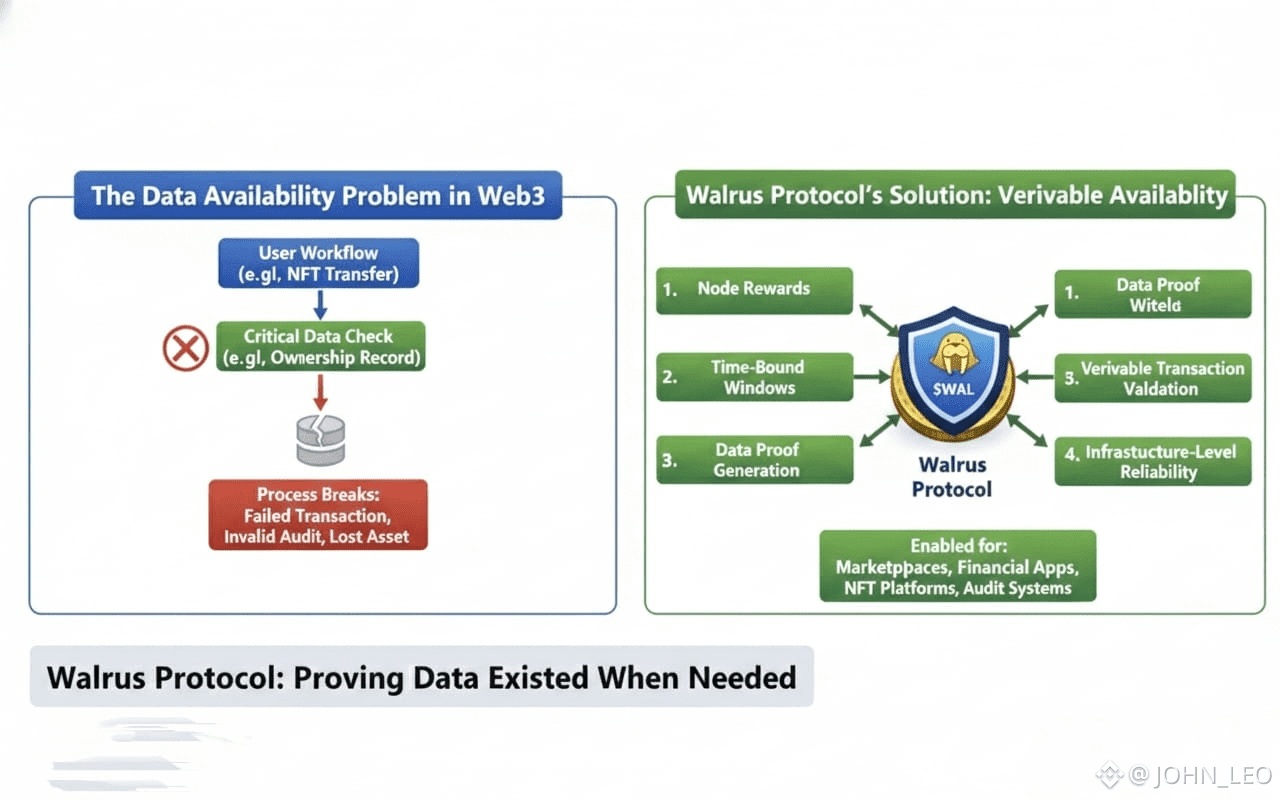
Why traditional storage (and blockchain storage) falls short
Every storage system makes trade-offs.
Blockchains prioritize consensus and small state changes. That’s why large “blob” data doesn’t belong there. Centralized clouds like Amazon S3 are efficient but introduce censorship risk, vendor lock-in, and single points of failure.
Decentralized networks such as Filecoin or Arweave improve resilience, but often rely on heavy replication or static, permanent storage. Once data is uploaded, it just sits there no easy way to automate permissions, monetize access, verify availability on-chain, or remove it when it’s no longer needed.
This static model doesn’t work for modern Web3 and AI systems, where data must be verified, managed, monetized, renewed, or deleted. What we actually need is a system where storage behaves like a programmable resource not a passive vault.
What is Walrus?
Walrus is a programmable, decentralized data availability and storage protocol built on Sui and developed by Mysten Labs. It allows developers to publish, read, and manage large binary files called blobs directly through Move smart contracts.
What makes Walrus stand out is that it treats storage as something interactive. Data can be owned, transferred, renewed, monetized, or destroyed all through on-chain logic.
Although Sui acts as Walrus’s control plane, the protocol itself is chain-agnostic. Ethereum, Solana, and other ecosystems can integrate with Walrus using SDKs, making it a shared storage layer across Web3.
The Walrus Foundation, backed by investors like Standard Crypto, Electric Capital, and Franklin Templeton Digital Assets, raised $140M in March 2025. Mainnet launched on 27 March 2025 and real usage followed.
I see Walrus as the data layer of the AI era.
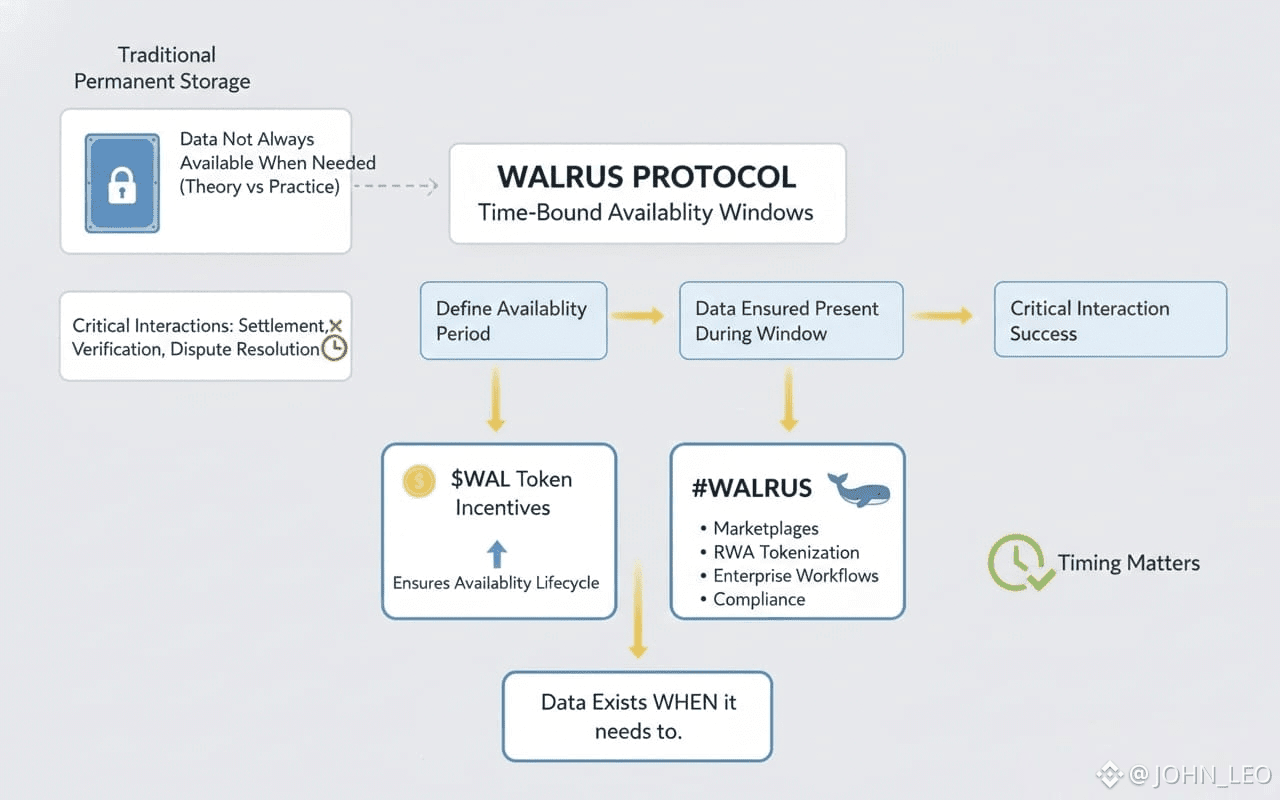
How Walrus works (without the headache)
Red Stuff and efficient erasure coding
At the heart of Walrus is a new erasure-coding system called Red Stuff. Traditional schemes like Reed-Solomon can recover data from fragments, but struggle with node churn and expensive repairs.
Red Stuff stores data in a two-dimensional structure with an effective replication factor of about 4.5x dramatically lower than full replication. If some data fragments are lost, Walrus only needs bandwidth equal to the missing pieces, not the entire file.
This enables self-healing, discourages adversarial attacks, and allows data recovery even if up to two-thirds of storage nodes fail or act maliciously.
Delegated Proof-of-Stake and epochs
Walrus runs on a delegated proof-of-stake (DPoS) model. Storage nodes compete for delegated stake from WAL holders. Based on that stake, nodes are selected into committees responsible for storing and serving data during an epoch.
At the end of each epoch, rewards are distributed. Poor performance leads to slashing. Rapid stake movement is penalized to prevent short-term attacks.
The result is a system that rewards long-term reliability and makes attacks economically irrational.
Sui as the control plane
Instead of keeping metadata off-chain, Walrus turns storage into on-chain Sui objects. Blobs, storage space, and availability proofs all exist on-chain.
When data is uploaded, it’s split into slivers and distributed across nodes. A Proof-of-Availability (PoA) certificate is published on Sui, allowing smart contracts to verify that the data exists and is accessible.
This design unlocks something rare in decentralized storage: deletability. Data can be destroyed when it’s no longer needed—something protocols like Arweave cannot do.
WAL token: utility, economics, and governance
WAL is the native token of the Walrus network, capped at 5 billion supply, with roughly 1.57 billion in circulation and a market cap around $190M at ~$0.12 per token (January 2026).
WAL serves three core purposes:
1. Cost – Users pay WAL to store data. Fees are smoothed over time so storage costs remain predictable despite price volatility. Early adoption is supported by user subsidies.
2. Security – WAL is staked and delegated to storage nodes. Good performance earns rewards; bad actors are slashed.
3. Governance – WAL holders vote on protocol parameters such as penalties, fees, and incentives.
The token is deflationary through burn mechanisms tied to short-term stake shifts and slashing penalties.
Decentralization by design
Walrus tackles the classic decentralization problem: stake concentration. It does this by rewarding uptime and reliability not scale—and by penalizing coordinated stake movement.
Governance decisions are distributed across the community, ensuring that no single operator or entity can control the network or the data stored within it.
As usage grows, decentralization strengthens instead of weakening.
Real-world use cases: from AI to esports
Walrus is already being used in production:
AI and data marketplaces Verifiable datasets with on-chain availability proofs and encrypted access.
Web3 media and content – Programmable websites, video, music, and creator monetization.
NFTs and DeFi – On-chain verification of media availability before transactions execute.
Enterprise and gaming – In January 2026, Team Liquid migrated 250TB of esports footage and brand assets to Walrus, eliminating centralized failure points and unlocking new fan experiences.
This is no longer theory it’s infrastructure.
Walrus vs other storage networks
Walrus doesn’t replace Filecoin or Arweave; it complements them.
Lower replication cost (~4.5x)
Fast, incremental recovery
Programmable storage via smart contracts
Data deletion and lifecycle management
Strong economic incentives against centralization
Where others focus on permanence or raw capacity, Walrus focuses on interaction and programmability.
Risks and my honest view
WAL has seen volatility from a $0.87 high to deep corrections. Execution risk exists, and adoption depends on continued delivery. This is not risk-free.
But data is becoming the foundation of AI, gaming, social networks, and digital economies. Walrus addresses this need with real innovation, real users, and a thoughtful economic design.
Personally, I see Walrus not as “just another crypto project,” but as core infrastructure for the next decade. I plan to use it, build on it, and participate in its governance while staying realistic about the risks.
Final thoughts
Walrus reimagines storage as a programmable, interactive asset. With advanced erasure coding, delegated proof-of-stake security, on-chain automation, and community-driven governance, it fills a gap that Web3 and AI desperately need.
For anyone serious about decentralized data, Walrus is not optional it’s foundational.
$WAL | @Walrus 🦭/acc | #walrus

