
My discovery of Dusk Protocol coincided with one of my earliest explorations of blockchain systems that combine the characteristics of a distributed network with the controls of a regulated financial system. I observed that, from the very first instance, the primary block design integrated regulation as a primary component, rather than as a secondary component. Most chains will demonstrate compliance as a secondary or superficial component of a front-facing commercial narrative, but Dusk is the only one I know of that has built oversight, auditability, and regulatory compliance into the design of the system. I have observed, over time, that Dusk builds its credibility slowly and over time, through disciplined design, the maintaining of strict compliance of operational guidelines, and the controlled setting of boundaries of trust. Most users will hardly notice this, but it is precisely this phenomenon that Dusk as a system possesses, rather than superficial and hyped adoption metrics.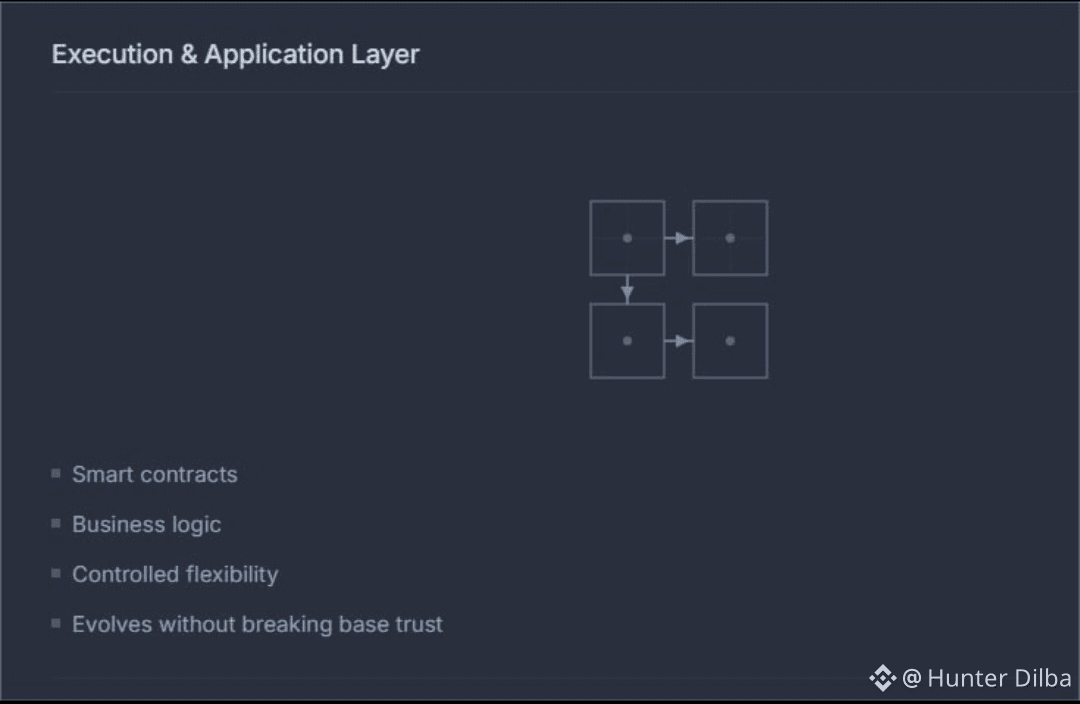
What has Dusk's design right, is the distinction first, between the foundational design tier and the higher order execution tier. The first or base layer is what I have come to also refer to as the settlement and data availability foundation, and it is as intentionally conservative as it has been designed to be.Dusk has a clear allocation of responsibilities. These include maintaining ledgers that are accurate and reliable, guaranteeing deterministic settlement, and being the single record for all processes that flow downstream. On top of this foundation sits an execution layer that contains smart contracts, business logic, and operations specific to an application. This division is similar to the architecture of systems I have been studying for a long time: clearing houses, central securities depositories, and settlement rails, which usually do not combine core ledger functions with business logic in the same system. Dusk embodies this principle, minimizing operational fragility at the bottom, while allowing the top layers to change without breaking systemic reliability.
Watching Dusk has taught me a lot, and one of the things I appreciate is how compliance is embedded as a function of the management of the information lifecycle. A transaction, an identity claim, and a state transition, for example, all contain one data element, and that element is said to follow a certain and controlled route: in, validated, published, and auditable. The operational processes of the system and how they run initiative Dusk to imbue regulatory compliance without external reporting and discretionary auditing.
Node updates must spread without risking settlement determinism, and version-migration is done in stages to balance trust boundaries. There are boundaries; the network doesn't promote instantaneous throughput, and it doesn't hide the price of the execution that can be verified. These are not weaknesses, but rather signals of trust for those used to working in institutional settings, where operational predictability and risk mitigation are valued over marketing buzz.
As I attempted to rationalize the phenomena at hand, the contrasts with customer-centric ecosystems became even more apparent. Dusk is not a system designed in service of a narrative, growth, or engagement. It has sacrificed even the most superficial visibility for a much more valuable form of growing complexity and structural resilience. Speed, spectacle, even viral growth, are not in Dusk's value proposition. Endurance is. Dusk reminds me most of the internal ledgers and permissioned networks of the modern financial ecosystem. Here, success is not the headline number. It is the ability to reliably survive audits, to be flexible with changing regulations, and to deliver the same expected results in the face of stress.
One very helpful moment was when I examined the interactions between settlement and execution layer contracts one event at a time. I was able to see how differentiated settlement primitives and layer execution contracts operated one event at a time. It was easy to see if a contract was violating some of the proto regulations, but valid operational contracts were able to continue. At times, Dusk shows operational flexibility and transparency, as the network permits complexity, but never at the expense of foundational trust. In contrast, Dusk operational flexibility and transparency permits a the complexity of a valid operational contract.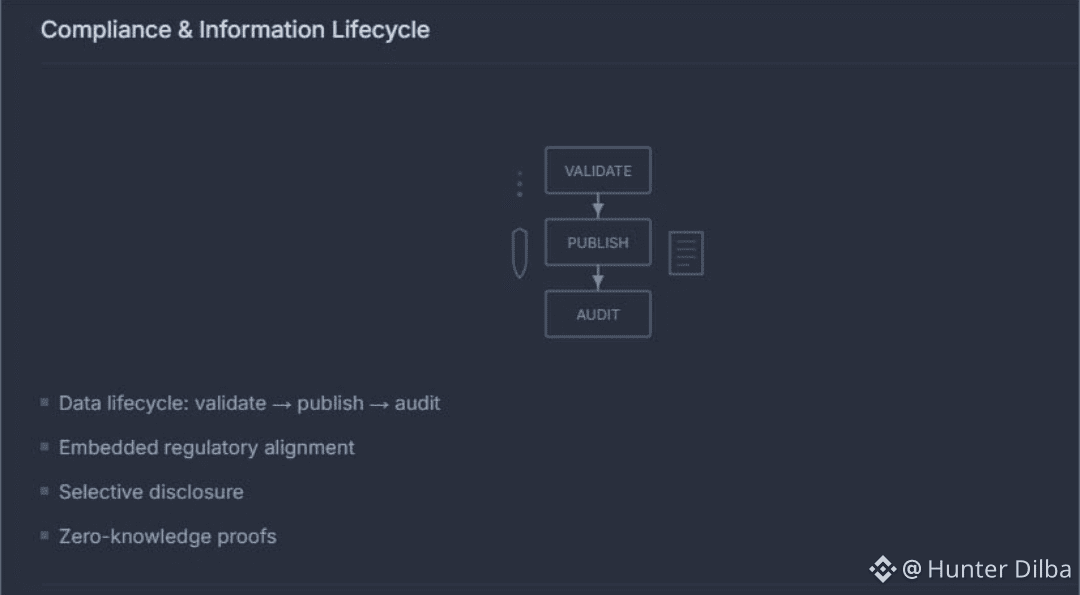
Repeatedly I mentioned the same conclusion. Through structural integrity and not through grandiosity, Dusk has operated. The overall structural design components of the network and how they manage compliance, privacy, and operational rigor is grand in scope, but the overall design components of the network and how they manage compliance, privacy, and operational rigor is grand in scope and the overall structural design components of the network and how they manage compliance The network is seamless and unobtrusive.
For environments that provide regulatory scrutiny, operational transparency, and a deterministic framework, Dusk is that platform.Trust is built incrementally, not given. A strong, positive relationship with regulators can be an asset, not a constraint. I believe Dusk Network's ability to withstand scrutiny while keeping its operational integrity and selective transparency is a structural advantage. Dusk is not built for mainstream adoption, hype, or for attention. It's built to succeed and showcase its abilities. Finally, that is what makes Dusk Network credible and why people in regulated, high-stakes finance pay attention to it.
