

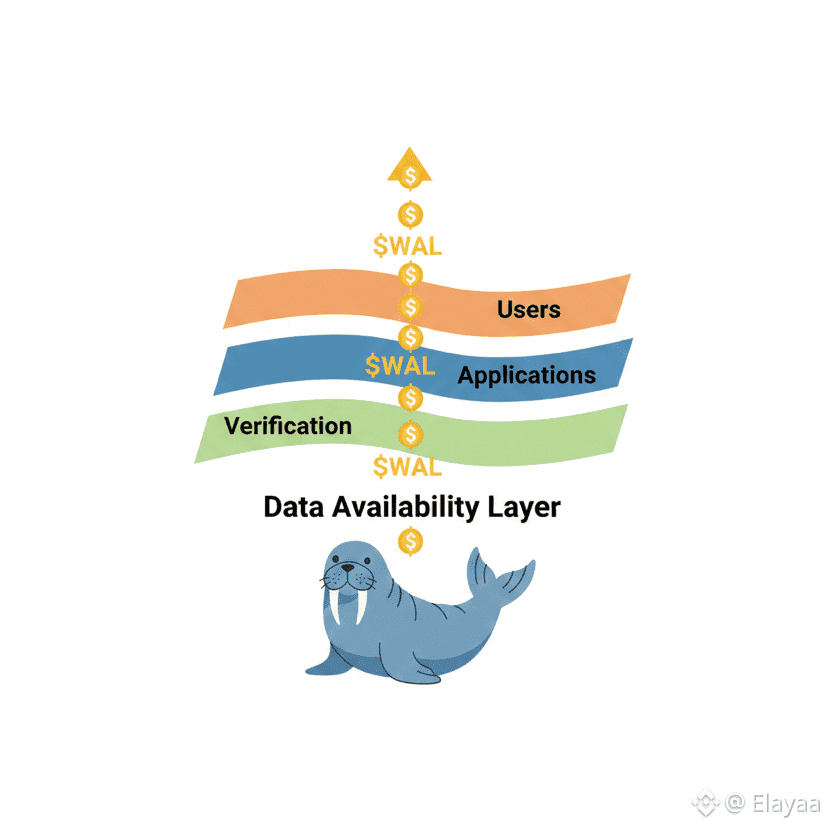
Walrus sits at the very bottom of the stack because everything else depends on data being available. Before apps, before execution, before automation, there must be data that can be accessed and verified over time.
When data is first created, it is easy to find. The network is active, nodes are online, and incentives are strong. Over time, this changes. Activity slows. Operators leave. Old data becomes heavy and costly to keep. This is when systems quietly start relying on trust instead of verification.
Walrus is built to stop that shift.
Walrus does not try to do many things. It does not run applications. It does not process transactions. It focuses only on keeping data available so anyone can check the past without permission.
Data on Walrus is encrypted and split into small pieces. These pieces are stored across many independent nodes. No single node controls the data. Even if some nodes go offline, the data can still be recovered. This keeps access open and reliable over time.
$WAL exists to support this role. Nodes are rewarded for staying online and keeping data available during quiet periods, not just during busy ones. This makes Walrus strong when attention fades.
Walrus acts as the base layer that protects history so everything built above it can remain trustworthy.

