
Plasma is emerging as one of the most talked-about innovations in the blockchain world precisely because it was designed from the ground up not just to host stablecoins, but to optimize them in a way no existing blockchain has before. Where networks like Ethereum and Tron were built as general-purpose platforms and later adapted to handle stablecoins, Plasma was carefully engineered to make stablecoin settlement and payments faster, cheaper, more secure, and easier for both developers and everyday users. What that means in practice and in technology is rich, and when you look at what it’s trying to solve, it reads like a direct answer to some of the biggest frictions blockchain users face today.
At its core, Plasma is a Layer 1 blockchain with a singular focus: it exists to be a global settlement layer for stablecoins. Instead of treating stablecoins as an afterthought, Plasma’s developers gave them first-class status at the protocol level. That design choice shapes everything about how the network works, from how transactions are validated and finalized to how fees are paid and how external security is woven into the system. In doing so, it promises a radically different experience from what most users have seen before on networks where stablecoins are just one among thousands of tokens.
Technically, Plasma brings together three major architectural pillars. PlasmaBFT is its custom consensus mechanism inspired by modern HotStuff-derived BFT designs, tuned for rapid decision-making and extremely low latency. It finalizes transactions in well under a second and can process thousands of transactions per second, a throughput that makes real-time stablecoin settlement and high-frequency financial applications feasible on-chain. That kind of performance is not a trivial improvement — it’s a fundamental shift toward the responsiveness needed for payments at scale.
Underneath that consensus layer sits the execution environment. Plasma is fully compatible with the Ethereum Virtual Machine (EVM), powered by a high-performance client built from the Reth project in Rust. What this means is that developers don’t have to learn a new programming model or rewrite their smart contracts to deploy on Plasma; anything that runs on Ethereum today, in Solidity or Vyper, will run on Plasma without modification, and development tools like Hardhat, Foundry, MetaMask, ethers.js, and others work seamlessly. This compatibility dramatically lowers friction for builders, because the ecosystem of tools and skill sets they already rely on carries over directly.
But Plasma’s innovations go beyond raw speed and developer ergonomics. One of the features that draws the most attention is its stablecoin-centric gas model. Instead of requiring users to hold the network’s native token just to pay transaction fees, Plasma enables fees to be paid directly in stablecoins like USDT or even Bitcoin. More than that, the protocol includes a special paymaster mechanism that can actually sponsor gas for basic USDT transfers, effectively making those transactions gasless from the user’s perspective. By removing this friction point — the need to manage two separate tokens just to make a payment — Plasma makes the user experience far closer to what people expect from traditional digital payments systems.
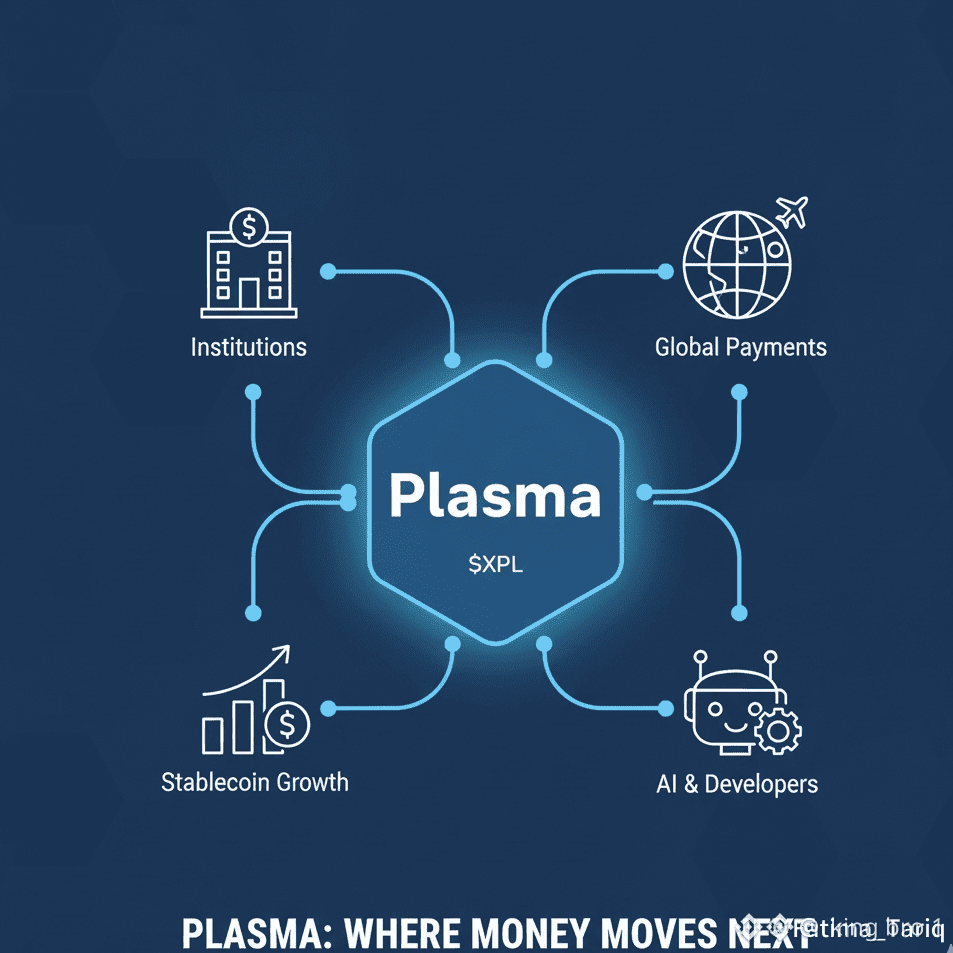
That stablecoin-first gas model is paired with a deeper philosophical shift about what blockchain money should look like. Most general-purpose chains charge fees in a volatile native token, which can be confusing or costly for everyday users making simple stablecoin transfers. Plasma instead treats stablecoins as the instrument of value and lets the mechanics of the network bend around that use case. Whether it’s paying fees in USD₮ or BTC, or subsidizing simple transfers for users, everything is engineered to reduce cost and complexity for stablecoin transactions — the very use case that accounts for the vast majority of real-world crypto value flows today.
Security is another area where Plasma diverges from typical Layer-1 designs. While many chains rely on internal validator sets whose security is self-contained, Plasma introduces a Bitcoin-anchored model. In simple terms, the chain periodically writes cryptographic summaries of its state to the Bitcoin blockchain, tying its history to Bitcoin’s proof-of-work consensus. Anchoring in Bitcoin doesn’t replace Plasma’s internal consensus, but it adds a layer of external settlement integrity: changing Plasma’s history without rewriting Bitcoin’s would be computationally infeasible. This approach combines the censorship resistance and neutrality of the Bitcoin network with the programmability of EVM-compatible chains, creating a unique hybrid security profile that appeals especially to institutional users and applications that demand stronger settlement assurances.
On top of all this, Plasma is designed with privacy-aware features in mind. While maintaining compliance and auditability, it offers optional confidential payment flows, where transaction details such as amounts or participant addresses can be shielded while still allowing for regulatory disclosures when needed. These privacy enhancements use advanced cryptographic techniques to balance confidentiality with legal and compliance requirements — a trade-off that many financial applications care deeply about.
From a market perspective, Plasma has also garnered significant backing and attention. It completed multiple funding rounds with participation from well-known investors in the crypto space, including venture firms like Founders Fund and Framework Ventures, as well as exchanges and stablecoin issuers themselves. That level of financial support reflects broader interest in specialized blockchain infrastructure tailored to real-world financial flows, particularly as stablecoins grow in volume and importance in cross-border payments, remittances, and decentralized finance.
What this all adds up to is a blockchain that aims to be both technically robust and commercially useful. Retail users in regions with unstable local currencies could find stable, low-fee settlement attractive, while institutions see value in a settlement layer with predictable costs, fast finality, and strong anchoring to Bitcoin’s security. That dual appeal — to everyday users and to financial players — is part of Plasma’s strategic positioning as a new kind of payment infrastructure for the digital age.

