
Nearly $1.7 billion in liquidations hit the cryptocurrency market in the past 24 hours. Total market cap dropped 6%.
Bitcoin accounted for almost half of the total liquidations. Traders betting on higher prices got crushed during the selloff.
All the noise from people keep saying that the next bear market will be a cute little dip. That we would go into "stocks like environment" where we see smaller dips, but also smaller gains in coming bulls.
Nope.
2026 is shaping up to be the most violent unwinding this space has ever experienced, and almost nobody is ready for it, as the general consensus from retail is the opposite atm.
Let me explain why.
1. Institutions don’t hodl. They sell. And HARD they will sell.
This cycle was the first time Bitcoin became a truly real institutional asset. Sounds bullish on paper, but the reality no one wants to talk about: institutions are forced sellers during recessions.
They de risk into cash.
They have clients to protect, redemptions to satisfy and risk rules to follow.
They are not your diamond handed Twitter influencers or average crypto bro from Reddit.
When liquidity dries up, they don’t wait for hopium. They hit the sell button.
2. The MicroStrategy situation is a ticking bomb. BOMB. The "Tsar bomba" kind of a bomb.
Everyone treats MSTR like some “savior of Bitcoin”, but it is basically a publicly traded giga leveraged long BTC position. They have billions in debt and BTC as collateral. If BTC drops -40 to -50%, which it likely will, they get squeezed harder than crypto gif memes.
If MSTR starts getting margin pressure or forced collateral adjustments, then the selling pressure will be worse than 3AC, Celsius and Terra combined. We will se a huge black swan event, similar or wose than the FTX event. However, this can be magnificant for retail to entry at low prices.
3. ETF flows do not just go up.
Yes. We had the first ETF driven bull run ever. But know what? That will follow with the first ETF driven bear run. If there is a recession or just a risk off macro period, ETF outflows will be brutal. Financial advisors will rotate clients into safer assets. Pension funds will reduce risk exposure. Family offices will trim BTC like any other volatile asset. When the lights go off for good (already starting), ETF outflows mean instant sell pressure that retail is not ready for.
4. Corporate treasuries might have to dump too.
Companies holding BTC look cool in a bull run, but when earnings weaken and credit conditions tighten.. Yeah, time to buckle up and say cya. It's natural for boards to tell them to cut risk. Auditors push impairment accounting. Cash becomes the thing again. Corporate selling has not been tested in a real macro downturn. 2026 WILL LIKELY be the first time.
5. Leverage in this market is insane compared to previous cycles.
The amount of perpetuals, options, structured BTC notes and corporate debt collateralized by BTC is ridiculous. When all of that unwinds under macro stress, it won’t be a small minus -30% dip. It will be a face melting liquidity vacuum.
6. QE will not save you early. It arrives after the pain.
Last but not least. Most people embrace the hopium of QE starting in 2026. Yes. Probably and actually, likely. But only after the market collapses. Q1-Q2 will be brutal. It will be enough time for the charts to plummet so hard it will go beneath your screen's bottom corner. Yes, after that will likely come QE, but why hold through that when one can sell now and double their position soon?
The next crash will not be (only) a retail emotional panic.
It will be an institutional, corporate, leverage driven purge.
270,000 traders got liquidated
CoinGlass data shows a sharp wave of liquidations as asset prices fell following escalating US-Iran tensions. Over 270,000 traders were liquidated during this period.
Long positions took the biggest hit. Liquidations reached $1.57 billion for longs. Short positions totaled $107.74 million.
Bitcoin liquidations hit $768.69 million. Long positions made up $745.3 million of that figure. Ethereum followed the same pattern.
ETH saw total liquidations of $417.43 million. Long positions accounted for $390.5 million.
Exchange data shows Hyperliquid recorded the highest liquidation volumes with $567.2 million in long liquidations and $28.1 million in short liquidations. Bybit followed with $329 million and $11.9 million. Binance posted $152.3 million in long and $29.5 million in short liquidations.
These forced closures happen when margin accounts can no longer cover losses. Exchanges automatically liquidate positions to protect both traders and platforms from unsustainable debt.
Leveraged positions magnify price movements. Sharp declines can quickly push traders using borrowed funds into liquidation. This creates a cascading effect. Successive liquidations add selling pressure and accelerate downward momentum.
Bitcoin and Ethereum drop to two-month lows
Total crypto market capitalization fell 6% over the past 24 hours. During early Asian trading hours, Bitcoin and Ethereum slid to two-month lows of $80,815 and $2,687 on Binance.
By press time, prices recovered slightly. Bitcoin was trading at $82,023 and Ethereum at $2,737. Among the top 10 cryptocurrencies, Solana posted the largest decline, falling 7.7% over the past 24 hours.
The crash wasn't limited to crypto. Precious metals and equities got hit too.
Lookonchain reported that a gold-long whale was liquidated for 2,700 $GOLD worth $13.83 million amid the market crash.
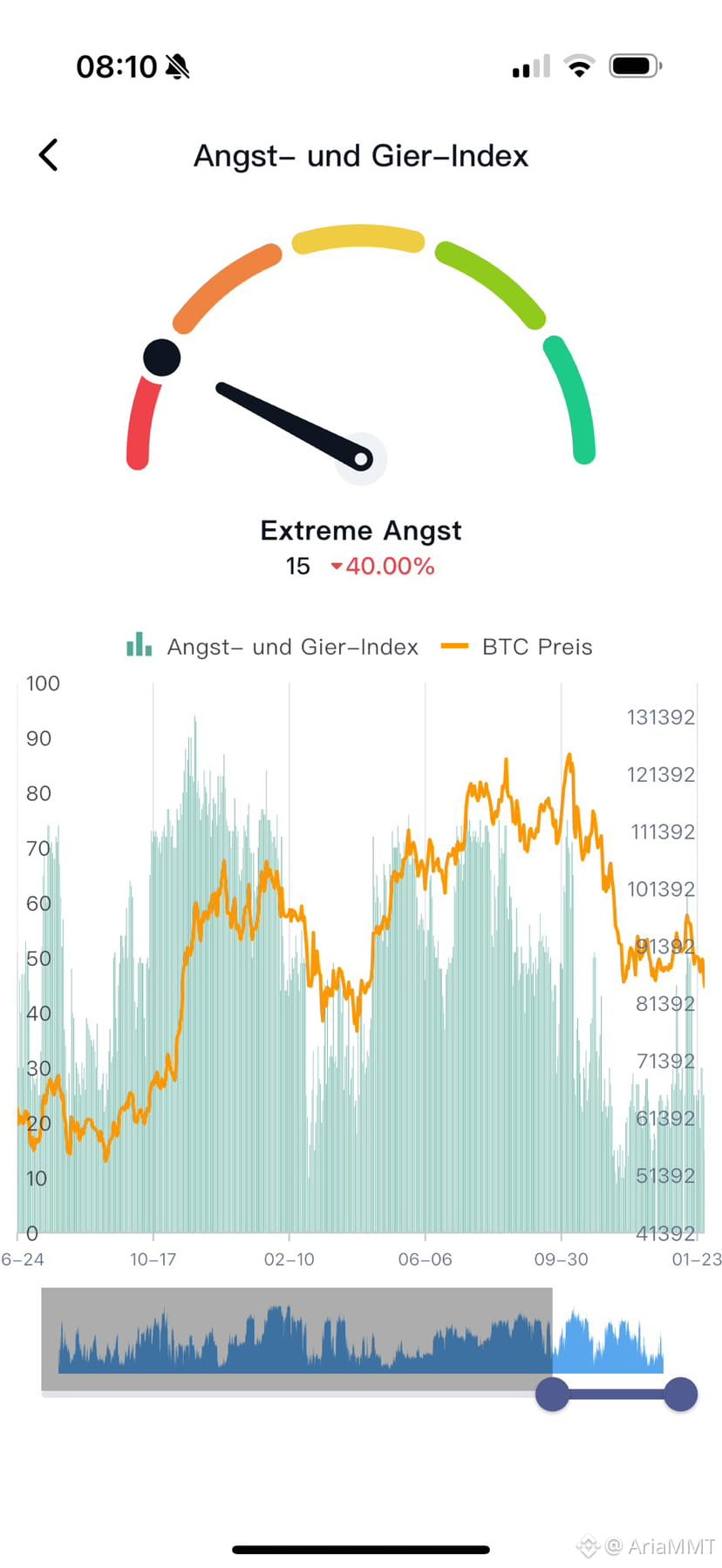
Fear index signals extreme panic
Market sentiment deteriorated sharply alongside the selloff. The Crypto Fear & Greed Index plunged to 16 on January 30, signaling extreme fear among traders. The reading marked the index's lowest level year-to-date, down from 26 a day earlier.
Signs of panic were visible on-chain too. Lookonchain tracked a whale sell-off event, signaling capitulation by key market players.
One whale panic-sold 200 BTC worth $16.91 million during the market crash. This whale bought 300 BTC at an average price of $111,459 on September 15 and November 12, 2025. That's a massive loss.
What happens next
The combination of heightened geopolitical tensions, aggressive deleveraging, and deteriorating market sentiment created a brutal environment for crypto markets.
Right now, the market is in extreme fear mode. $1.7 billion got wiped out in one day. Whales are panic selling at losses. And Bitcoin is testing two-month lows.
The bleeding might not be over


