
Dusk is a blockchain project born out of a deep-seated belief that the world of traditional finance and the world of decentralized technology could be brought together without compromising on privacy, performance, or regulatory responsibilities. Since its founding in 2018 in Amsterdam, Dusk has grown from a bold idea into a full-fledged Layer 1 protocol that has carved out a unique niche at the intersection of regulated financial markets and privacy-centric distributed ledger technology.
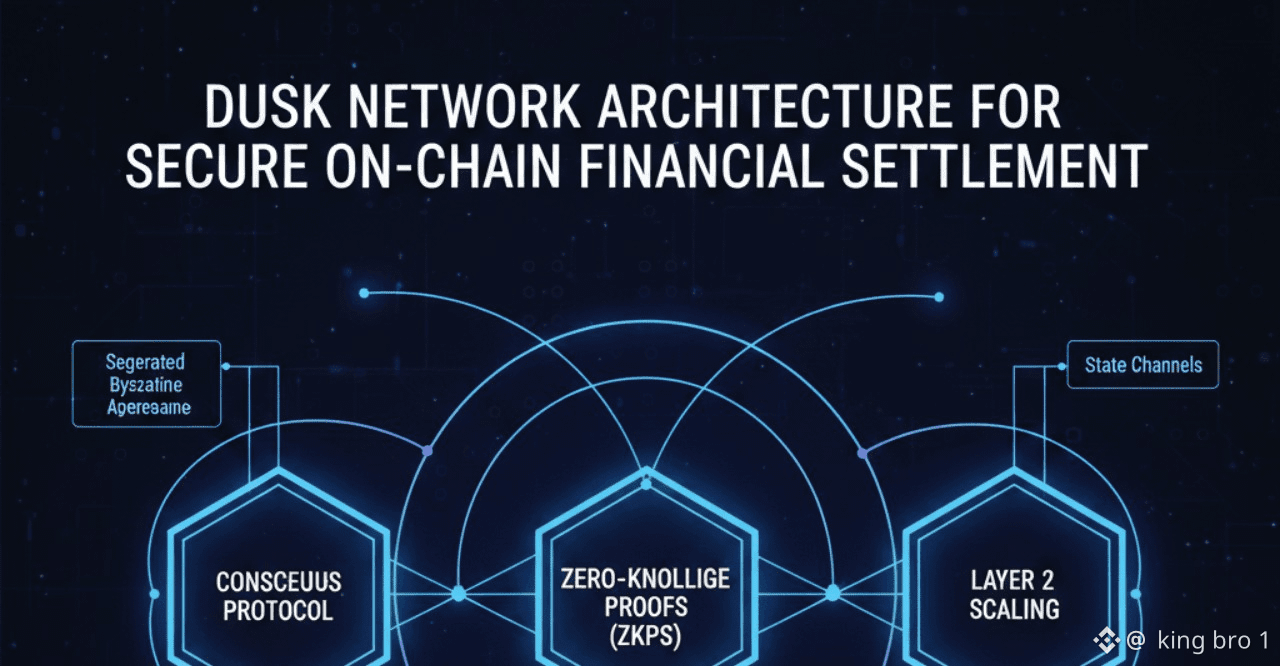
At its core, Dusk is not just another blockchain network; it is a purpose-built financial infrastructure designed explicitly for institutions and developers who want to issue, trade, clear, and settle regulated financial assets on-chain. Traditional financial markets are often opaque, slow, and burdened with intermediaries. Dusk’s founders saw an opportunity to rethink this entire stack by creating a decentralized market infrastructure where privacy and compliance are fundamental design principles, rather than afterthoughts. This vision has guided the project from its earliest days, long before regulatory frameworks like MiCA and the DLT Pilot Regime were commonplace, positioning Dusk to bridge the gap between the regulatory and technological languages of finance.
Unlike many blockchains that emphasize public transparency as an inherent feature, Dusk approached privacy as an essential requirement for real-world financial use-cases. In the financial industry, transaction details, positions, and counterparty identities are often confidential for competitive or legal reasons. Dusk uses advanced cryptography, primarily zero-knowledge proofs (ZKPs), to enable confidential transactions and confidential smart contracts that can prove correctness without revealing sensitive data. This offers what the project describes as “auditable privacy,” where authorized regulators or compliance bodies can verify transactions without exposing private data to the entire network. It’s a subtle but powerful twist on blockchain privacy that aims to satisfy institutional fears about public exposure while still upholding decentralized principles.
Technically, Dusk’s architecture is thoughtfully modular. At the base lies DuskDS, a settlement and data-availability layer responsible for consensus, transaction finality, and staking. Above this, DuskEVM provides an Ethereum-compatible execution layer, so developers can deploy familiar Solidity smart contracts while tapping into Dusk’s privacy and compliance features. A third layer, DuskVM, focuses on full privacy-preserving applications, allowing developers to build Rust-based or other high-privacy workloads leveraging zero-knowledge technology. This separation of concerns — settlement, general EVM execution, and private execution — not only increases performance and flexibility but also allows each layer to specialize and optimize for its role. The network uses a proof-of-stake consensus called Succinct Attestation that provides fast and deterministic finality, an important property for financial settlement where reversing transactions is not acceptable.
This layered design also makes Dusk particularly welcoming to developers. In a world where Ethereum tooling dominates, the ability to use familiar tools like Hardhat and MetaMask for contract deployment on DuskEVM lowers barriers to entry, while still enabling optional privacy features unique to the protocol. The native DUSK token fuels the network, serving as gas for transactions, staking for validators, and a unit of exchange across the layers. For institutions and developers alike, this creates a seamless environment where conventional DeFi and highly regulated assets can coexist on a single platform.
One of the most compelling aspects of Dusk’s growth has been its real-world integrations and partnerships. Rather than remaining purely theoretical, the project has actively engaged with regulated entities. For example, through collaborations with Dutch stock exchange NPEX and partners like Quantoz Payments, Dusk has supported the launch of EURQ, a MiCAR-compliant electronic money token pegged to the euro. This represents one of the first times a blockchain has been used in concert with a licensed Multilateral Trading Facility (MTF) to enable legally recognized digital legal tender, pushing the boundaries of what regulated finance can do on-chain.
But Dusk’s ambitions extend beyond tokenizing simple assets. By embedding regulatory compliance directly into the protocol, it aims to make an entire ecosystem of financial products — from digital bonds and securities to structured products and institutional DeFi — accessible within a compliant yet decentralized environment. Instead of forcing regulated entities to retrofit compliance tools on top of generic blockchains, Dusk builds these requirements into the ledger itself, supporting features like identity and permissioning primitives that mirror the regulations financial firms already operate under.
The philosophy behind Dusk is rooted in inclusivity: the idea that anyone, whether an institutional investor or a retail participant, should be able to access regulated financial instruments directly through their wallets. By breaking down intermediaries, reducing settlement times, and lowering friction traditionally associated with financial markets, Dusk aspires to democratize access to capital markets in ways that were impossible before. Its focus on privacy, compliance, and modular architecture reflects a deep understanding of both the technological challenges and regulatory realities that have slowed blockchain adoption in the financial sector.
