
 Plasma was born from a simple but powerful frustration that kept growing louder as the crypto world matured, because while headlines celebrated volatility and speculation, real people across emerging economies, freelancers working across borders, and businesses trying to move digital dollars at internet speed were quietly running into the same wall again and again, a wall made of slow confirmations, confusing gas tokens, unpredictable fees, and infrastructure that felt like it was built for experiments rather than for everyday money, and out of that tension came the idea that maybe the future of finance did not need another chain chasing every use case at once, but instead needed rails designed with one clear emotional truth at the center, that stable value moving reliably from one human being to another is the real heartbeat of the digital economy.
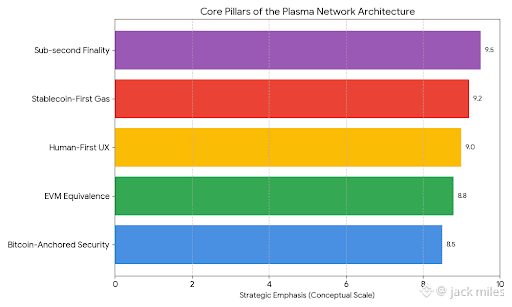
The purpose of Plasma flows directly from that human reality, because the network is designed around the belief that money on the internet should feel calm, immediate, and dependable rather than technical and uncertain, which is why it combines full EVM compatibility through a high performance execution client with a purpose built consensus system called PlasmaBFT that aims to deliver sub second finality, creating an environment where developers can bring existing Ethereum applications without rewriting their foundations while users experience something that feels closer to sending a message than submitting a risky transaction into a waiting room of unknown outcomes, and this blend of familiarity for builders and speed for users is not just a technical choice but an emotional one, reducing anxiety, friction, and hesitation at the exact moment value changes hands.
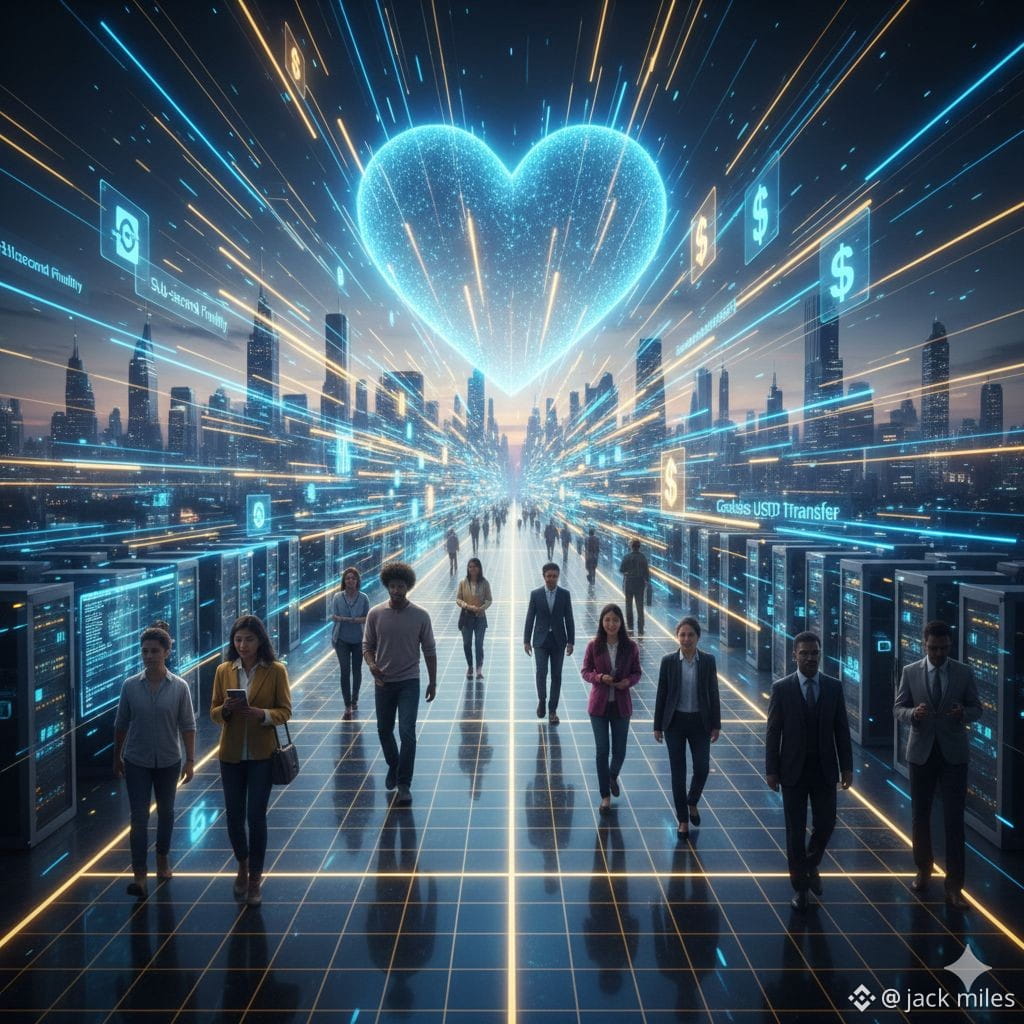 At the design level Plasma treats stablecoins not as passengers but as the main cargo, which leads to stablecoin first gas mechanics and gasless transfer experiences for assets like USDT where the complexity of fees can be abstracted away through sponsorship models and protocol level tooling, allowing people in high adoption regions to move digital dollars without first learning how to manage a separate volatile token just to pay network costs, and this matters deeply in the real world where small uncertainties can block adoption, because when a merchant, a gig worker, or a family sending support across borders thinks in units of stable value, forcing them to think in a second asset creates distance between intention and action, while Plasma tries to collapse that distance until the technology fades and only the financial outcome remains.
Under the hood the mechanism that makes this possible is a layered architecture where EVM equivalence preserves the vast ecosystem of wallets, smart contracts, and developer tools, while PlasmaBFT consensus focuses on fast deterministic settlement that reduces the gray area around reversibility and reorganization risk, and on top of that the network explores Bitcoin anchored security approaches that link its state to the most established and censorship resistant chain in the space, creating a story where day to day speed comes from an optimized local consensus but long term integrity is strengthened by cryptographic ties to a globally neutral settlement layer, which is especially meaningful for institutions and regulators who need auditability and tamper evidence without sacrificing performance.
Looking ahead the future of Plasma is tied to whether it can quietly become financial plumbing rather than spectacle, expanding into remittances, merchant settlement, payroll, and on chain financial services where instant stable value movement is not a luxury but a requirement, while continuing to decentralize validators, harden performance under stress, and deepen integrations with wallets, payment providers, and compliance infrastructure so that the system can handle both millions of small retail transfers and large institutional flows without bending, because true success will look like invisibility, like people using services powered by Plasma every day without even knowing the name of the chain beneath their transactions.
 The risks are real and they carry emotional weight as well as technical complexity, because dependence on stablecoins connects the ecosystem to regulatory decisions, issuer policies, and macroeconomic forces beyond the protocol itself, while innovations like gas abstraction and ultra fast finality must be engineered with extreme care to avoid hidden vulnerabilities, and in a competitive landscape where many networks promise speed and low cost Plasma must prove not only that it is fast, but that it is trustworthy, resilient, and aligned with the needs of both everyday users and regulated financial actors.
Yet the possibilities are enormous, because if Plasma succeeds it helps reshape how the world feels about digital money, turning cross border payments from a slow and expensive process into something fluid, making global work more accessible, enabling businesses to settle instantly, and allowing people in regions with unstable local systems to rely on internet native value that moves with the same ease as information, and in that world the real breakthrough is not hype or price charts but a quiet shift in daily life where sending stable value across the planet feels normal, safe, and immediate, fulfilling the original promise of blockchain not as a casino, but as open financial infrastructure for human connection at global scale.@Plasma #Plasma $XPL

