

In crypto, token design tells you the real story.
It shows who the network is built for, how value flows, and whether a system is designed to last—or just to launch.
That’s why Walrus stands out.
Walrus isn’t trying to be another flashy Layer-1. It’s focused on something more fundamental: decentralized, privacy-preserving data storage for a world where apps handle massive amounts of data. And $WAL is designed to support that role, not extract from it.
A supply aligned with long-term use
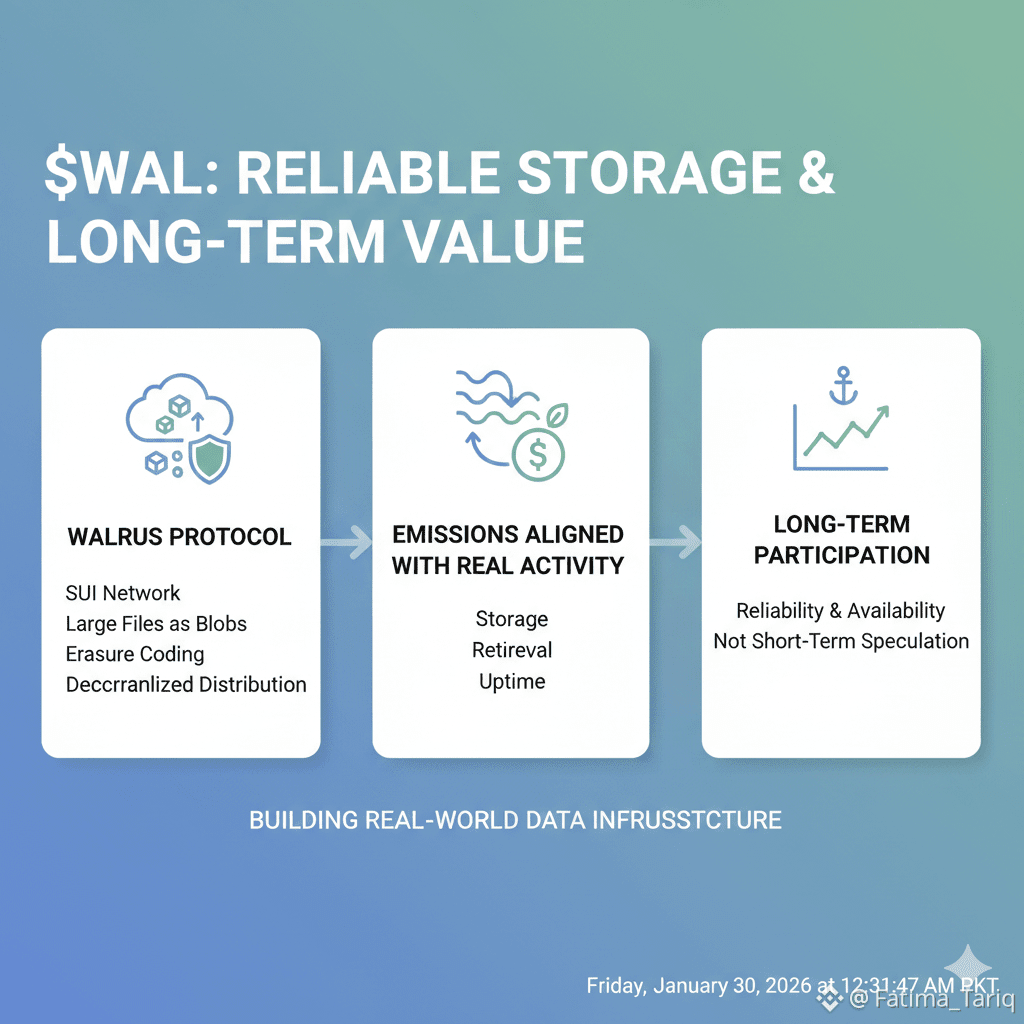 Wal powers the Walrus protocol on Sui, where large files are stored as blobs using erasure coding and distributed across a decentralized network. The token is built to incentivize reliable storage, availability, and long-term participation, not short-term speculation.
Instead of chasing hype cycles, Walrus aligns emissions with real network activity—storage, retrieval, and uptime.
Where wal actually works
Wal isn’t a passive asset. It plays a direct role in securing and operating the network:
• Storage providers stake wal to participate
• Providers earn for keeping data available and retrievable
• Poor performance or downtime is economically penalized
This turns data storage into a verifiable service, not a trust-based promise.
Wal as infrastructure fuel
Wal enables the core functions of Walrus:
• Incentivizing decentralized storage and availability
• Supporting governance and network upgrades
• Aligning providers, users, and long-term network health
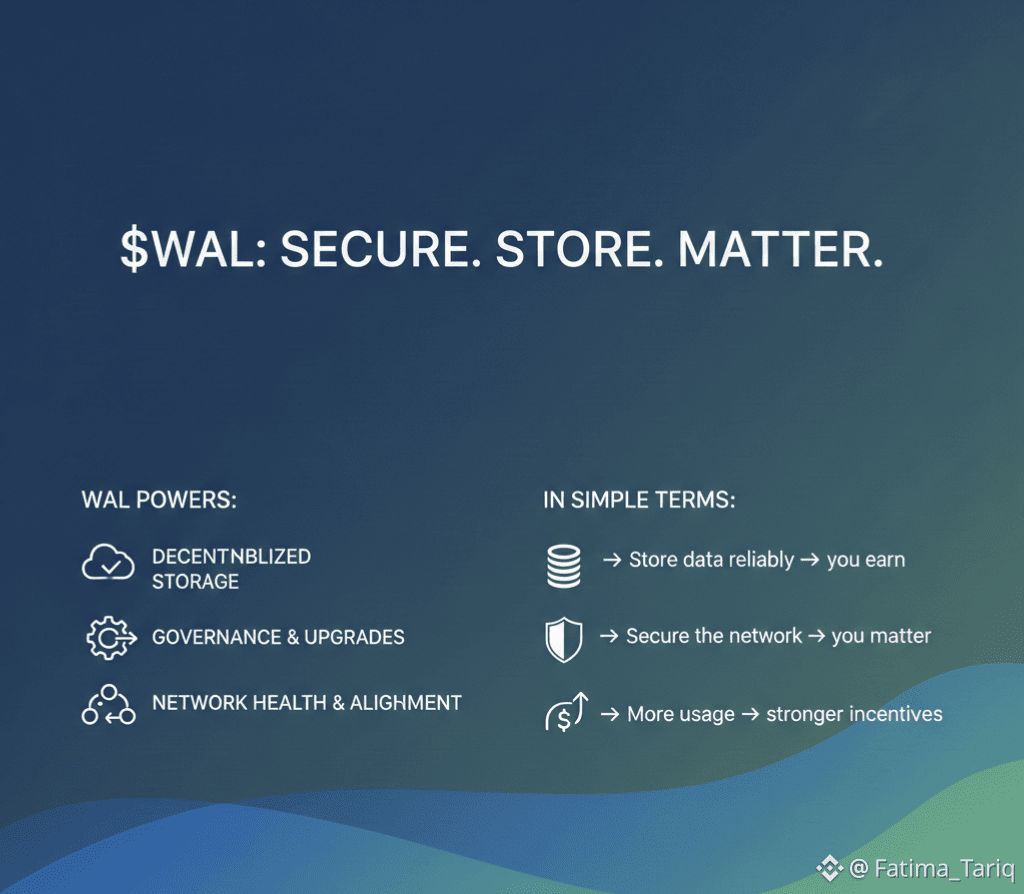 In simple terms:
👉 Store data reliably → you earn
👉 Secure the network → you matter
👉 More usage → stronger incentives
Walrus treats data storage as core infrastructure, not an afterthought. Value circulates inside the ecosystem instead of being extracted at the top.
Short-term narratives fade. Infrastructure compounds.
$WAl isn’t built to chase attention—it’s built to keep data private, available, and censorship-resistant.
And in a multi-chain future, that kind of design becomes essential.#Walrus #WAL #walrus #Sui $WAL @Walrus 🦭/acc


