
In a world where blockchain is racing toward real-world adoption, scalability and cost-efficiency have become just as important as decentralization itself. This is where Plasma (XPL) steps into the picture not as a loud, hype-driven project, but as a quiet architectural shift in how value can move on-chain.
Plasma is not just another token or payment rail. It is a framework and settlement layer designed to make blockchain transactions faster, cheaper, and far more practical for everyday use.
Let’s explore what Plasma really is and how it works under the hood.
Understanding Plasma in Simple Terms
At its core, Plasma is a scaling solution built on top of existing blockchains (usually Ethereum or similar networks). Instead of forcing every transaction to be processed directly on the main chain, Plasma allows most activity to happen on secondary layer while still benefiting from the security of the base chain.
Think of it like this:
The main blockchain is a busy highway. Plasma builds side roads where most traffic flows freely, only returning to the highway when absolutely necessary.
This reduces congestion, lowers fees, and dramatically improves transaction speed.
Why Plasma Matters
Blockchains today face three major challenges:
• High transaction fees
• Slow confirmation times
• Limited throughput
Plasma directly addresses all three.
With Plasma:
• Users can transact almost instantly
• Costs are significantly reduced
• The main blockchain stays unclogged
• Security remains anchored to Layer 1
This makes Plasma ideal for:
• Stablecoin settlements
• Micropayments
• DeFi operations
• Gaming and NFT transactions
• High-volume financial applications
How Plasma (XPL) Works Step by Step
Let’s break it down in a simple flow:
1. Transactions Move Off-Chain
Instead of recording every action on the main blockchain, Plasma processes transactions on its own side chain (also called a child chain). This allows thousands of transactions to be handled cheaply and quickly.
2. Periodic Checkpoints to Main Chain
Rather than sending every transaction to Layer 1, Plasma sends compressed summaries (checkpoints) back to the main blockchain at intervals. This ensures that the system remains verifiable and secure without overwhelming the base layer.
3. Fraud Proofs for Security
If something suspicious happens on the Plasma chain, users can submit fraud proofs to the main chain. This allows dishonest behavior to be challenged and corrected ensuring trustless security.
4. Exit Mechanism
Users can always withdraw their funds from Plasma back to the main blockchain. This exit feature ensures that users are never locked into Plasma and always retain full ownership of their assets.
How Plasma Looks Visually
Here is a simplified representation of how Plasma connects users to the blockchain:
Plasma Workflow Diagram
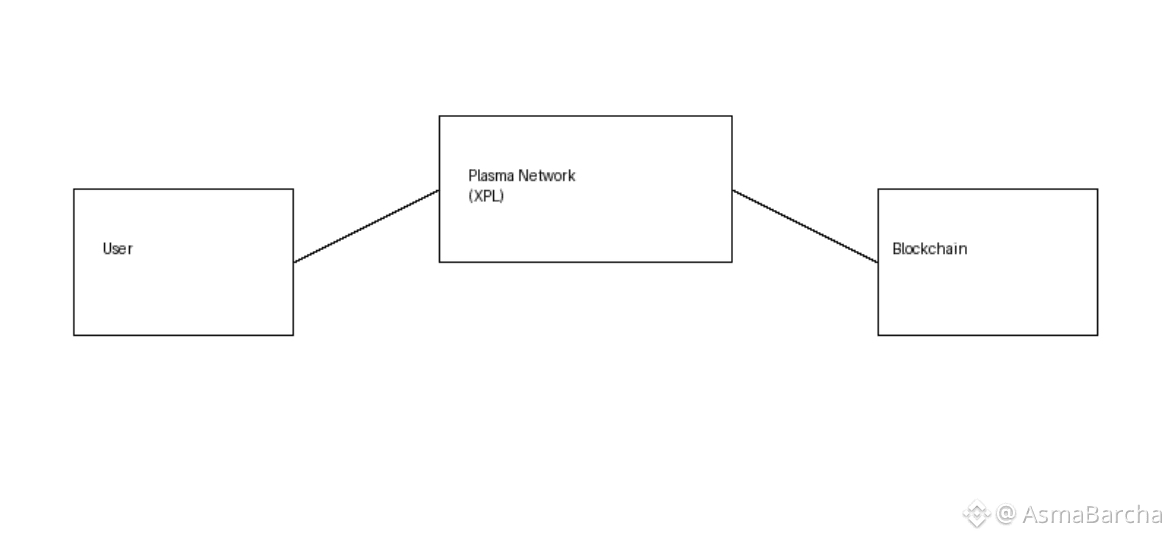
This shows how Plasma acts as a bridge and processing layer between users and the main chain.
The Role of XPL Token
The XPL token powers the Plasma ecosystem. It is typically used for:
• Paying transaction fees
• Securing the network
• Incentivizing validators and operators
• Governance participation
Rather than being just a speculative asset, XPL is designed to function as the fuel of a settlement-oriented network.
Plasma vs Traditional Layer 2 Solutions
What sets Plasma apart from rollups and other Layer 2s is its minimalistic design philosophy:
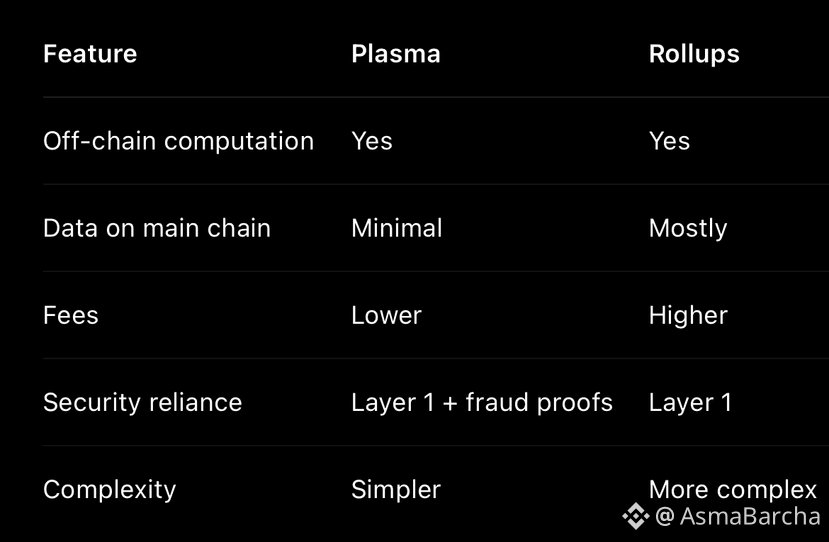
Plasma focuses more on efficiency and settlement logic rather than full computation replication.
Real-World Impact of Plasma
Plasma is particularly powerful for stablecoins and payments, where:
• Speed matters
• Costs must be near-zero
• Security must remain uncompromised
Instead of treating stablecoins as just another crypto asset, Plasma reimagines how they should move across borders, apps, and financial systems.
This makes Plasma less about speculation and more about infrastructure.

