
Dusk Network is a purpose‑built blockchain designed to support financial systems that traditional institutions have often been reluctant to adopt. Launched in 2018, Dusk aims to resolve a key challenge in digital finance: how to deliver the transparency, efficiency, and programmability of blockchain while respecting privacy and regulatory requirements. From the beginning, the Dusk team focused on building a Layer‑1 blockchain capable of supporting issuance, trading, and settlement of regulated assets such as stocks, bonds, and other financial instruments without exposing sensitive information.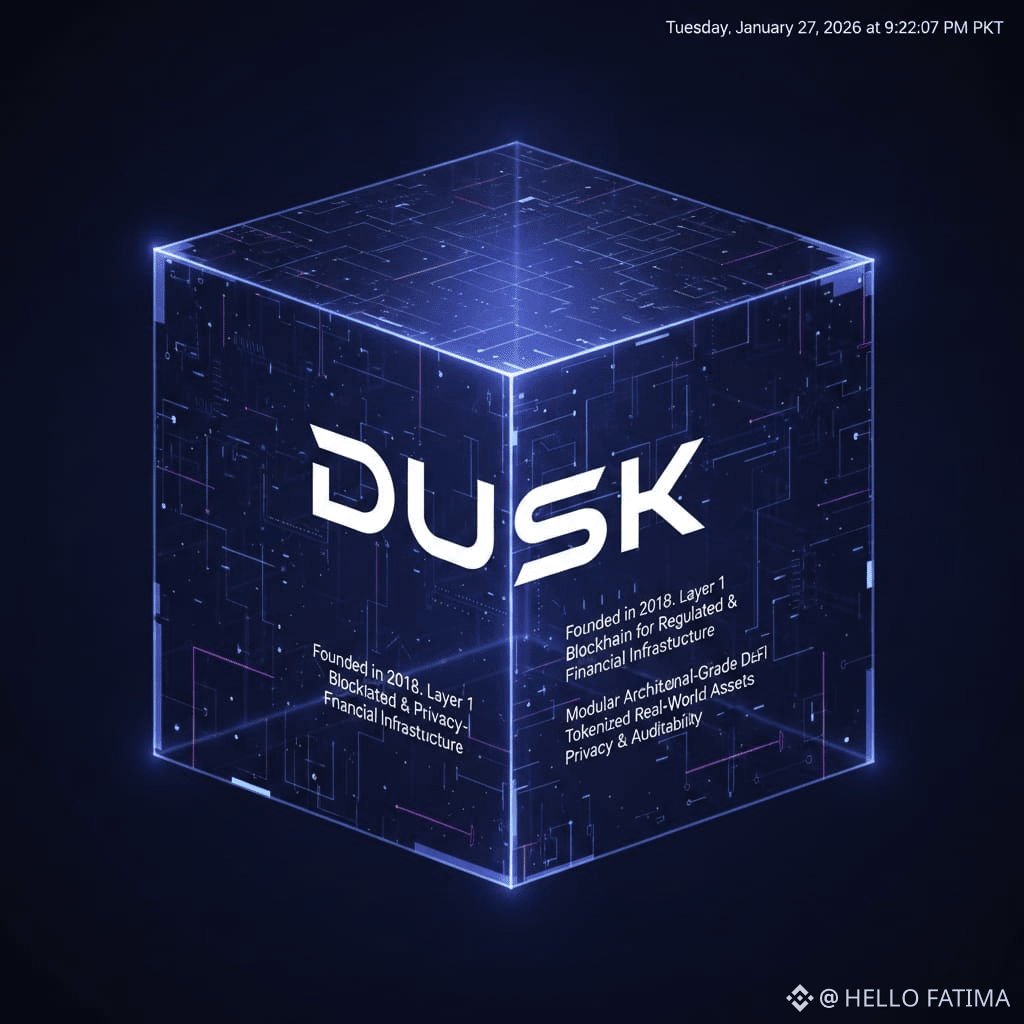
What distinguishes Dusk from many public blockchains is its focus on privacy and regulatory compliance. Unlike traditional blockchains, which broadcast all transactions and balances publicly, Dusk uses zero‑knowledge proofs to validate transactions without revealing underlying data. This approach protects user information while enabling compliance with rules such as KYC (Know Your Customer) and AML (Anti‑Money Laundering), as well as EU regulations including MiCA and MiFID II. Transactions on Dusk are private by default but remain auditable by authorized regulators and compliant parties.
Dusk’s architecture is designed for institutional use. It features a modular stack where settlement and data availability are separate from smart contract execution. The DuskDS layer provides finality and performance suitable for financial markets, while DuskEVM offers an Ethereum‑compatible environment for deploying smart contracts using familiar tools. This modularity allows developers to create applications that meet both performance and compliance requirements.
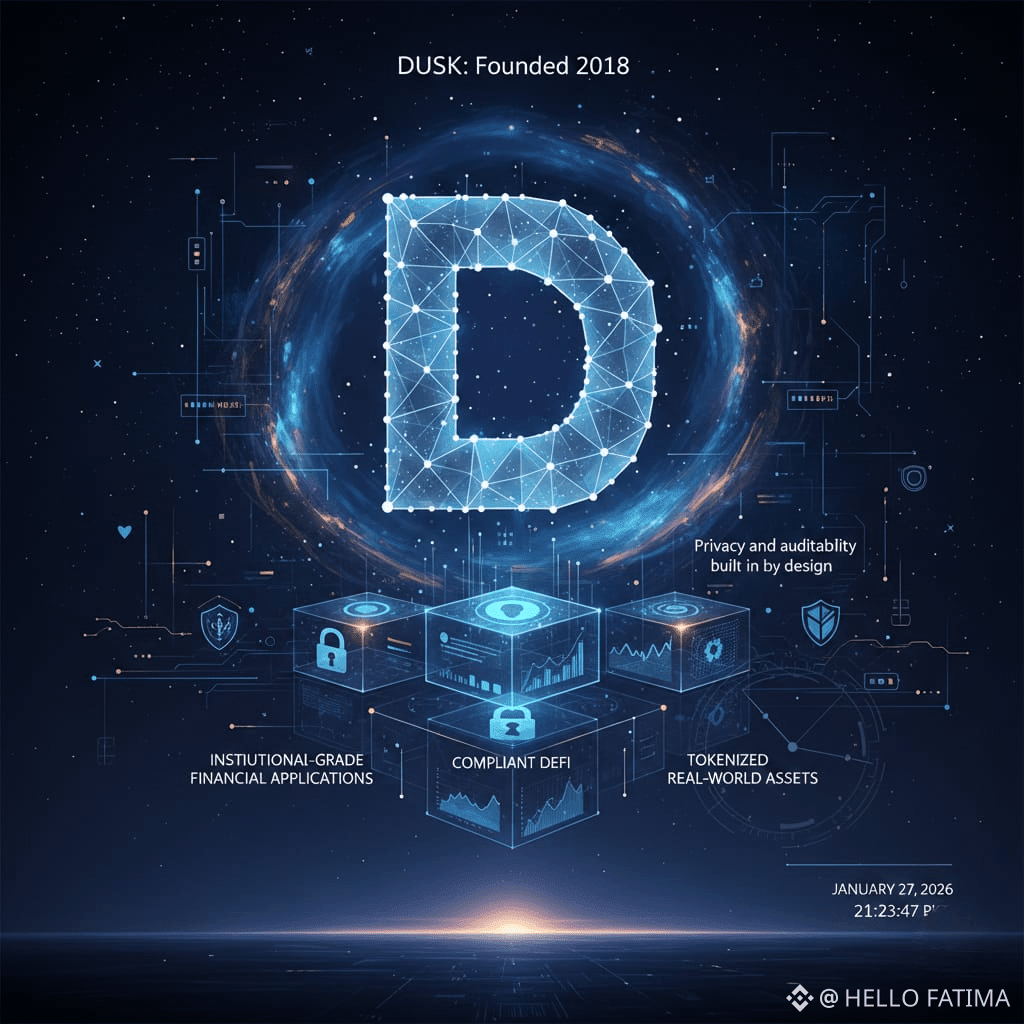
2025 and 2026 were pivotal years for Dusk. In January 2025, the mainnet produced its first immutable block, moving from testnets to a fully operational blockchain for financial workflows. Since then, the network has introduced a bi‑directional bridge to Ethereum‑compatible chains, enabling asset transfers while preserving privacy across chains. The DuskEVM testnet launched later in 2025, allowing developers to test smart contracts ahead of broader mainnet capabilities.
In early 2026, Dusk expanded its role in tokenizing real‑world assets (RWAs) on-chain. Partnerships with Chainlink and the Dutch regulated stock exchange NPEX are enabling interoperable data and cross‑chain standards for compliant financial products. This collaboration strengthens the network’s technical capabilities and positions Dusk as a platform for on‑chain trading and settlement of regulated securities with cryptographic audit trails.
Dusk also emphasizes financial empowerment and user autonomy. Features like self‑sovereign identity, selective disclosure, and privacy‑preserving compliance tools allow users to control their own data and assets while meeting regulatory requirements.
As digital finance evolves, Dusk offers a model that balances privacy, transparency, and efficiency. Its ecosystem demonstrates that decentralized technology can integrate with traditional financial markets when built with careful design and practical partnerships. For institutions, developers, and users, Dusk provides a framework for regulated digital finance where on‑chain assets can be issued, traded, and settled securely and compliantly.
