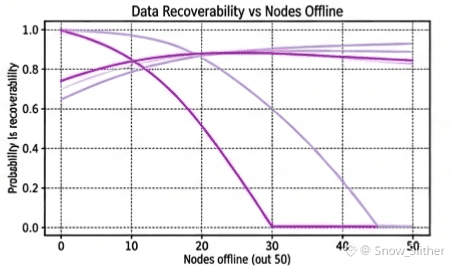
Have you ever uploaded a big file online and worried, even for a second, if it might get lost, stolen, or inaccessible? For most of us, cloud storage is convenient, but it comes with risks. Centralized servers can fail, be hacked, or even disappear overnight. For businesses, developers, or anyone storing important files, relying on a single server is like putting all your valuables in one fragile box. That’s the problem Walrus set out to solve.Walrus is a decentralized storage protocol built on the Sui blockchain, designed to make storing large files secure, private, and reliable. Unlike traditional cloud services, where one company controls your data, Walrus spreads your files across a network of nodes. This means no single point of failure exists. If one node goes down, your data remains accessible elsewhere. Think of it like breaking your file into pieces and keeping each piece in a different, secure safe across the world—no thief or system crash can wipe it all out.The key to this approach is decentralization. Instead of relying on one central server, Walrus uses a network of independent nodes. These nodes work together to store, manage, and retrieve files efficiently. The process isn’t just about redundancy—it also ensures privacy. When a file is uploaded to Walrus, it doesn’t sit in its original form on any single node. Advanced techniques, like erasure coding, split the data into fragments that are distributed across the network. Only authorized users can reconstruct the file. In simple terms, even if someone accesses part of the network, they can’t see or steal your data.But what makes Walrus stand out isn’t just safety. It’s also designed for scale. Big files, like high-resolution videos, datasets, or app resources, can be expensive to store on traditional platforms. Centralized cloud storage often charges based on volume, speed, and location, which quickly adds up. Walrus reduces these costs by using a decentralized model. By distributing storage across multiple nodes and optimizing how data is stored, it makes keeping large files practical and affordable. This opens the door for developers, businesses, and even individuals who want reliable storage without breaking the bank.
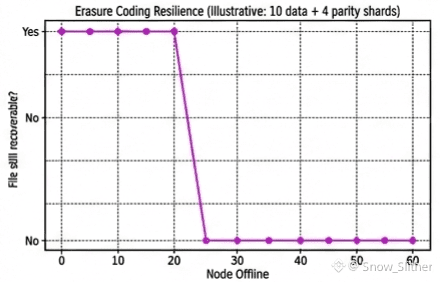
Another advantage of Walrus is transparency. Even though your files are private and encrypted, the system itself remains verifiable. Users can track where their data is stored and how the network is performing. Unlike traditional storage systems, where the company decides how files are handled, Walrus gives you insight and control. This aligns with blockchain’s broader promise: creating systems that are secure, accountable, and resistant to censorship. If a government or a corporate entity tries to restrict access, the decentralized nature of Walrus ensures that your files remain reachable.The backbone of this ecosystem is the WAL token. These tokens power the network by enabling governance, incentivizing participation, and rewarding nodes that store and secure data. Token holders can vote on proposals, changes, or upgrades to the network, creating a democratic approach to management. At the same time, nodes earn rewards for contributing storage space and bandwidth, which encourages consistent and reliable service. This combination of financial incentives and decentralized governance keeps the system robust and self-sustaining.Walrus also addresses a subtle but important challenge: trust. Traditional storage platforms require users to trust that a company will honor privacy, security, and uptime promises. With decentralized storage, trust is embedded in the system itself. Instead of relying on a single entity, the network’s architecture and coding techniques enforce rules and protect data automatically. For users, this reduces reliance on third parties and increases confidence that files are safe, private, and available when needed.What makes Walrus particularly exciting is its flexibility. It’s not just for tech giants or developers. Anyone who needs secure storage for large files can benefit. Whether it’s an app storing user-generated content, a researcher handling big datasets, or a creative professional managing video files, Walrus provides a scalable and affordable solution. And because it’s built on Sui, the network can interact with other blockchain-based applications, creating opportunities for integration, smart contracts, and more advanced decentralized services.
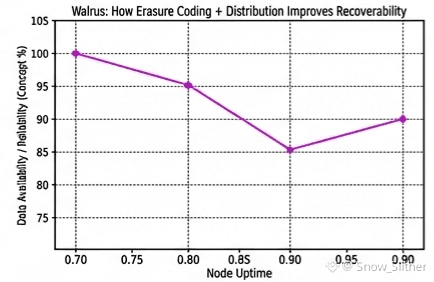
Of course, no system is perfect. Decentralized storage networks rely on active participation from nodes, so network health can vary depending on engagement. Performance can fluctuate, and users must understand how redundancy and fragmentation work. But Walrus has designed its protocol to minimize these risks through erasure coding, incentives, and careful network management. The goal isn’t to replace traditional storage entirely but to offer a resilient alternative that is secure, private, and practical.In the end, Walrus is more than just a storage solution—it’s a shift in how we think about data. Instead of entrusting all our files to one company, it spreads responsibility across a network, combining privacy, security, affordability, and transparency. For anyone concerned about losing access, exposing sensitive information, or paying too much for storage, Walrus offers a lesson in how technology can be smarter, safer, and fairer.By embracing decentralized storage, we take a step toward systems that work for users, not just providers. Walrus shows that protecting your data doesn’t have to be complicated or expensive. It proves that blockchain can solve real-world problems, keeping your files secure and accessible while empowering communities to manage and maintain the network together.In a world where our digital lives are growing bigger by the day, Walrus offers a simple but powerful idea: your files can be safe, private, and always within reach—without relying on anyone else. That’s a lesson worth remembering as we navigate an increasingly digital future.