
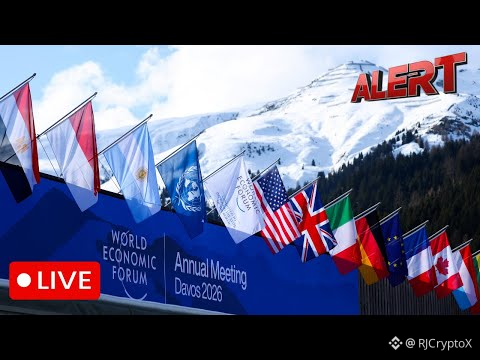
The World Economic Forum in Davos 2026 arrives at a moment when global confidence is fragile and consensus is harder to manufacture than ever. While official themes emphasize cooperation, resilience, and sustainable growth, the undertone this year is unmistakable: the global system is being stress-tested from every direction.
Political fragmentation, trade realignment, and persistent inflationary pressure dominate closed-door discussions. Governments are increasingly prioritizing domestic stability over global efficiency, while corporations recalibrate supply chains not for cost optimization, but for geopolitical survival. The era of frictionless globalization is no longer a baseline assumption—it is a historical reference.
At Davos, policymakers continue to signal coordination and gradualism. Markets, however, are pricing something very different: volatility, regional divergence, and policy-driven shocks. Trade tools, tariffs, and financial regulation are no longer neutral mechanisms; they are instruments of leverage.
This disconnect between narrative and reality is becoming a defining feature of the Davos cycle. Official optimism competes with investor skepticism, and the gap between the two continues to widen.
One of the clearest themes emerging around WEFDavos2026 is capital mobility under constraint. As trust in institutions fluctuates and regulatory uncertainty rises, capital increasingly seeks optionality. This is reflected in growing interest in alternative assets, digital infrastructure, and decentralized financial systems—not as ideology, but as risk management.


#EFDavos2026 #GlobalMacro #MarketVolatility #EconomicOutlook
Follow RJCryptoX for real-time alerts 🚨