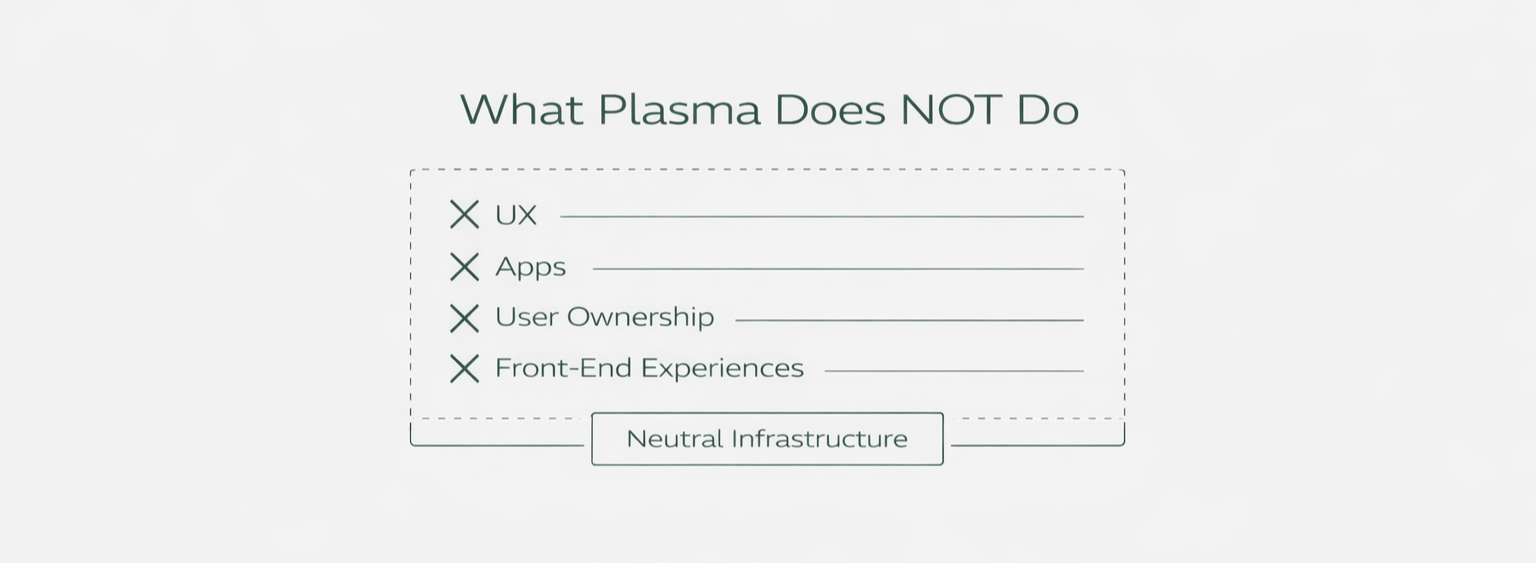
In crypto, many projects blur the line between infrastructure and applications. Plasma makes a deliberate distinction. It is not trying to compete with apps, own user relationships, or define front-end experiences. Plasma is infrastructure—built to support stable, scalable financial activity underneath everything else.
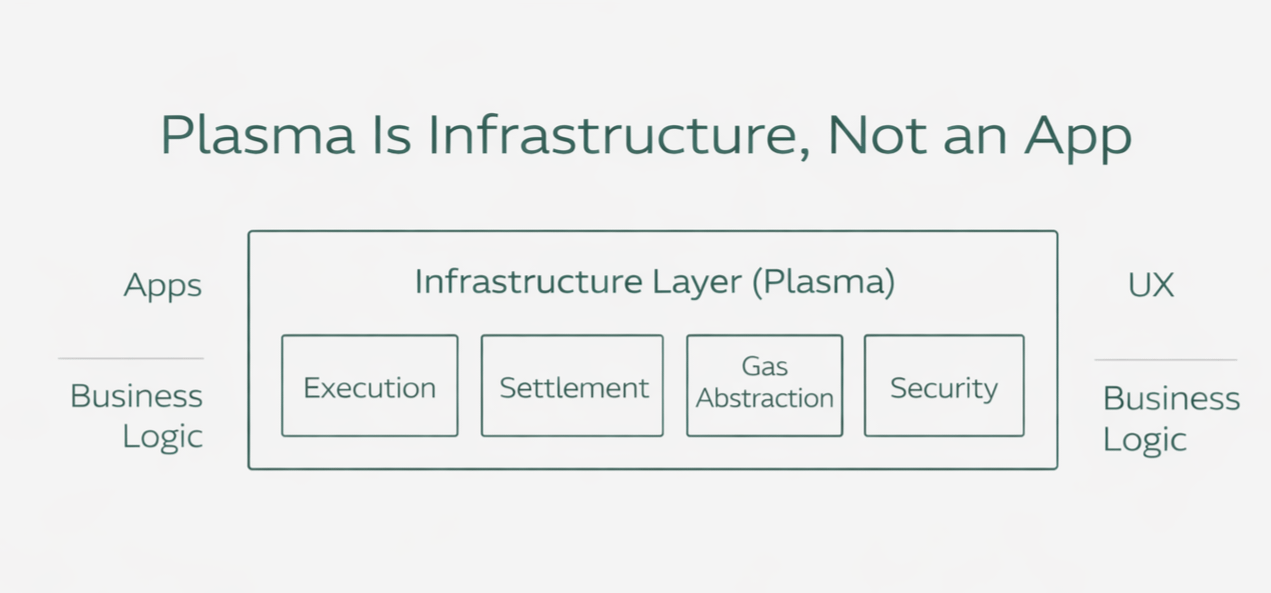
Rather than dictating how users interact with the network, @Plasma focuses on providing reliable execution, settlement, and payment primitives. This separation allows developers and businesses to build products freely, without being constrained by network-level assumptions or rigid UX patterns.
Plasma’s design reflects this philosophy. Stablecoins are native, execution is predictable, and gas abstraction reduces friction at the base layer. These are infrastructure decisions, not product features. They exist to make higher-level systems easier to build and operate, not to define how those systems should look.
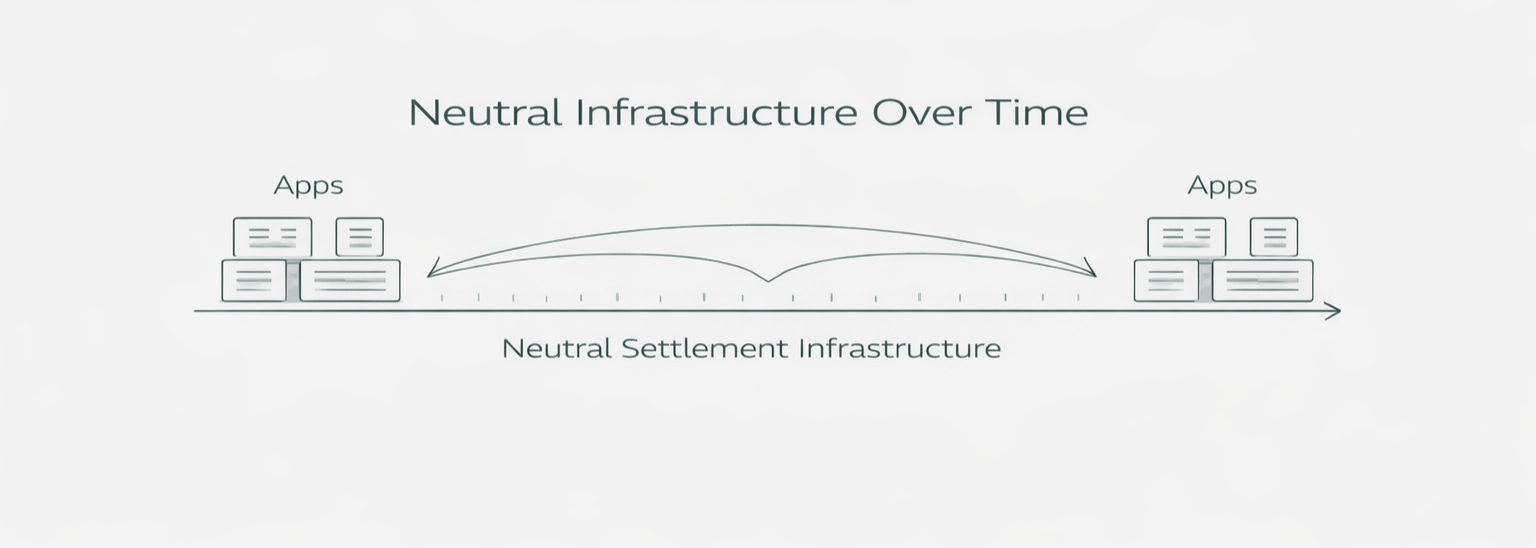
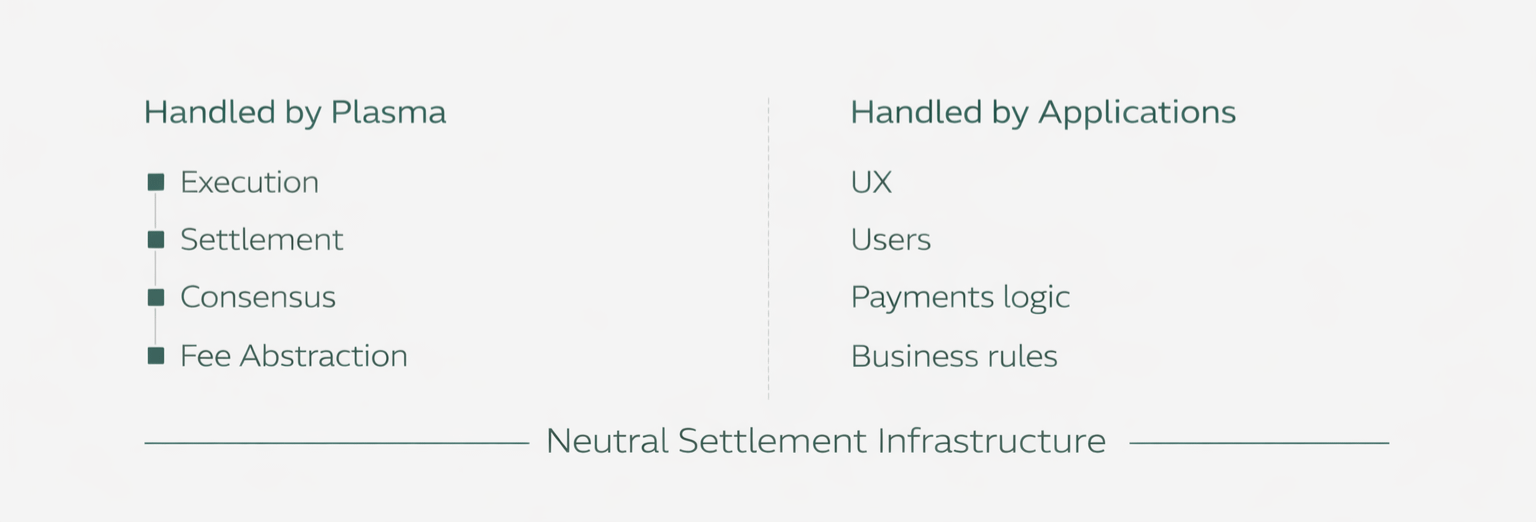
By remaining infrastructure-focused, Plasma avoids competing with its own ecosystem. Applications handle UX, customer acquisition, and business logic. Plasma handles settlement, execution, and security. This clear role separation creates healthier incentives and a more sustainable environment for builders.
The $XPL token reinforces this model by supporting network operation through fees, staking, and governance—without pushing speculative behavior at the application layer. Value accrues from usage and reliability, not from app-level narratives.
As blockchain adoption moves toward real commerce and financial rails, this distinction becomes critical. The most valuable networks won’t be the loudest or most visible—they’ll be the ones quietly powering systems that work. In that sense, #Plasma positions itself where long-term infrastructure belongs: foundational, neutral, and built to last.