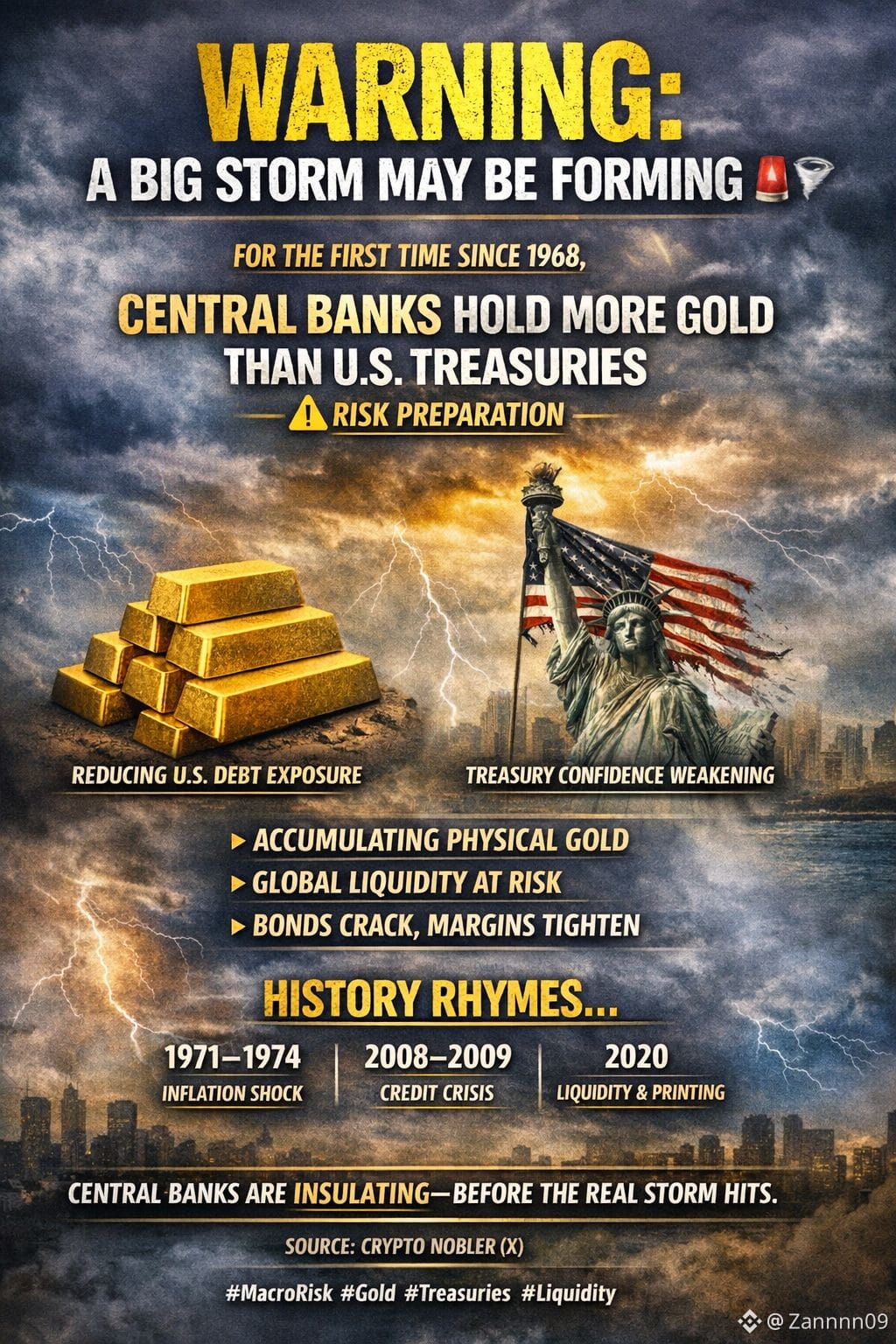
🚨 For the first time since 1968, central banks now hold more gold than U.S. Treasuries.
They didn’t chase highs — they bought the dip.
This isn’t politics.
This isn’t diversification theater.
This is risk preparation.
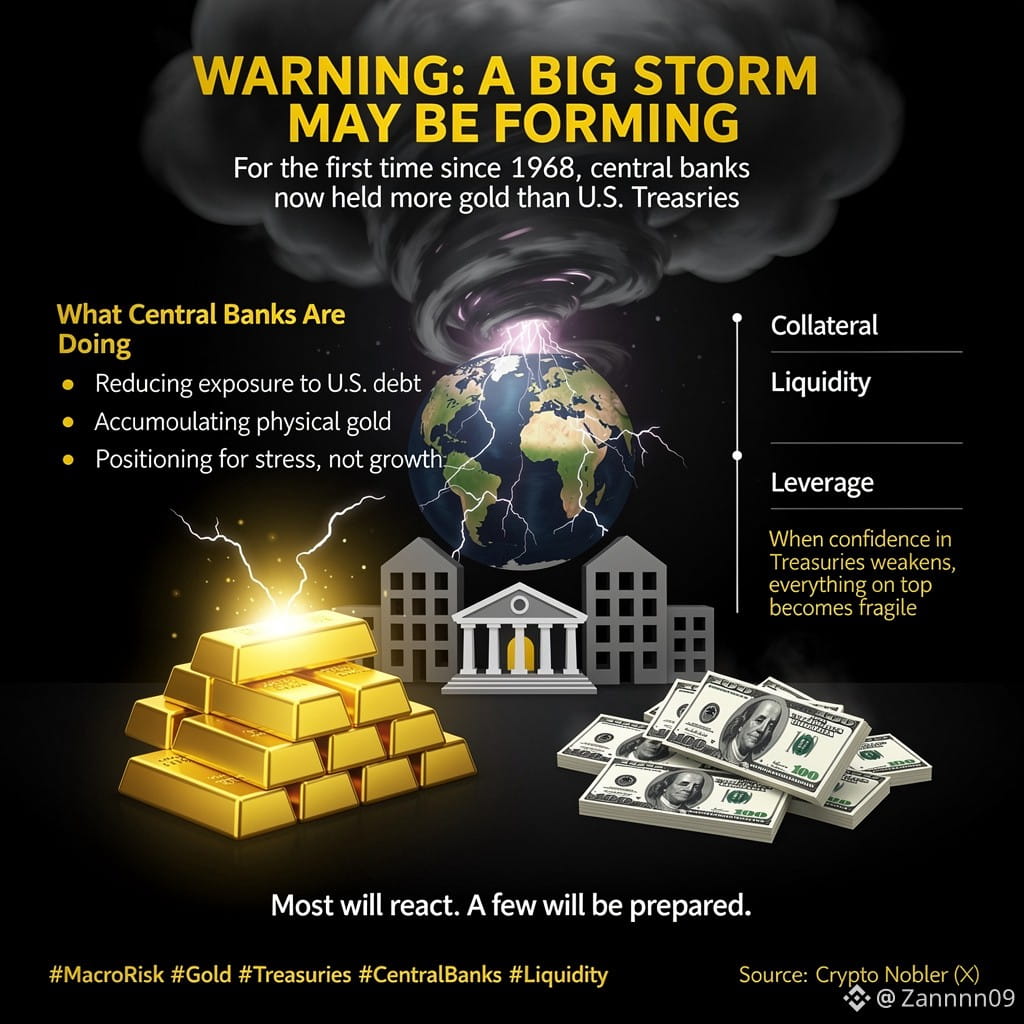
🏦 What Central Banks Are Doing
Reducing exposure to U.S. debt
Accumulating physical gold
Positioning for stress, not growth
📌 Why This Matters
U.S. Treasuries are the backbone of the global financial system:
Core collateral
Anchor for global liquidity
Foundation for leverage across banks, funds, and governments
When confidence in Treasuries weakens, everything built on top becomes fragile.
📉 This is how real market breaks begin:
Not with panic.
Not with headlines.
But with silent shifts in reserves and collateral.
🕰️ History Rhymes
1️⃣ 1971–1974
→ Gold standard breaks
→ Inflation surges
→ Stocks stagnate
2️⃣ 2008–2009
→ Credit markets freeze
→ Forced liquidations
→ Gold preserves purchasing power
3️⃣ 2020
→ Liquidity vanishes
→ Trillions printed
→ Asset bubbles inflate
📍 Now
Central banks are moving first.
🔍 Early Stress Signals
Rising debt concerns
Geopolitical risk
Tightening liquidity
Growing reliance on hard assets
Once bonds crack, the sequence is familiar:
→ Credit tightens
→ Margin calls spread
→ Funds sell what they can, not what they want
→ Stocks & real estate follow
⚖️ The Fed’s Dilemma
1️⃣ Cut rates & print
→ Dollar weakens
→ Gold reprices higher
→ Confidence erodes
2️⃣ Stay tight
→ Dollar defended
→ Credit breaks
→ Markets reprice violently
Either path carries risk.
There’s no clean exit.
🧠 Bottom Line
Central banks aren’t speculating — they’re insulating.
By the time this shift is obvious to the public, positioning is already done.
Most will react.
A few will be prepared.
The shift has started.
Ignore it if you want — just don’t say you weren’t warned.
📡 Source: Crypto Nobler (X)
#MacroRisk #GOLD #Treasuries #CentralBankStance #Marketstructure #liquidity #BULLA #ZK