
The Dusk Network is emerging as one of the most technically sophisticated blockchains designed specifically for regulated finance, privacy, and legal compliance. Unlike many public ledgers that prioritize transparency over confidentiality, Dusk aims to create an infrastructure where privacy and regulatory trust coexist without compromising blockchain’s core principles.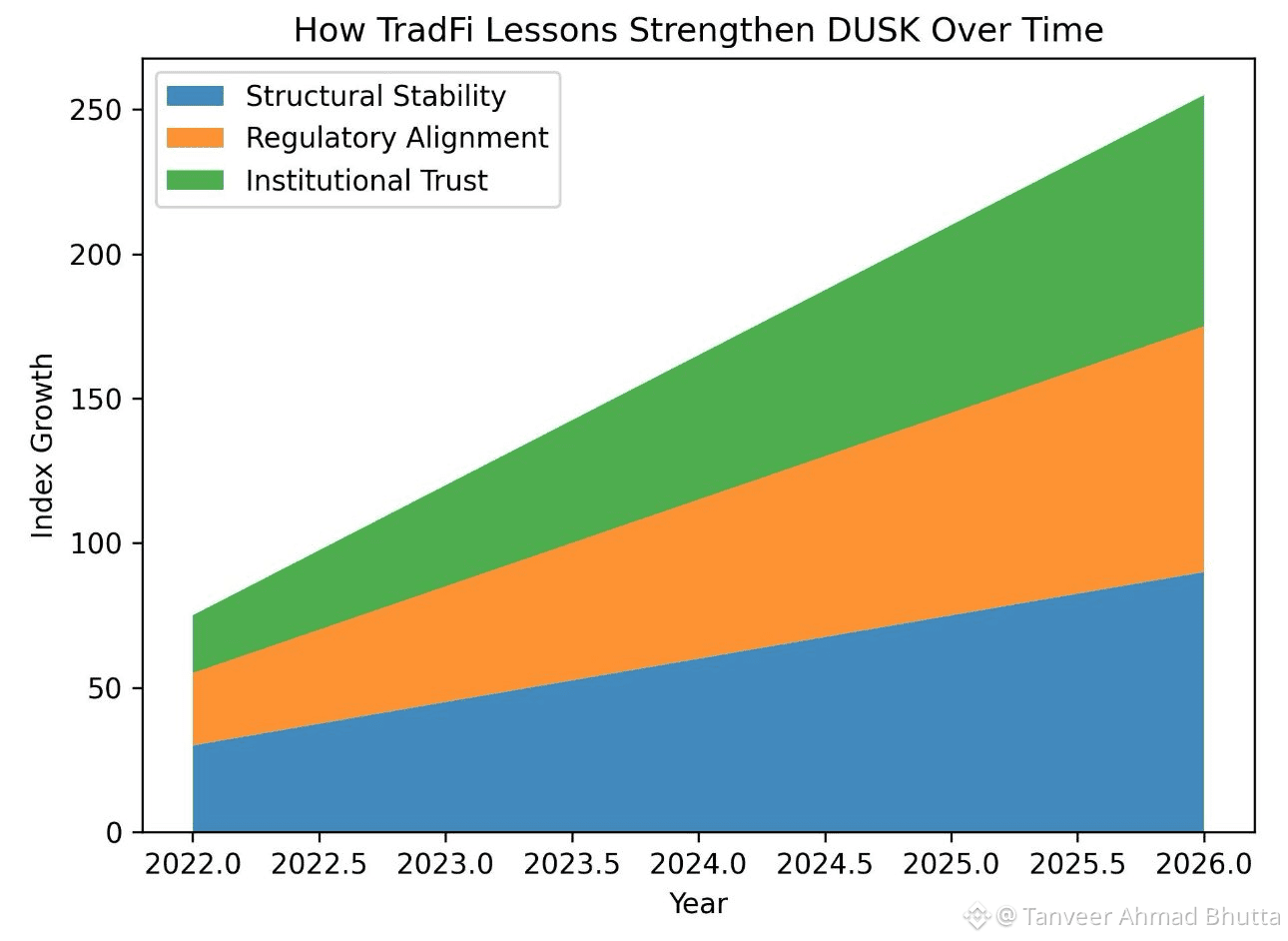
A Blockchain Built for Regulated Markets
At its core, Dusk is a layer-1 blockchain built to let institutions and individuals issue, trade, and settle tokenized financial instruments—such as securities and real-world assets—while enforcing compliance rules directly in protocol logic. Traditional blockchains often struggle with compliance because public transaction data can conflict with anti-money laundering (AML), know-your-customer (KYC), and investor eligibility requirements. Dusk tackles this directly by embedding regulatory structures in its architecture.
The network’s design focuses on privacy by default through cryptographic tools that allow confidential balances and private transfers while still enabling auditability to authorized parties. This dual model supports both public transparency when needed and privacy when required by law or business needs.
Zero-Knowledge Cryptography and Privacy
A central innovation enabling privacy is zero-knowledge proofs (ZKPs). These cryptographic techniques allow one party to prove that a statement is true—such as the validity of a transaction—without revealing the underlying sensitive data itself. Dusk uses advanced ZKP schemes (including zk-SNARK techniques) to build confidential transactions and smart contracts that are verifiable but opaque to outsiders.
Through these cryptographic methods, Dusk can deliver selective disclosure: regulators can inspect transaction details when legally required (e.g., for audits), while third parties see only what they are permitted to see. This aligns with privacy principles like those in GDPR and other financial privacy standards and keeps sensitive business data confidential.
Finality and Consensus: Succinct Attestation
One of the challenges in decentralized systems is ensuring settlement finality—the point at which a transaction cannot be reversed or altered. Finality is especially important in regulated markets, where legal certainty of ownership and settlement is mandated. Dusk addresses this with a novel Proof-of-Stake (PoS) consensus mechanism known as Succinct Attestation, which delivers fast, irreversible settlement once blocks are confirmed.
This approach contrasts with probabilistic finality systems (like traditional Proof-of-Work), where a transaction may be reversed if a longer chain emerges. By ensuring transactions are final as soon as they settle, Dusk aligns more closely with legal requirements of regulated financial systems.
Smart Contracts and Market Utility
Beyond basic payments, Dusk enables confidential smart contracts and token standards designed for compliance and institutional use, such as its Confidential Security Contract (XSC) standard. These allow programmable corporate actions—like voting rights or transfer restrictions—to be executed on chain, with built-in legal guardrails.
The Rusk Virtual Machine further supports the development of privacy-aware decentralized apps (dApps), expanding the network’s utility beyond simple token transfers to complex financial workflows.
Conclusion
Dusk Network represents a convergence of cutting-edge cryptography, blockchain scalability, and legal compliance. By embedding privacy, settlement finality, and regulatory cooperation into the protocol, Dusk is positioned to bridge the gap between decentralized technology and traditional regulated markets—ushering in a new era of compliant, confidential finance on blockchain.
