
As blockchain adoption grows, a clear shift is taking place. Instead of one-size-fits-all networks, infrastructure is becoming more specialized. Plasma represents this shift by focusing on a specific and increasingly important use case: stablecoin-based financial activity.
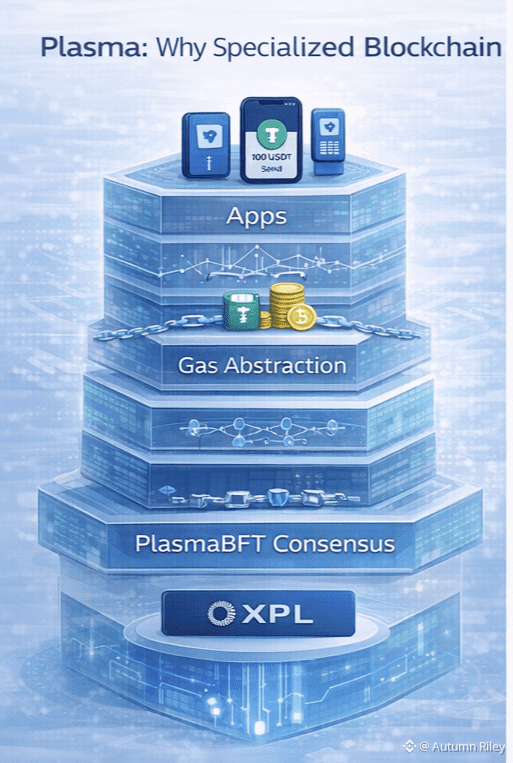
Rather than retrofitting payments onto a general-purpose chain, @Plasma is designed with stablecoins as native assets. This design choice influences everything from execution behavior to user experience. Gas abstraction, predictable settlement, and stablecoin-first tooling reduce friction for users and developers alike.
Plasma’s architecture reflects a broader trend toward purpose-built systems. Its EVM compatibility allows developers to reuse existing Ethereum tools, while PlasmaBFT consensus is optimized for consistent execution rather than speculative peak performance. This balance enables applications to operate with clearer assumptions about cost and behavior.
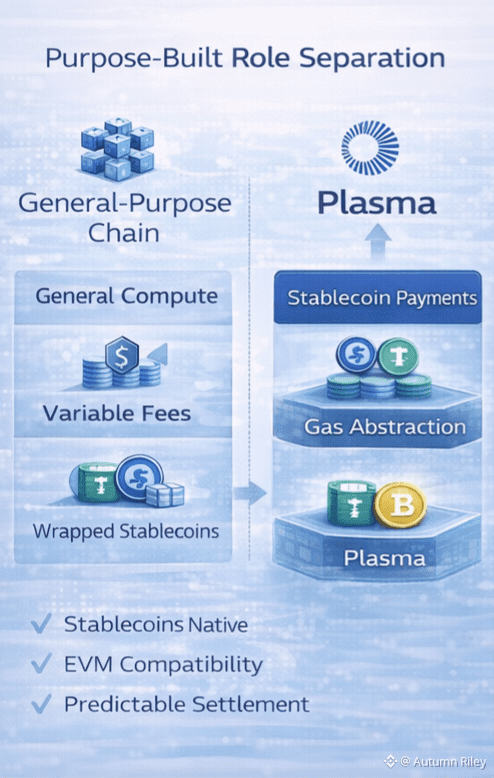
Another notable aspect is Plasma’s emphasis on usability. By abstracting complexity away from end users, the network makes stablecoin transactions feel closer to traditional digital payments. This is especially relevant for applications involving commerce, remittances, and treasury management, where reliability matters more than novelty.
Economically, $XPL is positioned to support network operation through fees, staking, and governance, aligning incentives with actual usage instead of short-term activity. This reinforces Plasma’s long-term orientation and infrastructure-first mindset.
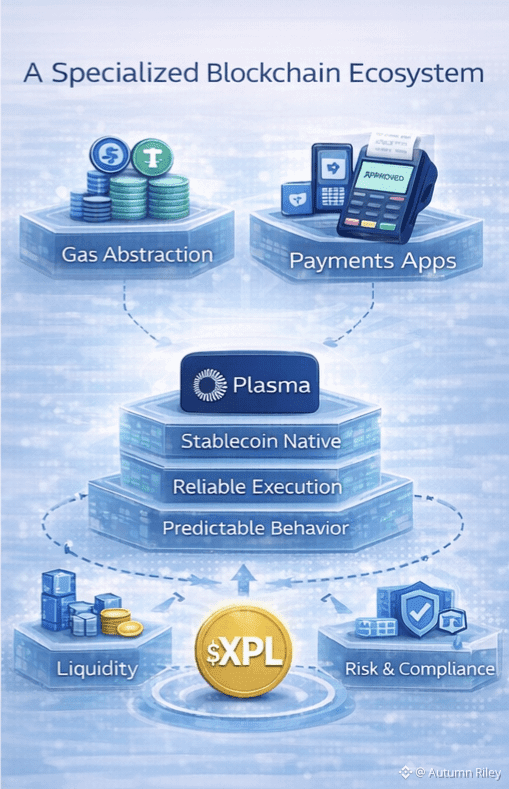
As the ecosystem matures, specialized blockchains like Plasma highlight an important insight: real-world adoption depends less on doing everything, and more on doing one thing well. In that context, #Plasma stands out as infrastructure designed for stable, scalable financial use cases rather than broad experimentation.

