
Plasma is a blockchain that feels like it was built by people who spent a lot of time watching how money actually moves in the real world. The idea did not start with complex theory or abstract technology. It started with a simple question why is it still so hard to send stablecoins quickly cheaply and reliably when so many people already rely on them every day. From remittances to online payments stablecoins like USDT are already being used as digital dollars yet the blockchains underneath them often feel slow expensive or confusing. Plasma was created to fix that gap by building a Layer one blockchain where stablecoin settlement is not a feature but the main purpose.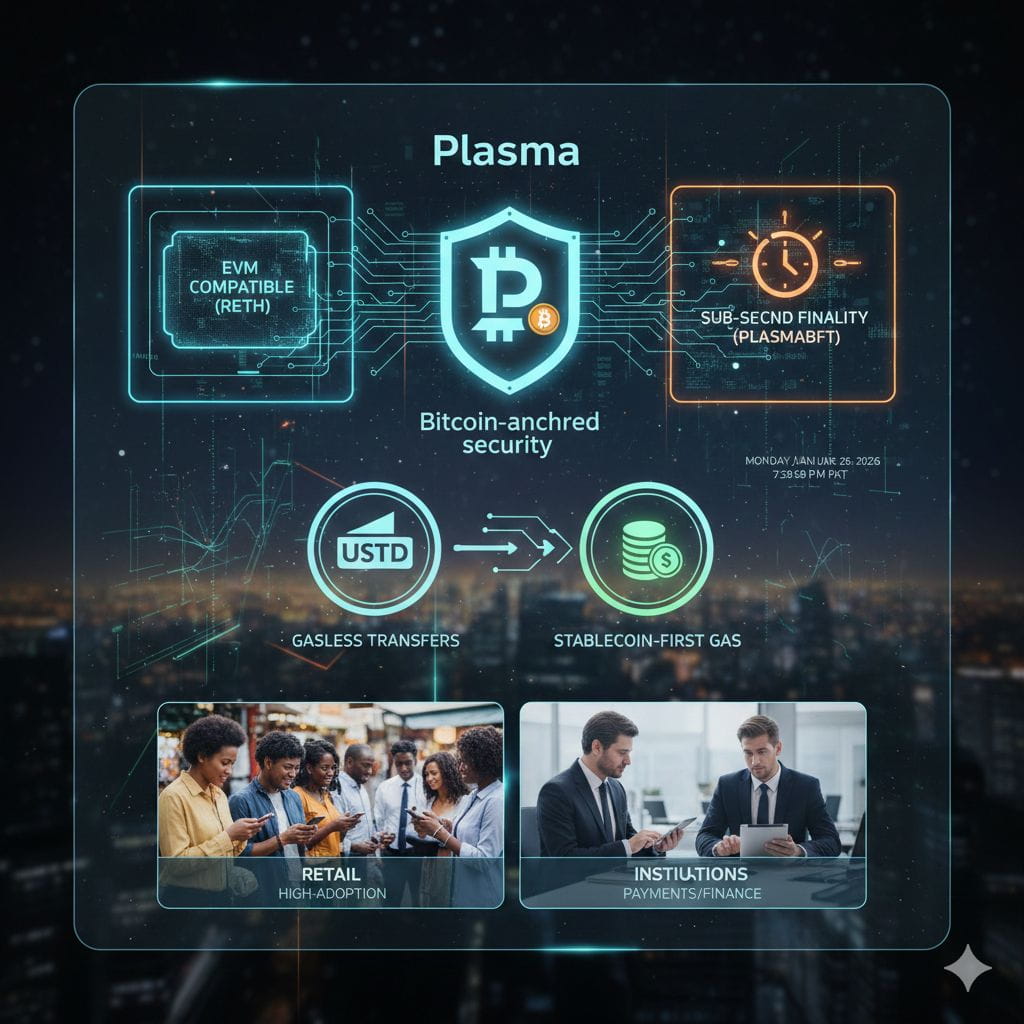
Instead of trying to do everything at once Plasma narrows its focus. It treats stablecoins as the core asset of the network. Every design choice flows from that decision. Speed matters because payments should feel instant. Costs matter because small transfers should not be eaten by fees. Simplicity matters because most users do not want to think about gas tokens or complex setups. Plasma tries to make the experience of sending a stablecoin feel closer to sending a message than interacting with a blockchain.
One of the most important parts of Plasma is how fast it reaches finality. Using its own consensus system PlasmaBFT the network is designed to confirm transactions in under a second. This means when a payment is sent it is settled almost immediately with no long waiting period and no uncertainty. For someone running a business or sending money across borders this speed changes how blockchain can be used. It stops being experimental and starts feeling practical. The system is built to handle high volumes of activity without slowing down which is essential if stablecoins are going to support real economic activity at scale.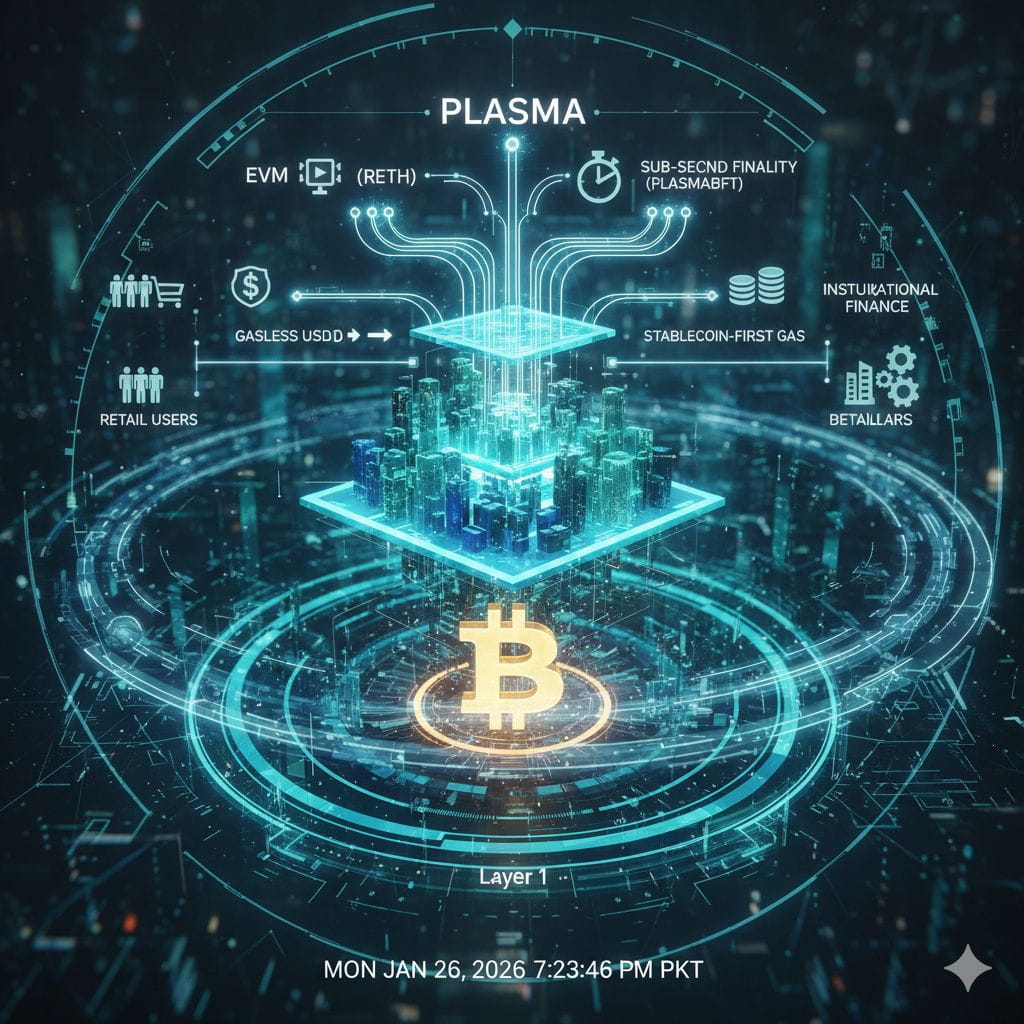
Under the hood Plasma remains fully compatible with Ethereum through its use of an EVM execution layer built with Reth. This is important because it means developers do not have to start from scratch. They can use the same smart contracts tools and workflows they already know. At the same time users benefit from applications that feel familiar because many wallets and interfaces already work with EVM based chains. Plasma combines this familiarity with a network that behaves very differently from traditional Ethereum in terms of speed and cost.
One of the most user friendly ideas Plasma introduces is changing how transaction fees work. On most blockchains users must hold a native token just to pay gas even if they only want to move stablecoins. Plasma removes that friction by allowing fees to be paid directly in stablecoins. In some cases especially for simple transfers of USDT the network can even cover the gas entirely so the user pays nothing. This gasless experience is a big step toward making blockchain usable for people who only care about sending and receiving money not managing tokens.
Security is another area where Plasma takes a thoughtful approach. Instead of relying only on its own validator set the chain anchors its state back to Bitcoin. By periodically recording checkpoints on the Bitcoin blockchain Plasma ties its history to one of the most secure and censorship resistant networks in existence. This adds an extra layer of confidence that the system cannot be easily manipulated or rewritten. It also signals a commitment to neutrality which is important for a payment network meant to serve people and institutions around the world.
Plasma is not built only for individual users. It is also designed with institutions in mind. Payment companies financial platforms and large scale settlement systems need predictability speed and compliance friendly infrastructure. Plasma aims to support these needs while still remaining open and accessible. Features like optional privacy controlled transparency and programmable settlement logic make it possible to build serious financial tools on top of the network without sacrificing usability.
In regions where stablecoin adoption is already high Plasma could feel especially relevant. Many people in emerging markets already use stablecoins to protect value send remittances and transact online. For them the main pain points are fees delays and unreliable infrastructure. Plasma speaks directly to those problems by making stablecoin transfers fast cheap and simple. At the same time institutions looking to move large volumes of digital dollars can benefit from the same infrastructure without relying on slow or fragmented systems.
What stands out about Plasma is that it does not try to make users care about the blockchain itself. The technology is there but it stays out of the way. The experience is designed so that people can focus on what they are doing paying someone getting paid or moving funds across borders. This approach reflects a belief that mass adoption will not come from teaching everyone how blockchains work but from building systems that work so well they do not need to be explained.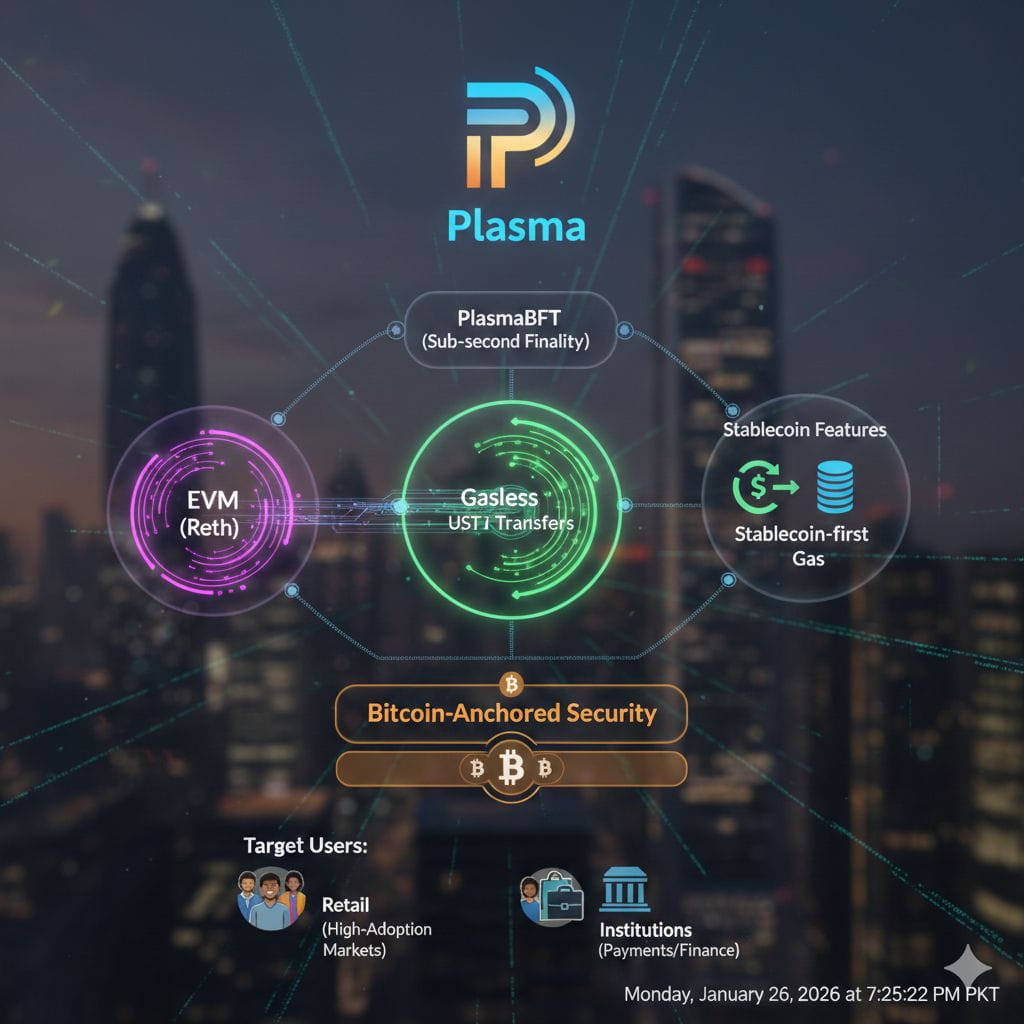
As the role of stablecoins continues to grow Plasma positions itself as infrastructure for that future. It is not trying to replace everything else in crypto. It is trying to do one thing extremely well. By centering the entire chain around stablecoin settlement Plasma offers a vision of blockchain as a quiet reliable backbone for global payments. If that vision succeeds most users may never think about Plasma at all. They will just experience faster cheaper and smoother digital money moving exactly when and where it is needed.

