
Gold and silver prices have recently faced a sharp correction, shaking investor confidence and triggering debates across global markets. Traditionally seen as safe-haven assets, both metals often attract buyers during economic uncertainty. However, the current crash highlights how shifting macroeconomic forces can quickly change market sentiment.
One of the main reasons behind the fall in gold and silver prices is the strength of the US dollar. When the dollar rises, precious metals become more expensive for holders of other currencies, reducing demand. At the same time, higher interest rates make yield-bearing assets like bonds more attractive, pulling capital away from non-yielding assets such as gold and silver.
Another key factor is easing inflation expectations. As inflation shows signs of cooling in several major economies, investors are reassessing the need for hedges against rising prices. This has led to profit-taking after long bullish phases, accelerating the downward momentum in precious metals.
Silver has been hit harder than gold due to its dual nature. Unlike gold, which is mainly an investment and store of value, silver has strong industrial demand. Slower growth expectations and weaker manufacturing data have raised concerns about reduced industrial consumption, adding extra pressure on silver prices.
Despite the crash, long-term fundamentals for gold and silver remain relevant. Geopolitical tensions, potential economic slowdowns, and central bank buying could provide support in the future. Historically, sharp corrections in precious metals have often been followed by periods of stabilization and recovery once market conditions rebalance.
In conclusion, the current gold and silver crash reflects short-term macroeconomic pressures rather than a complete loss of value. For investors, this phase serves as a reminder that even safe-haven assets are not immune to volatility, and careful risk management is essential in rapidly changing mar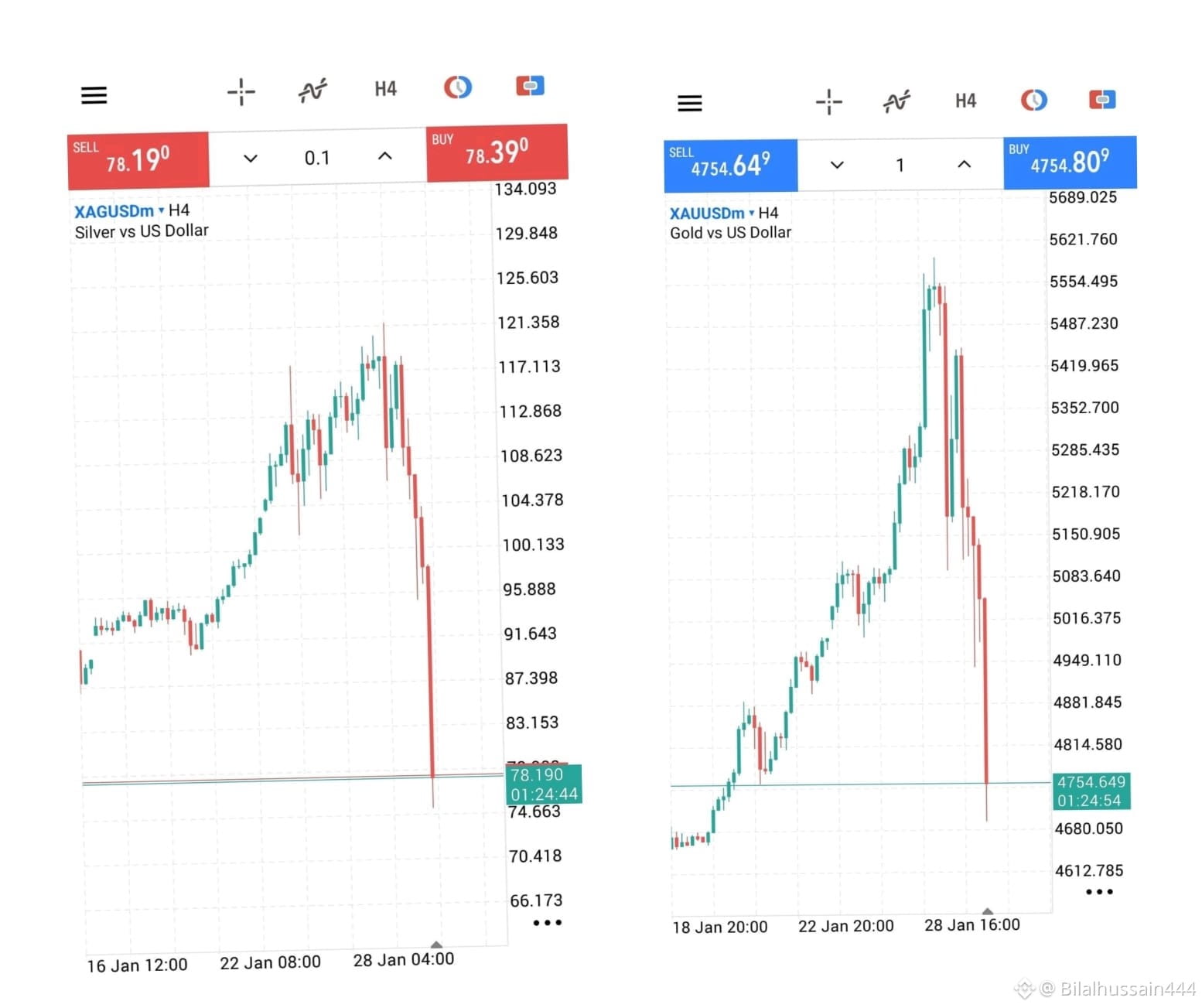 kets.
kets.