

Vanar Chain is not trying to be everything at once. Instead, it focuses on one clear idea: bringing Web3 into areas people already enjoy, like gaming, virtual worlds, and digital entertainment. Rather than building for only crypto-native users, Vanar is designed for everyday people who may not even realize they’re using blockchain.
The team behind Vanar comes from gaming, media, and global brands. That background shows in how the network is built. The goal isn’t to push complex features or buzzwords, but to make Web3 feel natural, fast, and enjoyable.
Built for Real Users, Not Just Developers
Many blockchains talk about mass adoption, but Vanar actually designs for it. The network is optimized for experiences where speed, low fees, and smooth interaction matter the most. This makes it ideal for games, metaverse environments, and AI-powered apps where delays or high costs can ruin the experience.
Instead of asking users to “learn crypto,” Vanar brings blockchain into familiar formats like playing games, collecting digital items, exploring virtual spaces, or interacting with AI-driven tools.
Real Products Already Live
Vanar isn’t just an idea. It already powers live platforms that people can use today.
Virtua Metaverse is one of the biggest examples. It’s a digital world where users can own land, collect assets, complete missions, race vehicles, and trade functional NFTs. Virtua moved to Vanar Chain to benefit from faster transactions and lower fees, which are critical for a smooth metaverse experience.
Then there’s VGN (Virtual Gaming Network), a blockchain gaming ecosystem where players can earn real digital assets while playing. It’s built to support multiple games and reward players without making the experience feel complicated or technical.
These platforms show how Vanar focuses on usability, not just theory.
What VANRY Does in the Ecosystem
VANRY is the native token that keeps the entire network running. It’s used to pay for transactions, stake to help secure the chain, take part in governance, and interact with games, apps, and digital assets built on Vanar.
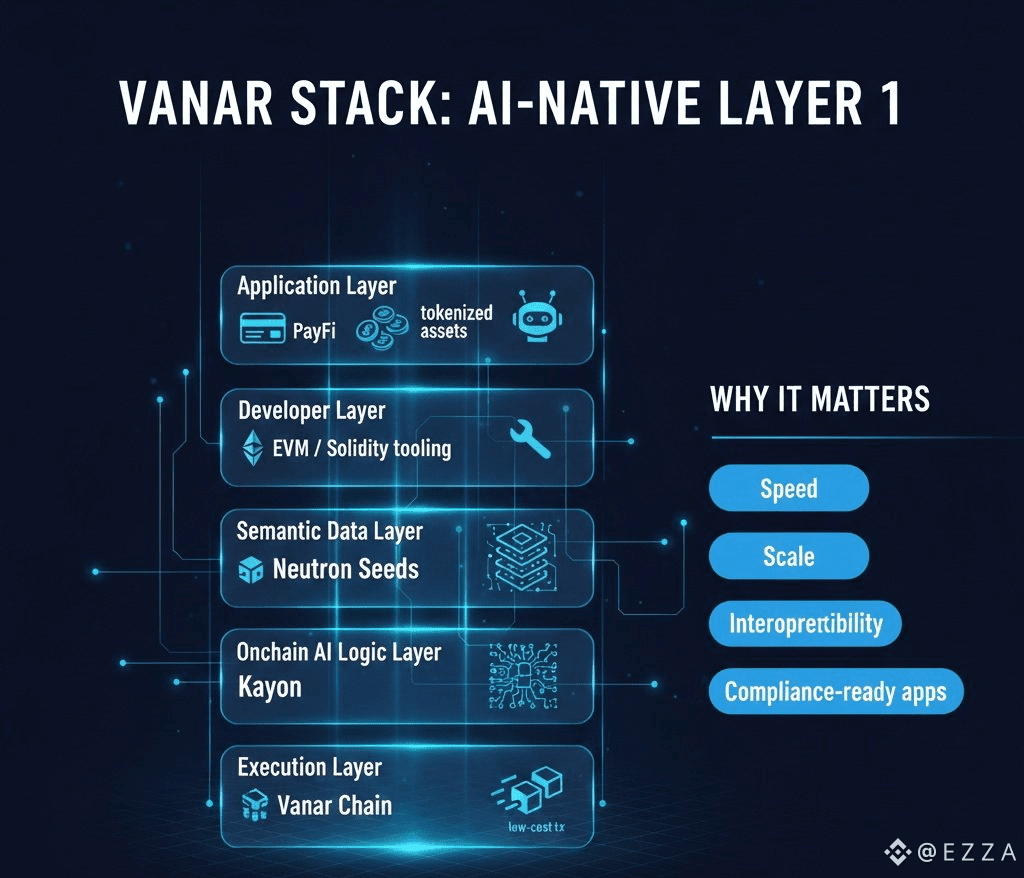
Because Vanar is EVM-compatible, developers can easily build or migrate apps from Ethereum. On top of that, Vanar adds advanced features like AI-native support, on-chain reasoning, semantic memory, PayFi tools, and real-world asset integration. This opens the door for smarter apps and more interactive digital experiences.
Focus on Sustainability and Performance
Vanar also addresses two major concerns in blockchain: energy use and scalability. The network runs on renewable energy through Google’s infrastructure, helping reduce environmental impact. At the same time, it’s built for high-speed transactions with low fees, which is essential for gaming and metaverse platforms where performance matters.
Market Overview and Long-Term View
As of late January 2026, VANRY is trading around $0.0076 with a market cap near $15–16 million. Trading activity remains steady, showing consistent interest rather than short-term hype. Some long-term projections suggest higher price levels if adoption grows, especially as more games, AI tools, and brand partnerships launch on the network.
Final Thoughts
Vanar Chain feels like a project focused on the long game. Instead of chasing trends or quick attention, it connects blockchain to things people already enjoy: games, virtual worlds, and intelligent digital experiences.
If Vanar continues expanding real products like Virtua and VGN, and keeps attracting developers and brands, VANRY could play an important role in making Web3 feel less complex and more everyday.
For anyone interested in gaming, metaverse, or AI-focused crypto projects, Vanar Chain is definitely worth watching.
